Duane Davis Found Guilty in 1996 Tupac Shakur Murder Case
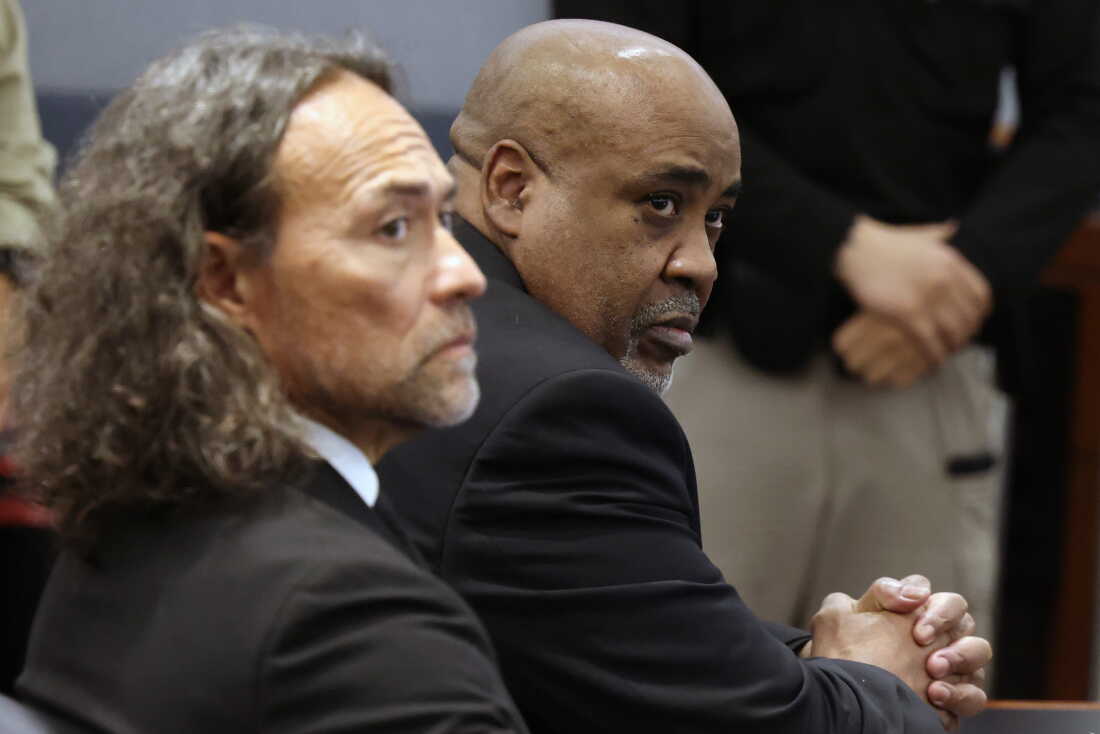
Duane “Keffe D” Davis and his attorney, Michael Sanft, attended the court proceedings where a jury found Davis guilty of orchestrating the murder of rap icon Tupac Shakur. The trial, held at the Clark County District Court Regional Justice Center in Las Vegas, concluded with the conviction of the 63-year-old Davis for first-degree murder with a deadly weapon. This verdict resolved a case that has perplexed hip-hop enthusiasts and the public for years.
On the decisive day, the jury needed less than three hours to deliberate after a lengthy trial. Emotional scenes unfolded in the courtroom; Shakur’s sister, Sekyiwa “Set” Shakur, expressed her emotions by embracing the prosecutors, while Davis’ son reacted by covering his face. The verdict carries a potential life sentence for Davis.
Chief Deputy District Attorney Binu Palal addressed the jury in closing arguments. He described how Davis acquired a gun and pursued Shakur and Death Row Records co-founder, Marion “Suge” Knight, following an assault on Davis’ nephew. Palal confidently urged the jurors to recognize Davis’ responsibility in the murder.
Throughout the trial, the prosecution emphasized Davis’ multiple accounts. They highlighted that he consistently placed himself in the white Cadillac used in the attack, even if he did not fire the weapon. Davis’ influence as a gang leader allegedly directed the actions of younger men in the car, including his nephew.
In response, defense lawyer Michael Sanft questioned the reliability of evidence suggesting Davis ordered the shooting. He noted that no substantial physical evidence directly connected Davis to the crime, questioning the credibility of Davis’ own dramatized public statements and memoir.
The trial featured testimony from 24 prosecution witnesses and three defense witnesses over nine days. While the state dropped a gang enhancement charge due to logistical issues with witnesses, the overall narrative persisted. Davis’ conviction remains the single prosecutorial outcome in the decades-long case.
The context of gang and record label rivalries played a central role in the courtroom. Witnesses detailed the antagonism between Los Angeles gang factions Mob Piru and Davis’ Southside Compton Crips, highlighting their affiliations with Death Row Records and Sean “Diddy” Combs’ Bad Boy Records. Despite this background, the defense argued evidence was insufficient to link Davis definitively to the crime.
Prosecutors stressed Davis’ own words, recorded in a 2019 memoir titled “Compton Street Legend,” and various interviews where he admitted involvement. The defense countered by questioning the authenticity of these statements, viewing them as self-monetizing fabrications.
The complex landscape of gang feuds and music industry rivalries remains topical. The unresolved case of the Notorious B.I.G.’s murder, occurring six months after Shakur’s, was briefly discussed during the trial, reflecting enduring mysteries in the hip-hop world.