Earthquakes Highlight Contrasts in Disaster Response Between Colombia and Venezuela
In Buenos Aires, Argentina, the ground shook again in South America. It was the second time in two months. Once more, families turned to social media for help locating loved ones trapped in collapsed buildings. Nations across political and geographical divides promised support. However, the reactions to Colombia’s recent 7.4-magnitude earthquake and Venezuela’s previous ones in June highlighted stark differences.
Contrasting Responses to Disaster
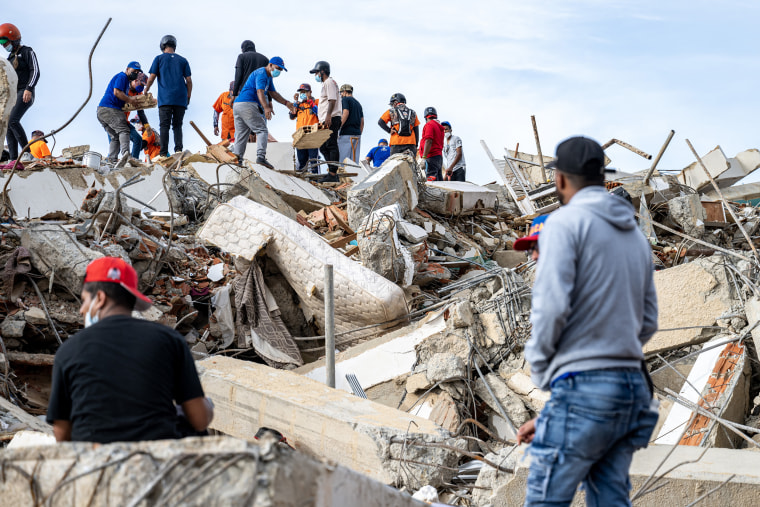
After the earthquake in Venezuela, acting President Delcy Rodríguez took almost four hours to address the nation. In contrast, Colombia’s newly inaugurated President, Abelardo de la Espriella, set up an emergency command post an hour after the quake. In Venezuela, civilians used their hands to clear rubble for weeks. In Colombia, machines like cranes and excavators were deployed within hours.
Rodríguez relied on international rescuers to fill gaps in response in Venezuela. Colombia only accepted teams from the United States, opting for humanitarian supplies instead. Volunteers and rescuers worked in Caraballeda, Venezuela, in June, highlighting the challenges faced there.
“The differences between an authoritarian regime and a democratic system can be seen clearly in the institutions and their capacity to respond to an emergency.” – Ronal Rodríguez, Venezuela specialist
These events underscore the importance of robust institutions, especially in crisis situations. They reveal fundamental differences in political systems and resources between Colombia and Venezuela.
Colombia’s Political Newcomer Takes Charge
Abelardo de la Espriella, with a background as a criminal defense lawyer and no prior political experience, assumed office in Cali, Colombia’s third-largest city. This occurred less than 72 hours before the earthquake that struck various regions, including those he vowed to focus on during his campaign. De la Espriella transitioned from Gustavo Petro, Colombia’s initial leftist president, amid allegations of electoral fraud, disrupting the formal handover process. Nevertheless, humanitarian workers commend the government’s response as a testament to Colombia’s democracy.
Within an hour of the earthquake, de la Espriella promised to lead the disaster response, ensuring Colombians they were not alone. Soon after, he coordinated with officials and toured affected cities, exemplifying Colombia’s well-functioning institutional system. Despite controversies over foreign aid, the disaster management system in Colombia continued effectively amid leadership changes.
Venezuela’s Veteran Leader Under Scrutiny
Despite Rodríguez’s extensive governmental experience, her handling of the disaster response was criticized. Competing power claims surfaced when the interior minister provided initial damage reports. The government’s casualty tally initially excluded La Guaira, where poorly constructed housing projects sustained significant damage. Political repression intensified distrust, leading many Venezuelans to question official reports.
“It was very difficult for citizens to access important information about the emergency, get themselves to safety and know where to seek help.” – Gabriel Bastidas, Venezuelan journalist
Even with an ideal response, Venezuela faced challenges. The earthquakes hit densely populated areas at night, complicating operations. Experts emphasize the length of time required for a comprehensive situation assessment, both in Venezuela and in Colombia.
Comparative Strengths in Responses
In the aftermath, Venezuela’s debilitated resources became evident. Years of economic crisis under former President Nicolás Maduro have eroded response capabilities. Meanwhile, Colombia effectively mobilized resources and personnel. The availability of information and equipment contrasted sharply with Venezuela’s experience, illustrating differences in preparedness.
Juan Mogollon in Florida learned about his relatives trapped in Cali and witnessed the rapid response there. Unlike Venezuela’s struggles, Colombia’s authorities efficiently deployed equipment and personnel to the scene, exemplifying effective government response and operational protocols.