Ebola Outbreak Raises Concerns Over U.S. Response
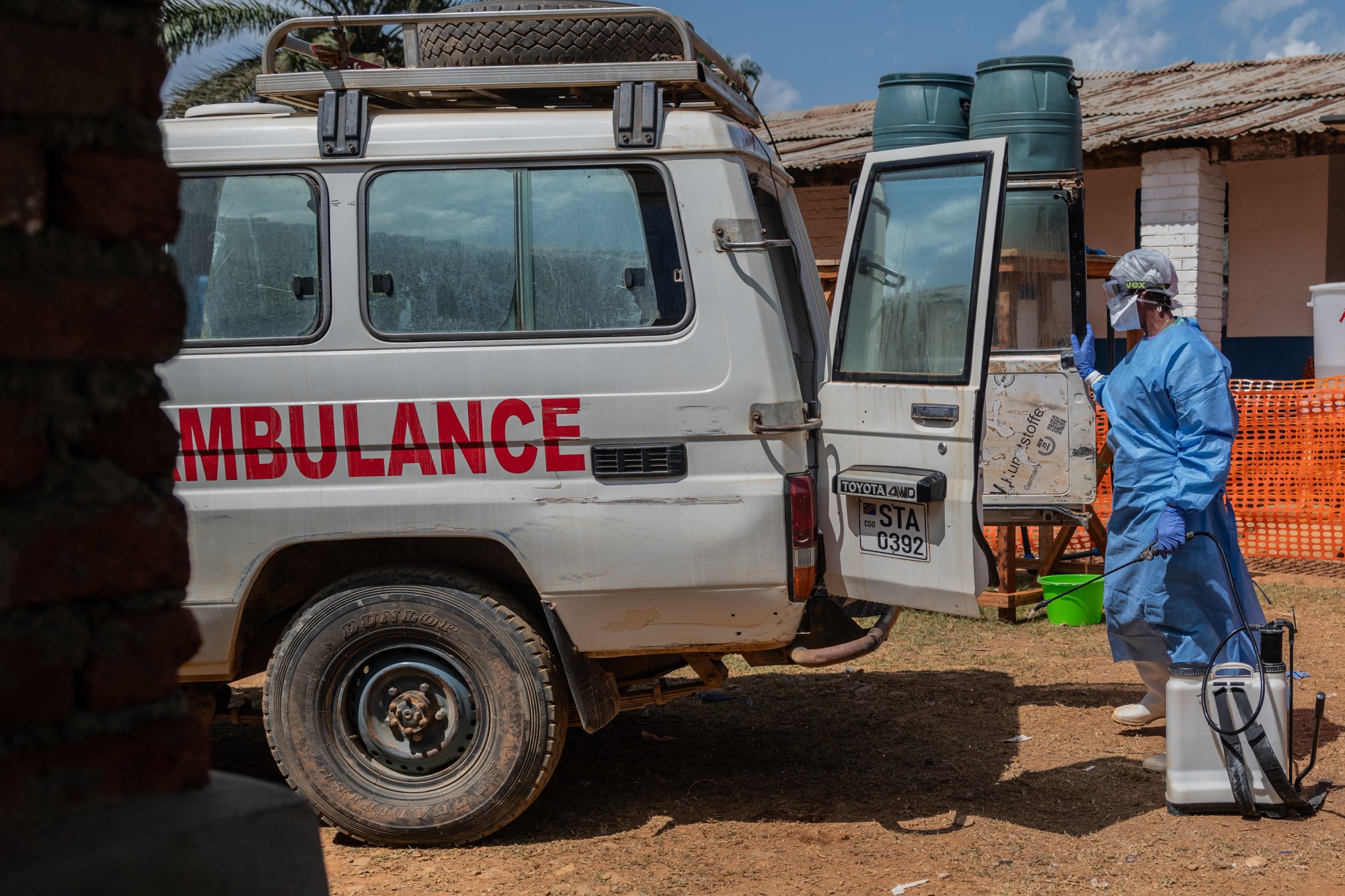
A health worker disinfects an ambulance at the Mongbwalu treatment center, Congo, as part of the response to the Ebola outbreak. This outbreak has led to 617 confirmed cases and 117 deaths in the Democratic Republic of the Congo and Uganda.
The U.S. government, under the Trump administration, has proposed establishing a quarantine and treatment facility at a U.S. military base in Kenya for Americans potentially exposed to Ebola. This proposal faces criticism and potential legal challenges. American health officials with experience in handling Ebola highlight significant clinical, ethical, operational, and legal concerns with this plan.
Ebola outbreaks are not uncommon. The current situation recalls the 2014-2016 outbreak in West Africa, which resulted in over 28,000 cases and more than 11,000 deaths, with a fatality rate of 39%. History shows that lessons from the past are often overlooked, leading to inadequate plans to curb the virus’s spread. In 2014, the U.S. government implemented airport screenings to prevent the virus from entering the country. This strategy was part of a broader plan to manage and treat infected individuals within U.S. borders.
Today, the U.S. faces challenges due to the dismantling of its public health infrastructure over recent months. The U.S. Agency for International Development no longer exists to provide necessary ground support in the Congo. Additionally, budget cuts have significantly impacted the CDC’s ability to respond effectively. Addressing these challenges focuses on containment, preventing the virus from spreading beyond its origin.
The CDC has deployed personnel to the Democratic Republic of the Congo. However, the current effort lacks the strength seen a decade ago. Compounding the issue is the U.S. withdrawal from the World Health Organization. As the outbreak continues, the risk of it spreading beyond Central Africa increases. Air travel poses a risk of spreading the virus globally, a concern heightened by the upcoming FIFA World Cup in North America.
People exposed to the virus, notably U.S. residents seek the superior care available in U.S. medical facilities. Yet, given the 21-day symptomatic incubation period and the ability to temporarily suppress fever with medications, barring entry to at-risk U.S. residents is problematic.
While current Ebola transmission is not airborne and requires contact with bodily fluids, the potential for wider transmission exists. The State Department aims to safeguard Americans, yet no vaccine or treatment is available against the Bundibugyo virus. Consequently, containing the virus at its source is paramount. Airport screenings provide limited effectiveness, akin to preventing a fire from spreading by building barriers instead of extinguishing the source.
Lessons from aviation security illustrate the importance of focusing resources where risk exists. Programs like TSA PreCheck and Known Crewmember expedite security for low-risk passengers, allowing resources to focus where they are needed most. Similarly, containing Ebola at its origin is the most effective strategy to safeguard Americans and the global community.
Sheldon H. Jacobson, Ph.D., a professor of Computer Science at the University of Illinois, has extensively researched risk-based aviation security. Janet A. Jokela, MD, MPH, FIDSA, MACP, an infectious disease expert, serves as a clinical professor at Carle Illinois College of Medicine and a member of the Illinois Immunization Advisory Committee.