Economic Prospects and Challenges Following the Iran Conflict
Washington — President Trump has promised a remarkable economic recovery, fueled by a recent deal to conclude his conflict with Iran. He assured Americans that gasoline prices would soon reduce to $2.50 per gallon, signaling an extraordinary economic boom unlike any before.
Despite these promises, economists remain cautious. The conflict’s impact, along with other inflation drivers, is expected to persist for months, posing ongoing challenges to American households and impacting Trump’s party ahead of the midterm elections.
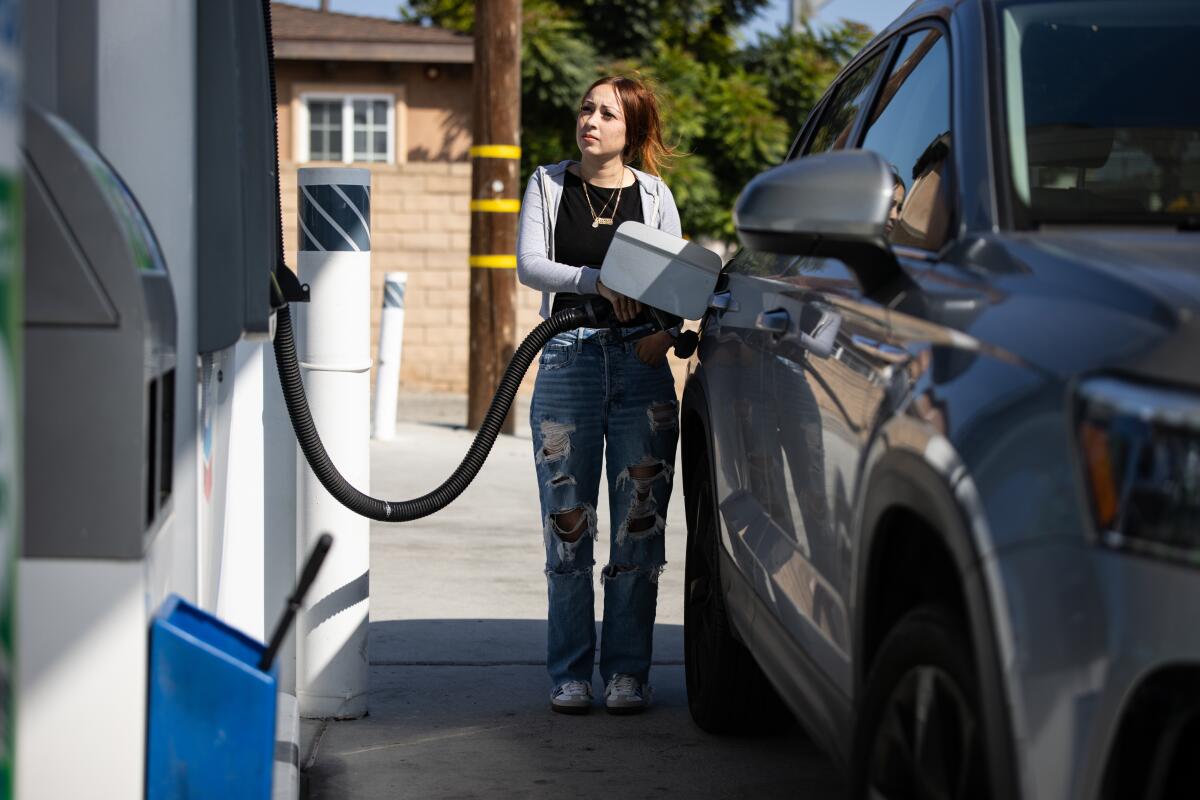
Yesenia De La Torre, a 24-year-old from Culver City, was seen refueling at a Chevron station despite the announcement of peace with Iran and efforts to reopen the Strait of Hormuz, with continuing high oil and energy prices.
“The war’s conclusion won’t instantaneously reverse the damage,” stated Patrick Harker from the University of Pennsylvania Wharton School, highlighting the delay in infrastructure repair and market stabilization.
Oil prices did drop last week, reverting to their levels prior to the conflict, while average gas prices decreased slightly. However, significant time will be required for oil shipping to resume and for prices to decline further, according to Michael Negron from the Center for American Progress.
Negron predicts continued gradual reduction in prices, yet immediate substantial improvements remain unlikely before the upcoming elections, where affordability has become a key concern. This could prove challenging for Republicans defending their Congressional majority.
Although Trump promotes a positive economic narrative, Gina Plata-Nino from the Food Research and Action Center notes the disconnect felt by Americans facing financial strain from rising costs.
The Iran conflict has burdened households with costs between $775 and $1,300, according to an analysis by Roger Pielke at the American Enterprise Institute. Oil price increments have also affected diesel and fertilizer prices, stressing various sectors.
Consumer prices have risen significantly, marking a three-year high, while Trump dismisses affordability concerns. He rejected a housing affordability bill despite bipartisan support, intensifying criticism.
The latest NPR/PBS News/Marist Poll indicates his approval on economic matters at a low point, and only 23% of Americans support the war’s cost considering its outcomes.
U.S.-Iran Negotiations Stalled
Proponents of Trump praise the Iran agreement, although its goals—such as dismantling Iran’s nuclear capabilities—remain unmet.
Trump emphasized the transient disruptions in energy markets due to the conflict, asserting that prices would quickly stabilize, yet ongoing U.S.-Iran negotiations are plagued with uncertainty.
Lifted sanctions on Iranian oil facilitate its trade, altering decades-old U.S. policy, yet the discussions’ unpredictability prompts caution among energy sectors.
As negotiations continue, energy companies proceed with caution amidst pricing volatility, foreseeing further risks in oil trading and insurance sectors.