European Wildfires Present Severe Challenges Amid Climate Change
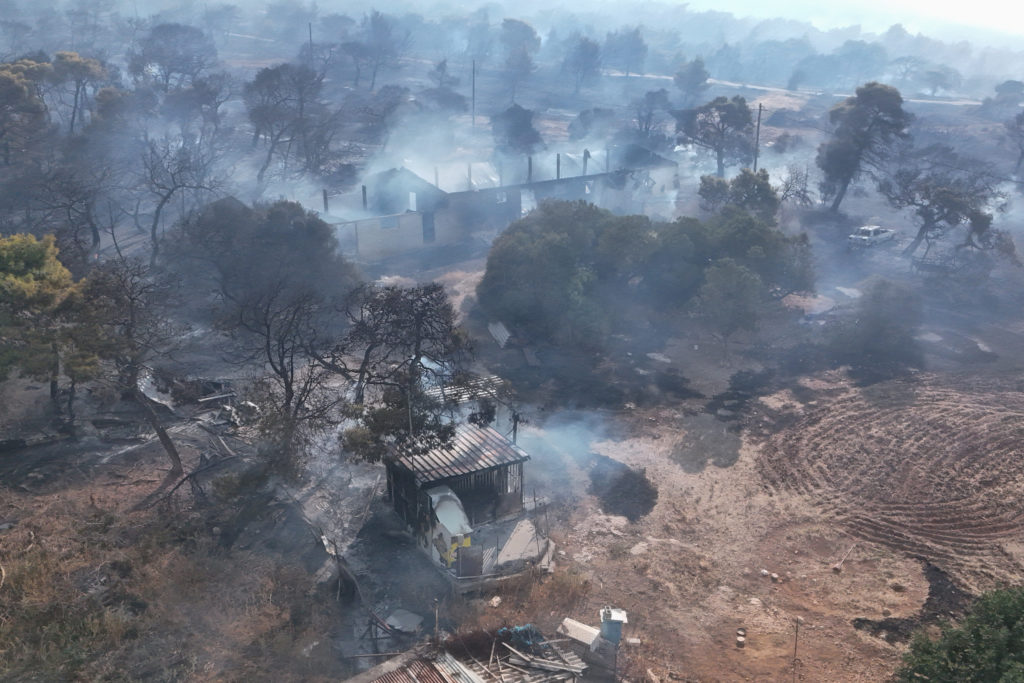
In Athens, Greece, a serious incident occurred as two firefighting helicopters collided during efforts to suppress a wildfire close to the city. The Greek fire department reported that one helicopter had crashed, affecting all four crew members. Two members were unharmed, while the other two required medical attention. The collision underscores the perilous environment faced by firefighters amid Europe’s escalating wildfire crisis.
The Extent of Europe’s Wildfire Emergency
Wildfire conditions worsened near Athens due to strong winds, leading to further evacuations in the region of western Attica. Flames threatened local communities and industrial areas around Megara, as high winds hampered efforts by aircraft to collect water for firefighting.
This situation is concerning, especially as the region recalls the devastating Mati wildfire in 2018, which caused 104 fatalities and was Europe’s deadliest blaze in recent history.
Farther west, France dealt with significant wildfire challenges as containment efforts continued. The Gironde megafire forced 224,000 evacuations, marking one of the country’s largest civilian displacements outside wartime. Despite the containment of this blaze, thousands remained unable to return home, and a second fire in Provence posed additional threats.
Impact and Response
Wildfires in France and Spain have displaced around 330,000 individuals, affecting residents and travelers during peak summer months. The spread of fires strained emergency resources across these nations.
Europe is experiencing a heightened wildfire threat, exacerbated by climate change. According to the European Environment Agency, recent decades have seen wildfires linked to nearly 800 deaths. The continent recorded its worst fire year ever in 2025, with over 10,000 square kilometers burned. Europe’s warming trend, more than twice the global average since the 1980s, is increasing the likelihood of extreme fire conditions.
Firefighting Efforts and Evacuations
Efforts to combat the wildfire near Athens involved 500 firefighters and 23 aircraft. Gale-force winds complicated aerial operations, leading to evacuations in several areas, including Kandili, Agia Skepi, and Toutouli. The seaside area of Porto Germeno was particularly at risk.
Prime Minister Kyriakos Mitsotakis monitored the situation closely. The fire originated near Agios Vasileios and quickly spread toward Porto Germeno and neighboring forested regions.
“There are no words to explain what has happened. Destruction. Total destruction,” expressed a local farmer as fires ravaged the area.
Ongoing Challenges in France and Spain
In southwestern France, the Gironde megafire remained within its established perimeter but continued to blaze, consuming large areas of forest. The Gironde prefecture highlighted the continued threat posed by hot and windy conditions. Officials assessed damage in Le Porge, where approximately 150 homes were lost.
Additional firefighting teams, including personnel from Ukraine, Lithuania, and French Polynesia, were expected to bolster efforts against the French fires. Although signs of stabilization emerged in Provence, multiple evacuations were necessary as flames threatened nearby locales.
In Spain, authorities concentrated efforts on containing fires that have claimed at least 13 lives. The crisis prompted Prime Minister Pedro Sánchez to propose a national plan addressing wildfire mitigation, recognizing the intensifying destruction exacerbated by climate change.
Overall, Europe continues to grapple with severe wildfire risks, emphasizing the urgent need for comprehensive strategies to manage these growing threats.