Farmers Worldwide Struggle with Fertilizer Shortages Amid Iran Conflict
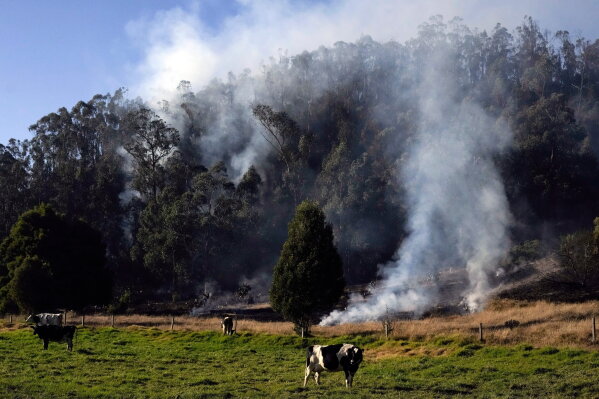
Farmers globally are grappling with the effects of the Iran conflict. Gas prices have surged, and fertilizer supplies are dwindling due to Iran’s extensive blockade of the Strait of Hormuz. This reaction follows the U.S. and Israeli bombings. Fertilizer scarcity threatens farmers, particularly in developing regions already suffering from rising temperatures and erratic weather. This situation may lead to higher food prices worldwide.
Impact on Global Agriculture
The Northern Hemisphere’s poorest farmers depend heavily on fertilizer imports from the Gulf. This current shortage arrives at the onset of the planting season, reported Carl Skau from the World Food Program. Skau highlighted that the worst-case scenario involves crop failures next season. In the best-case scenario, higher costs of inputs will reflect in food prices in the future.
“Right now, we are waiting and hoping,” said Baldev Singh, a rice farmer in Punjab, India, expressing concerns of smallholders’ survival without government subsidies for fertilizers as demand peaks.
Strait of Hormuz Blockade
Iran is significantly restricting shipments through the Strait of Hormuz. This narrow passage usually facilitates a substantial portion of both the world’s oil and global fertilizer trades. On Friday, Iran accepted a U.N request to allow humanitarian and agricultural shipments through despite enduring strikes on nuclear sites. This decision provides the first relief at the chokepoint after the conflict started a month ago.
Key nutrients, nitrogen and phosphate, face immediate threats from the blockade. Nitrogen and urea supplies, crucial for plant growth and yield enhancement, suffer the most due to shipping delays and high liquefied natural gas prices. These conflicts constrain about 30% of the global urea trade, according to Chris Lawson of CRU Group.
Consequences for Developing Countries
Some nations are facing critical shortages. Raj Patel, an economist from the University of Texas, stated that countries like Ethiopia, relying on nitrogen fertilizers routed through the Gulf, experience stress on supply chains.
Phosphate export pressure adds to the problem, with Saudi Arabia contributing a significant share to the global trade. Even after the war, Gulf producers would need security assurances to resume shipments through the strait, likely increasing insurance costs.
In India, the government prioritizes urea for local use and provides fertilizer manufacturers with a significant portion of their natural gas requirements. Still, some plants operate below capacity, reducing output.
“The food system is fragile and relies on stable fertilizer supply chains,” said Hanna Opsahl-Ben Ammar of Yara International.
Immediate Implications for Crop Yields
The timing of fertilizer applications is critical. Delays, even short ones, can impact crop yields severely. These effects are already apparent in the United States and Europe with current planting seasons underway. Asia is expected to face difficulties in its upcoming planting season.
“Our crops need nitrogen now,” said Dirk Peters, an agricultural engineer in Berlin, emphasizing the urgency.
Despite fertilizer price lows compared to previous crises, grain price drops haven’t cushioned farmers as before, creating potential yield reductions, especially if less fertilizer-intensive crops are chosen.
Strategies for Vulnerable Regions
African nations are reporting disruptions due to reliance on Middle Eastern imports. In East Africa, farmers face limited time and resources to prepare fields due to early rains. Reduced yield occurrences linked to fertilizer shortage were highlighted by Raj Patel, emphasizing governmental roles in subsidies and promoting domestic production.
India has implemented fertilizer subsidies, impacting budget allocations for long-term investments and increasing reliance on imported gas for domestic urea production, which affects the soil negatively, according to Purva Jain from the Institute for Energy Economics and Financial Analysis.
Promoting organic fertilizers emerges as a protective measure against fluctuating energy prices and climate shocks, said Oliver Oliveros of the Agroecology Coalition, viewing present challenges as pivotal moments for change.
This article, initially published on March 27, 2026, was updated on March 30, 2026, to accurately report Saudi Arabia’s roles in the fertilizer sector.
Reporters contributed: Olingo from Nairobi, Jamey Keaten in Geneva, and Kerstin Sopke in Berlin. Funding support for climate and environmental coverage stems from multiple private entities, though content remains AP’s responsibility.