Forest Service Research Faces Uncertain Future Amid Reorganization
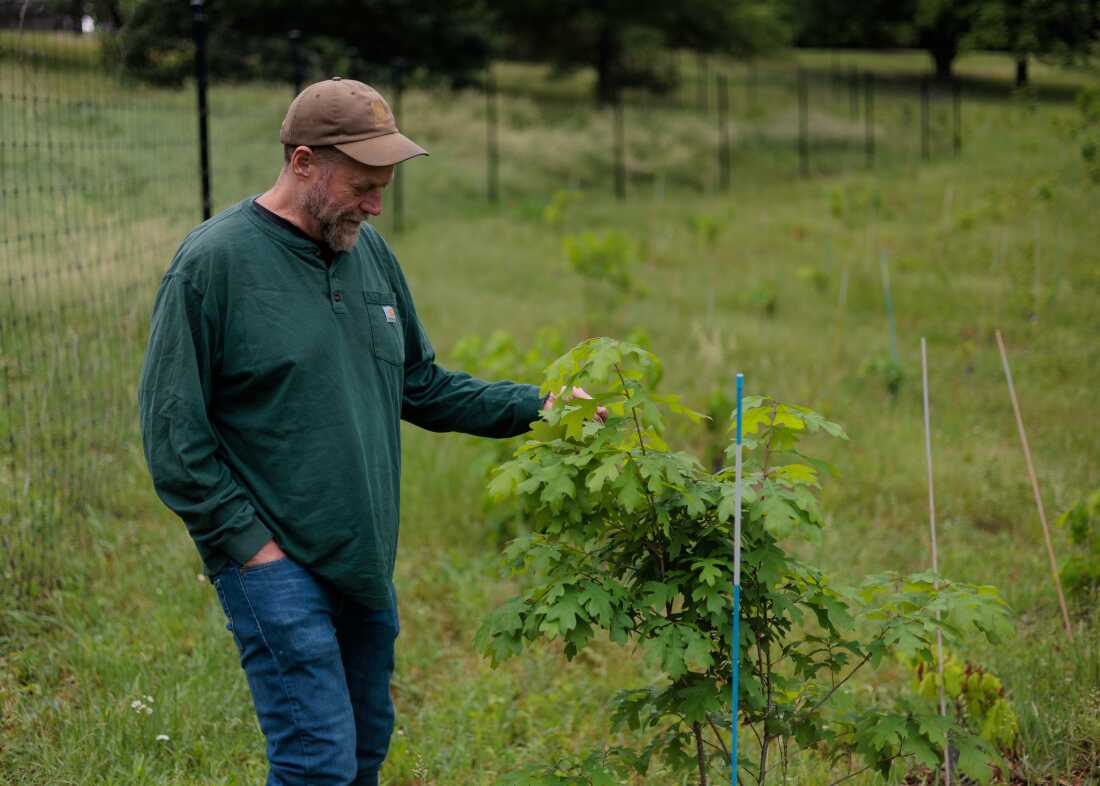
When trees fall in Baltimore, the city doesn’t send them to landfills. Instead, they are sent to Camp Small, a facility that repurposes them into furniture, flooring, and other products. This operation generates revenue for Baltimore and has become a model for other cities.
Shaun Preston, who manages Camp Small, credits the U.S. Forest Service for its essential support. “They helped us with research and developing ideas,” Preston stated. “The Forest Service looked into expanding Camp Small to the next level.” More than 1,000 Forest Service employees work in various Research and Development facilities across the U.S. They operate from greenhouses, laboratories, and cabins both in urban spaces like Baltimore and near national forests they manage.
The Forest Service announced a reorganization that could close research facilities, including one in Baltimore. A proposal from President Trump’s 2027 budget further suggests eliminating funding for Forest Service research, dropping from $309 million in 2026 to zero.
At a recent budget hearing, Forest Service Chief Schulz emphasized the need for fiscal responsibility. He proposed moving the agency headquarters from Washington, D.C., to Salt Lake City, Utah, and closing regional offices to streamline operations.
The reorganization affects 229 employees, according to the Forest Service Council of the National Federation of Federal Employees. While the closures are not intended to force resignations, the agency plans to consolidate personnel in Colorado.
Despite the financial challenges, many research facilities cost little to maintain. For example, the agency pays minimal or no rent for several properties. The facility in Fort Collins, Colorado, however, costs $1 million annually in rent.
Dr. Morgan Grove, who worked with Camp Small, highlights the local nature of research projects, which would become difficult if relocated to a place like Denver. “The research is specific to Baltimore’s conditions,” he said. “Remotely, managing projects becomes almost impossible.”
Current Forest Service scientists explain that their work, which often involves local stakeholders, requires proximity. Partnerships with local communities are jeopardized by remote operations, according to Dr. Grove.
The scientists express reluctance to move, with many willing to resign if told to relocate. “I’m not moving to Fort Collins,” a researcher noted. “Our aim is to conduct long-term, region-specific research.”
Union representatives argue that the proposed reorganization breaches legislation that mandates government funding reallocations must have committee approval. They claim the committees were not notified.
Despite ongoing negotiations, the union predicts the reorganization will diminish the Forest Service’s research legacy. Scientists worry about reduced public access to essential forest management and preservation information.
Dr. Paul Hessburg, with 40 years in forestry, fears long-term damage from research funding cuts, emphasizing the extensive management required for national forest lands.