Grand Jury Decision on Nolan Wells Case Stirs Questions and Controversies
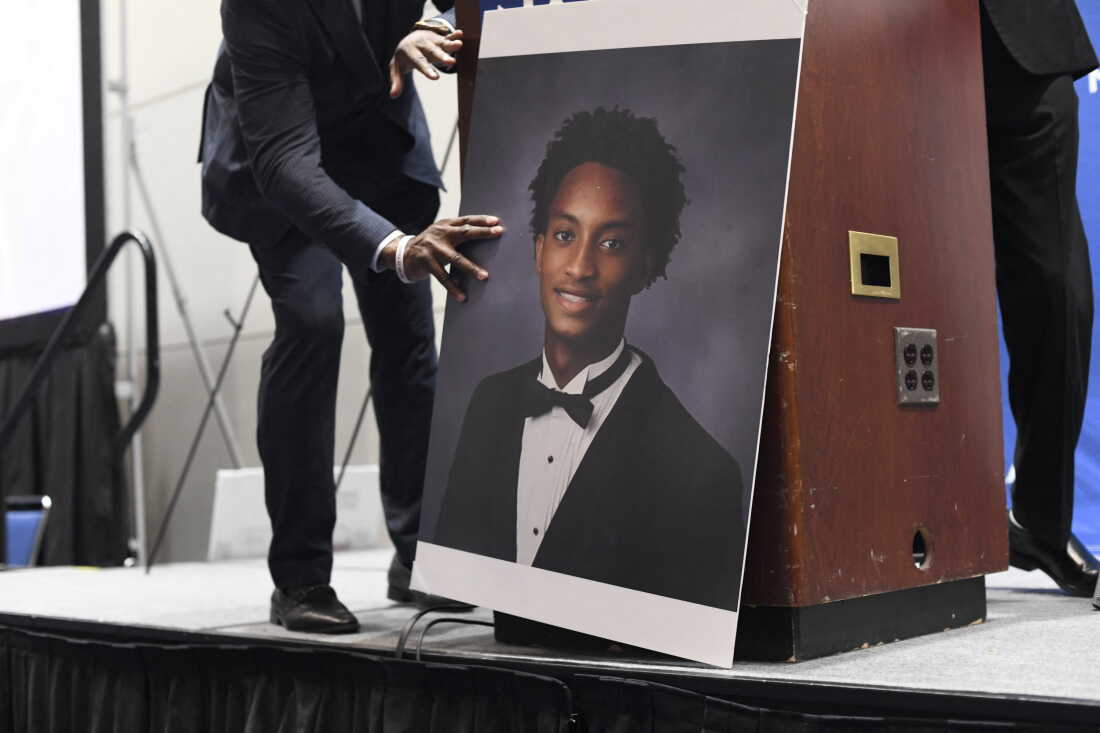
A photograph of Nolan Xavier Wells was placed in front of the podium during a news conference at McCormick Place in Chicago on July 22. Wells, an 18-year-old college student from Mississippi, was found dead after a boat trip with friends on July 4.
A Mississippi grand jury chose not to indict anyone in the case of Nolan Wells. The teenager was discovered dead off the Mississippi coast in early July. The report stated, “The Grand Jury finds no credible evidence to support the public allegations that any persons who rode to or from Horn Island on July 4, 2026, on the Triton, the Palm Beach, or the Tideline engaged in any criminal conduct related to the death of Mr. Wells.”
The grand jury convened from Sept. 14 to Sept. 18. They concluded the cause of death was consistent with drowning, based on the location of his body and multiple autopsies. Although the cause of death is undetermined, the absence of other causes leads to the likelihood of drowning as a “diagnosis by exclusion.” The jury heard from over 40 witnesses and examined evidence such as GPS data, cellphone extractions, photos, and videos from Horn Island.
“No True Bill Does Not Resolve How Nolan Wells Died,” civil rights attorney Ben Crump posted on Facebook, hours after the grand jury report was released. Crump represents Wells’ family.
Wells was discovered dead on Horn Island on July 6 after traveling there with friends on July 4. He was the only Black individual in his group and did not return from the trip. According to the grand jury report, Wells chose to stay on Horn Island the afternoon of July 4. This choice was not deemed unusual or suspicious.
District Attorney Angel Myers McIlrath stated, “Nolan chose to stay on the island that day, and there is not a scintilla of evidence to contradict that.” The grand jury found that a comprehensive search took place on Horn Island on July 5, before Wells’ body was discovered the next day. The report does not explain why his body wasn’t found earlier.
The forensic pathologist performing an independent autopsy, Dr. Roger Mitchell, agreed with the state medical examiner that the cause and manner of death remained “undetermined.” Drowning was considered a diagnosis of exclusion. Crump claimed Mitchell lacked access to certain body parts during the independent autopsy, but the grand jury report indicated Mitchell received all parts except for internal neck structures.
Evidence revealed bruises on Wells, with one on the back of his head. Crump highlighted these bruises, suggesting an independent autopsy found traces of blood and blunt force trauma to the back of Wells’ head and back. The report suggests keeping the investigation open due to unresolved questions about Wells’ condition and actions before entering the water.
Despite the Crump team’s allegations, District Attorney Myers McIlrath said they advised her office they had no evidence of a crime committed against Wells. Questions persisted about why Wells stayed on the island and the absence of his cellphone when found. The Jackson County Sheriff’s Office initially treated this as a death case, not a homicide.
Wells’ family was concerned about law enforcement’s prompt assumption that no foul play was involved and their delayed communication. His mother, Christine Wells-Wonsley, spoke of “the narrative pushed by the general public.” They believed his phone’s messages were deleted when his parents found it after tracking to a friend’s house the day his body was discovered.
Throughout the investigation, materials like the state autopsy were kept under wraps to protect the integrity of the case, according to Myers McIlrath. In her statement, she addressed claims by Crump’s team, particularly concerning the review of Wells’ phone. Myers McIlrath asserted, “The Crump team knew better, but allowed the public to believe, among other false narratives.” She affirmed the integrity of the processes followed.
Legal actions may still unfold. Wells’ family sent litigation warnings to his friends and their families after his funeral. Additionally, public figures, including Rev. Al Sharpton and “The View” co-host Sunny Hostin, face potential defamation lawsuits. Mississippi does not have a statute of limitations on homicide cases, allowing any new evidence to be considered.