Growing Republican Dissent in Congress Challenges Trump’s Influence
In a Congress dominated by Republicans loyal to President Donald Trump, a group of dissenters is emerging. Despite Trump’s strong hold on Republican voters, this growing faction threatens his policies on issues such as the Iran war and immigration funding. The party’s slender majority on Capitol Hill adds to the tension.
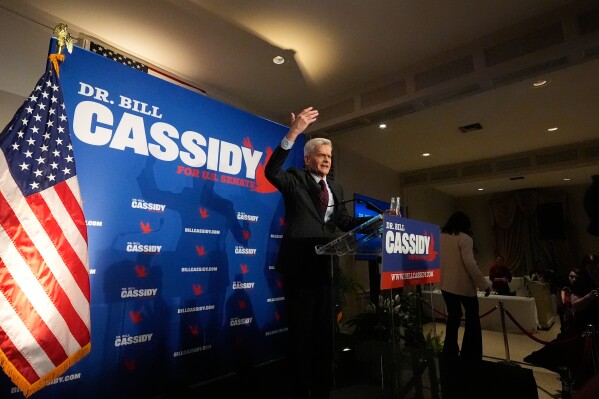
Sen. Bill Cassidy of Louisiana is a recent addition to this group. After losing his primary to a Trump-backed challenger, Cassidy reversed his stance on Iran legislation, siding with Democrats to limit U.S. military actions. He emphasized that Congress should hold the executive branch accountable.
“The way our Constitution is set up, Congress should hold the executive branch accountable,” Cassidy stated.
Next could be Sen. John Cornyn of Texas, opposed by Trump-endorsed Ken Paxton. Rep. Thomas Massie of Kentucky, an early member of the group, lost his primary to a Trump-backed opponent. Massie has been a thorn in Trump’s side by opposing key legislation, like the tax bill, and advocating for the release of the Epstein files.
Massie’s defiance hinted at further actions before leaving office. “I got seven months left in Congress,” he noted with a smile during his concession, as supporters cheered.
Others in the dissent include Sen. Thom Tillis and Sen. Lisa Murkowski, who have shown resistance to Trump’s policies. Sens. Susan Collins and Mitch McConnell have opposed some of Trump’s Cabinet nominations, while Rep. Don Bacon seeks to restore Congress’s influence over tariffs.
This group is not a revival of the Never Trump movement. Still, their independence could complicate efforts by Senate Majority Leader John Thune and House Speaker Mike Johnson to push through major legislation.
Thune labeled Cornyn a “principled conservative” and emphasized a senator’s limited control over presidential actions.
Upcoming votes, like an immigration funding package, may test this dynamic. Democrats aim to exploit these divisions. House Democratic Leader Hakeem Jeffries expressed confidence in driving wedges between Republicans, leveraging a discharge petition to move issues to a vote.
Gov. Gavin Newsom pointed out Trump’s influence primarily rests within the Republican base, not the broader American electorate.
Meanwhile, Republicans strategize on securing legislative support. Sen. John Hoeven acknowledged Cassidy as a “good friend” but doubted he would shift from Republican consensus. Sen. John Kennedy described Cassidy’s actions as rational and mature.
Cassidy denied plans to be a disruptive force against Trump, instead pledging to act in his state’s and country’s best interests. Nevertheless, his independent views resurfaced quickly. He criticized the U.S.’s weakened alliance against China and questioned the administration’s creation of a nearly $1.8 billion fund intended to compensate Trump allies.
“I just came off the campaign trail. People are concerned about making their own ends meet, not about putting a slush fund together without a legal precedent,” Cassidy remarked.
Note: This story was updated to correct the fund’s value to nearly $1.8 billion and the proper name of Customs and Border Protection.