Hakeem Jeffries Poised to Become First Black Speaker of the House
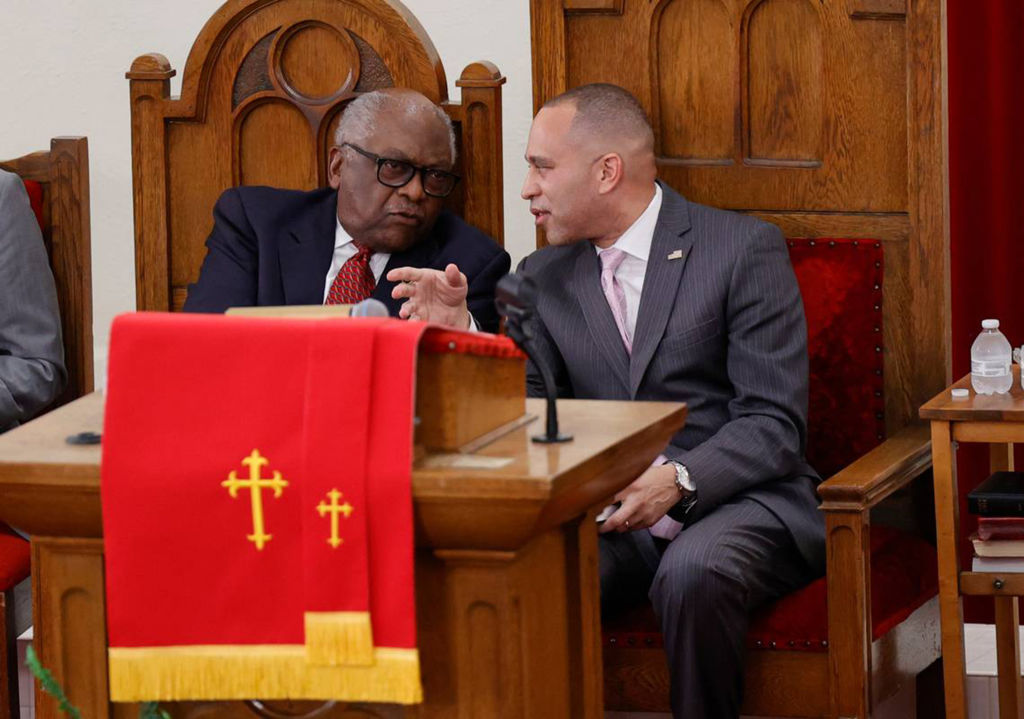
In 1870, Joseph Rainey of South Carolina became the first Black person to serve in the U.S. House. Now, House Democrats are preparing to choose Rep. Hakeem Jeffries as the first Black Speaker. This moment carries deep meaning and many challenges for Jeffries and the Black community, according to several Black leaders interviewed by TIME. They emphasize the symbolic value of Jeffries’ new role and the need to transform this representation into tangible policy improvements.
Rev. Frederick Haynes, a pastor and newly elected member of the U.S. House in Dallas, connects Jeffries’ rise to Martin Luther King Jr.’s dream. Haynes believes this connection taps into a hope rooted in the American dream.
Jeffries’ Responsibilities as Speaker
As Speaker, Jeffries will direct the House’s legislative priorities and engage in key federal spending and policy negotiations. He will also counter the actions of a Trump administration that has targeted civil rights protections. Democrats are anticipating their largest majority since around the time of President Obama’s early years in office. This situation reflects the 2008 election, which broke racial barriers and increased expectations for Democratic-led reforms.
Rep. Jim Clyburn of South Carolina, a prominent Black lawmaker, underscores Jeffries’ duty to progress the party’s aims while retaining caucus trust. Although Clyburn keeps his advice to Jeffries private, he highlights its essence: “Conduct yourself in such a way that you’ll ensure that you won’t be the last.”
Jeffries has been positioned for this leadership since 2022 when he was selected to succeed Nancy Pelosi as the House leader. Before the midterm elections, he had garnered the backing of the Congressional Black Caucus and several key progressive figures like Alexandria Ocasio-Cortez and Greg Casar, the Congressional Progressive Caucus chair.
Challenges and Skepticism
Some progressives are doubtful about Jeffries’ leadership. Post-election, new progressive members and some liberal groups have expressed reservations or called for alternative leadership. Clyburn acknowledges the thankless nature of the Speaker role, involving delicate management of party dynamics.
Jeffries, in an open letter, committed to incorporating insights from across the Caucus. Yet, he acknowledges the expectation is not only to promote political messaging but to push for substantial change. “House Democrats must deliver dramatic change,” he insisted.
Ties to the Black Church
Jeffries’ links to the Black church date back to his upbringing in Brooklyn’s Crown Heights and his attendance at Cornerstone Baptist Church. This church was a vital part of the Civil Rights Movement and had ties with Martin Luther King Jr.
Rev. Haynes, who knew Jeffries since his time at Cornerstone, notes this connection could lead Jeffries to spotlight the Black church’s moral legacy. Haynes asserts that the Black community’s steadfast belief in democracy exists alongside the reality of societal oppression.
Balancing Leadership and Legislation
Carl Heastie, the first Black Speaker of the New York Assembly, has worked closely with Jeffries. He explains that being Speaker requires a balance: listening to constituents and colleagues, while drawing on personal experiences. Jeffries has advocated for significant legislation, such as the 2010 law on counting incarcerated people for districting, targeting inequities impacting the Black population.
Heastie emphasizes the pride in Jeffries’ promotion, viewing it as proof that the American dream is still attainable. “A Black person from Brooklyn becoming the first Black Speaker,” Heastie reflects, “I’m just so proud and eager for what’s next.”