Highlights from the World Humanoid Robot Games
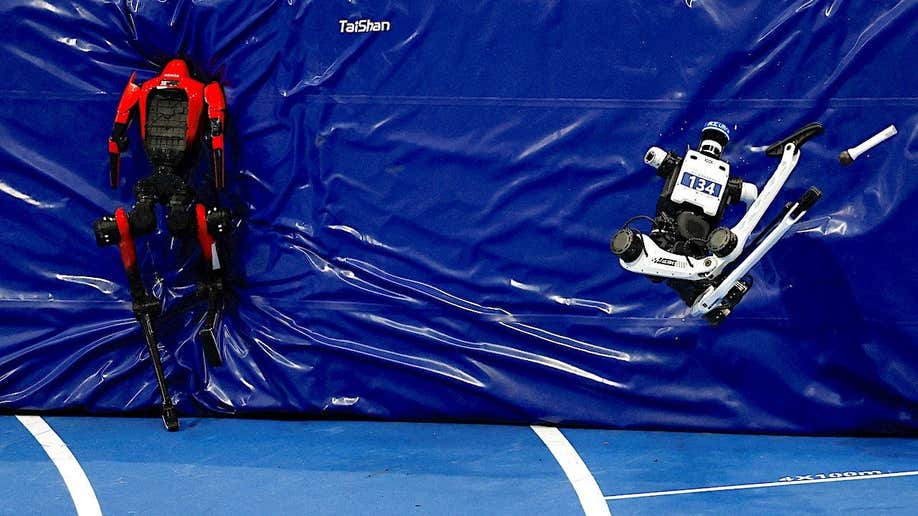
The World Humanoid Robot Games recently captivated audiences, showcasing both the triumphs and comical failures of advanced robotics. In its second year, this annual event pushes the limits of technological innovation, reassuring the public that robots aren’t yet poised to dominate the world.
Christian Hubicki, a mechanical engineering professor at Florida State University, emphasized the speed at which robots are evolving. He noted, “The goal of this event really was to show how fast we can get robots to go.” Despite their impressive speed, the robots spectacularly crashed into a large wall, illustrating their ongoing development.
A Showcase of Speed
The aim was to surpass Usain Bolt’s 9.58-second 100-meter dash record. Several robots willingly pushed to their limits, culminating in a new record by Tiangong Ultra, a Chinese humanoid robot. It completed the 100-meter dash in 8.64 seconds, beating Bolt’s time.
The robots might be running faster than Usain Bolt, but the technology is still learning to stand from a crawl.— Christian Hubicki
Hubicki elaborated that while the mechanical aspects of robots have outpaced humans for some time, intelligence is still lacking. Even in robots playing tennis, external cameras are needed for guidance. Progress in artificial intelligence remains essential.
Technological Breakthroughs and Challenges
Despite these feats, Hubicki reminded audiences to temper expectations. Artificial intelligence aids in motion coordination but remains rudimentary. Robots lack the ability to remember past actions, focusing solely on ongoing tasks. This limitation highlights the need for further development.
The event dubbed as the “Robot Olympics,” involved over 2,000 robots from 666 teams across 51 disciplines. These ranged from sports to task-based challenges. Hubicki mentioned, “The organizers did a great job highlighting the type of tasks Chinese robotics companies excel at, specifically athletic events.” Though wheeled robots have surpassed human speed long ago, humanoids are catching up thanks to advancements in AI.
Future Implications
The robotics community continues striving for practical intelligence in robots. The intention is to build reliable and useful technology, beyond merely speeding down tracks. Videos have shown robots in real-world scenarios where they struggle to interact thoughtfully, suggesting room for improvement.
Real-world deployment of AI and robotics, including warfare, prompts caution. The New York Times highlighted AI-guided drones’ use in conflict zones, causing concern over future military applications. Hubicki noted, “As much as these humanoids get headlines, there are more practical and worrying applications right now.” Understanding these implications is crucial as technology progresses.