Humble Robotics’ Electric Autonomous Truck: Innovation in Freight Transportation
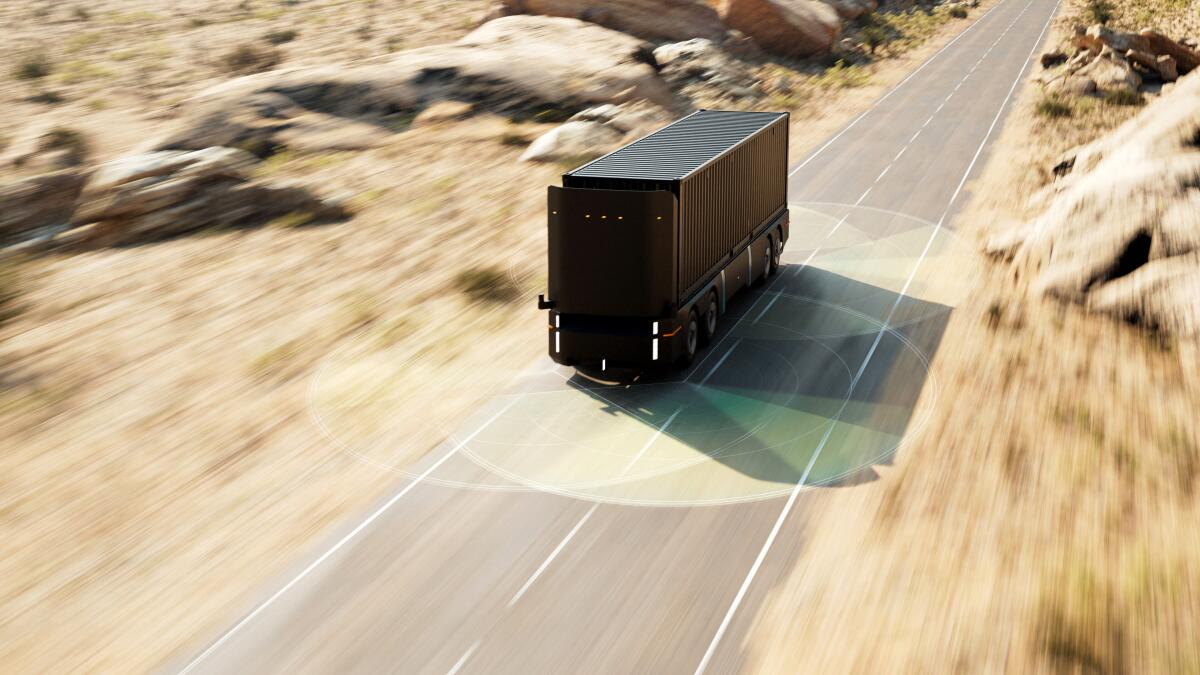
A startup in the Bay Area is transforming the semitruck landscape by creating electric, autonomous trucks focused on efficiency. Founded last year in San Francisco, Humble Robotics has secured $24 million to build a freight truck without a cab, steering wheel, gas pedal, or driver’s seat. This reimagined truck offers environmental benefits and cost savings for transporting goods across California and beyond.
The company emerged in April backed by seed funding from Eclipse Capital, based in Palo Alto, and Energy Impact Partners. Humble Robotics aims to leverage recent California regulations supporting autonomous truck operations on public roads. However, various challenges persist, with labor groups like the Teamsters expressing safety and employment concerns.
Eyal Cohen, Humble Robotics’ founder and CEO, highlighted the goal to advance electric autonomous platforms for cost-efficient freight transport. Cohen has extensive experience with electric and autonomous vehicles at companies such as Uber, Apple, and Waabi. The firm plans to initiate customer pilot programs within the year for the Humble Hauler, its driverless truck model.
California’s Department of Motor Vehicles (DMV) revised policies in April, lifting the ban on autonomous trucks over 10,001 pounds, provided they undergo initial testing with human safety drivers and cover 500,000 testing miles. Although Humble Robotics hasn’t yet applied for a DMV permit, it now plans to align operations with the revised California regulations. This marks a shift from its original testing location in Texas.
Humble Robotics faces competition from other firms like Aurora and Kodiak, who are developing self-driving trucks with conventional driver features. According to Dan Sperling from UC Davis, regulatory approval for cabless trucks may face delays due to safety concerns.
Existing automated guided vehicles already operate in controlled settings like marine ports but are not fully autonomous. Humble Robotics seeks to expand their use to public roads, particularly around the bustling ports of Los Angeles and Long Beach. The company plans collaborations with ports and shipping firms for its initial deployments.
Using technology similar to self-driving cars, Humble Robotics’ trucks feature radar, lidar, and cameras for a comprehensive 360-degree view. The vehicles also employ AI for adaptive driving decisions. The company emphasizes cameras as its primary sensing technology, with lidar and radar serving as backups.
The Humble Hauler is a Class 8 vehicle, capable of carrying typical cargo containers or other loads. It offers a 200-mile electric range and a top speed of 55 mph. While primarily designed for short-distance trips, the Hauler shares its class with long-haul trucks, which face scalability issues due to the need for large batteries.
Zero-emission vehicles are gaining traction in California, accounting for 23% of new medium- and heavy-duty truck sales. To support this shift, California’s voucher program has allocated $165 million for electric semitruck subsidies, including Tesla’s plans.
California is a key freight trucking hub, employing over 130,000 drivers. Cutting human driver jobs could significantly impact the state, prompting opposition from the Teamsters to the DMV’s decision. They criticized the push for driverless heavy-duty trucks as hazardous to roads and jobs.
Cohen reassured that driver jobs won’t disappear soon, citing the slow adoption rate of automated trucks. The perception of massive driverless trucks remains a concern, posing optics and safety challenges despite growing acceptance of self-driving cars.