Hungary Takes Urgent Steps to Secure Power Plant Amid Danube Crisis
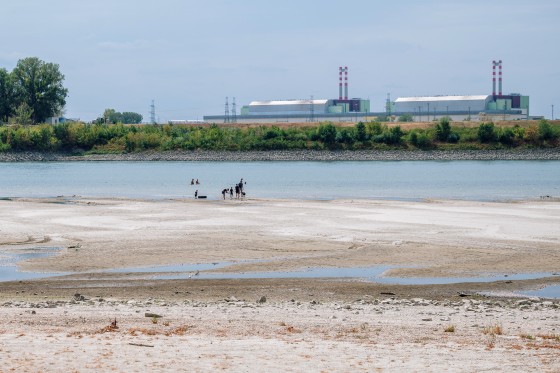
BUDAPEST, Hungary — Hungary is undertaking urgent measures to increase the Danube River’s water level to maintain operations at the country’s only nuclear power plant. Prime Minister Péter Magyar announced these steps on Wednesday. A persistent drought and numerous heat waves have drastically lowered the river’s levels, putting the Paks nuclear power plant at risk of shutting down for the first time in its 44-year history.
The Danube’s low water levels have reduced the plant’s ability to cool its reactors. Currently, it operates at only 10% of its 2,000 megawatt capacity but still supplies around a third of Hungary’s electricity.
In a video message on Wednesday, Magyar revealed plans to build a bed sill. This concrete or stone structure will be installed in the riverbed to slow the current and raise upstream water levels. Construction is set to begin Thursday near the plant. Delivery of the materials, approximately 145,000 cubic meters of rocks, began Wednesday evening. This intervention could increase water levels by up to a meter (3 feet).
Additionally, two barges measuring 80 meters (262 feet) each will be positioned near the site. They might be submerged to further raise water levels by approximately 20 centimeters (8 inches) at the plant’s cooling pumps. A decision on submerging the barges will be made on Friday, according to Magyar.
Magyar emphasized the urgent nature of the situation, stating, “We can no longer consider this extraordinary situation as a one-time natural extreme.” He stressed the necessity of prompt action to prevent a complete shutdown of the Paks plant.
Péter Magyar stated, “The Danube has given us days, not months.”
Magyar described the bed sill as a long-term solution to stabilize water levels and prevent future reactor shutdowns at Paks. Rising water levels were recently observed, but they are expected to decrease again soon without intervention, threatening the plant’s operations.
Similar actions were recently undertaken in Romania, where authorities used barges loaded with rock to redirect Danube waters towards the Cernavoda nuclear plant, which had partially shut down due to low water levels.
Magyar also noted the economic impact of the current situation. The reduced output at Paks costs Hungary roughly 50 billion forints ($158 million) per month. In contrast, the planned measures for the Danube are estimated at about 6 billion forints ($19 million).