Impact of Federal Changes on Voter Registration Efforts
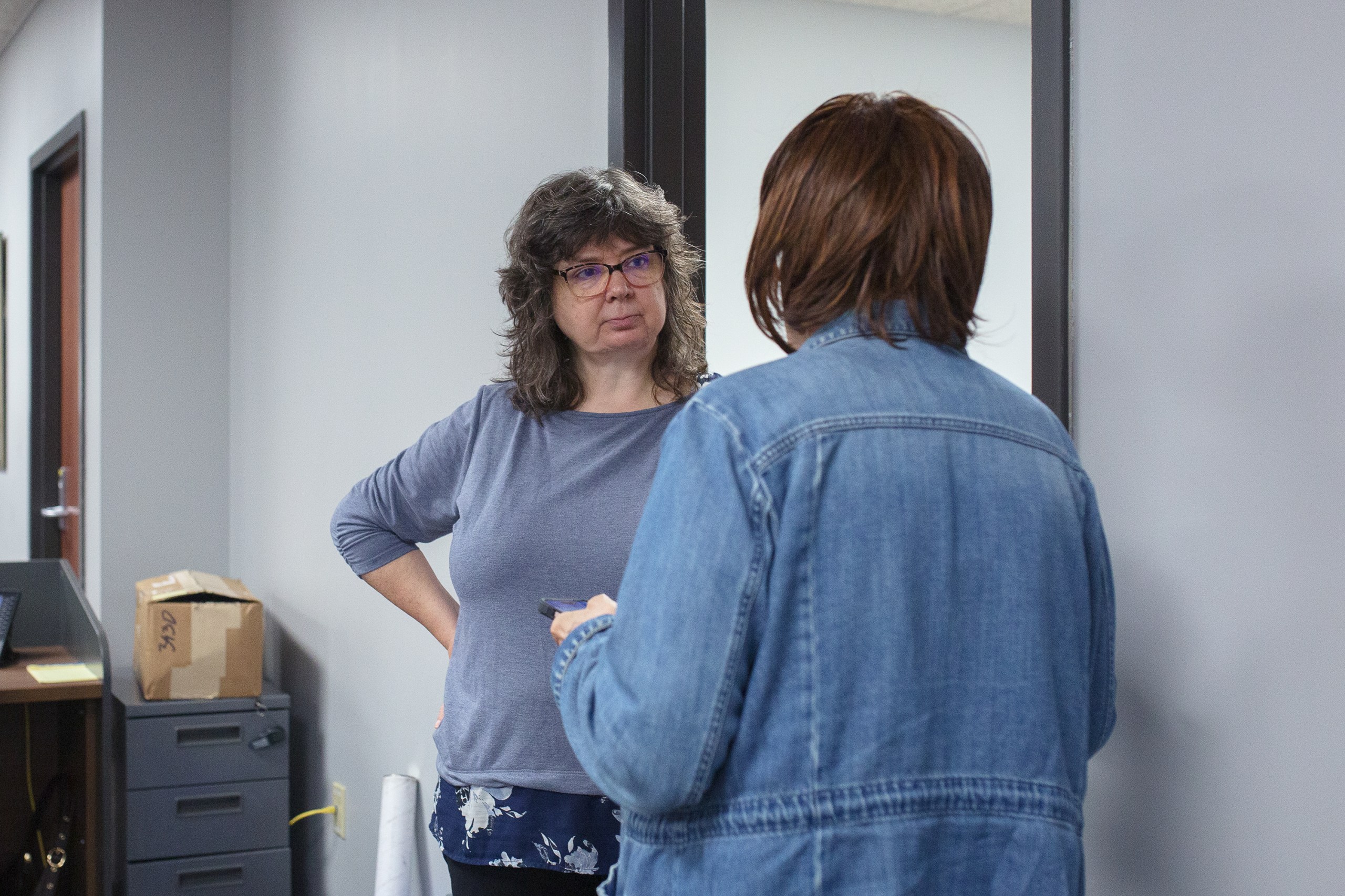
Amy Miller plays a crucial role in ensuring elders and people with disabilities can vote. As Disability Rights Nebraska’s attorney, Miller travels across Nebraska, investigating the quality of nursing homes and assisted living facilities. While educating residents about reporting abuse or neglect, she also provides voter registration forms. Recently, Miller assisted a veteran with a brain injury in completing paperwork to update his address for the midterm elections. Despite his challenges in writing, he was clear on his voting preference. Miller’s work is funded by Congress to guarantee voting access for individuals lacking internet or transportation. However, a looming White House proposal could jeopardize this effort.
The White House Office of Management and Budget proposes changes to spending rules to prevent federal funds from being used in voter registration drives or related activities. Russell Vought, leading the office, has criticized taxpayer-funded voter registration efforts, using his position to alter federal funding policies against Congress’s wishes. Miller, with six years at her nonprofit, has never faced opposition from regulators. She highlighted the importance of her work and expressed concern about making voting harder for vulnerable Americans.
This proposal fits into the broader effort by the administration to curtail federal initiatives aimed at improving voting accessibility for historically marginalized groups. Trump’s SAVE America Act mandates citizenship documentation for voter registration, potentially ending voter registration drives. Last year, the Trump administration initially banned nongovernmental registration drives at naturalization ceremonies before temporarily lifting the ban under legal pressure. The Department of Education also directed colleges to avoid using federal work-study funds for voting activities. Such directives challenge efforts like Biden’s order to expand voting opportunities, focusing on barriers faced by marginalized communities.
Miller and her colleagues face a potential shift in federal grant policy that might affect nonprofits reliant on funds for programs under the National Voter Registration Act. These organizations must provide voter registration forms, but confusion over compliance could halt efforts. Nonprofits conducting voter outreach with private donations, and universities assisting students away from home, face uncertainty. The biggest impact would be felt by groups like Disability Rights Nebraska and those they serve.
Rabia Belt, a Stanford law expert on disability and citizenship, warns that while disenfranchising voters with disabilities may not be the intention, it could be an outcome. The Help America Vote Act, passed in 2002, addressed voting challenges for disabled individuals and enhanced voting systems post-2000 election controversies. Congress continues to allocate $10 million annually to support 57 nonprofits across all states and territories. Research by Rutgers University shows this funding reduces voting gaps for disabled individuals, though challenges in registration remain.
In 2024, registered disabled voters faced statistically significant registration challenges compared to others. Rutgers data indicated difficulties for 3.6% of disabled voters compared to 1.4% without disabilities, reflecting experiences of around 740,000 disabled voters. Legal battles are expected over the OMB proposal once finalized, conflicting with existing laws and policies supporting voter accessibility grants.
Samuel Bagenstos, a former OMB counsel, argues the proposal undermines Congress’s budgetary authority. The legislative branch dictates budgets for federal agencies, which establish detailed grant policies. Vought’s understanding of federal funding dynamics indicates efforts to centralize White House power. Disability Rights Nebraska, receiving $141,000 for voter accessibility, opposes the proposal, stressing its nonpartisan service to disabled Nebraskans.
At events like Scottsbluff’s National Night Out, the organization registers voters, ensuring nonpartisan teams carry out the work according to legal requirements. Miller recounts assisting residents in isolated communities lacking basic amenities to access voting information. For instance, during a 2024 visit to a small assisted living facility, Miller engaged with a resident learning he could register to vote.
Miller wishes lawmakers could witness moments of realization among residents about their voting rights. Such firsthand experiences underscore her advocacy for maintaining federal support for voter registration initiatives vital to disenfranchised communities.