Impact of Poor Air Quality on Pets, Zoo Animals, and Beekeeping
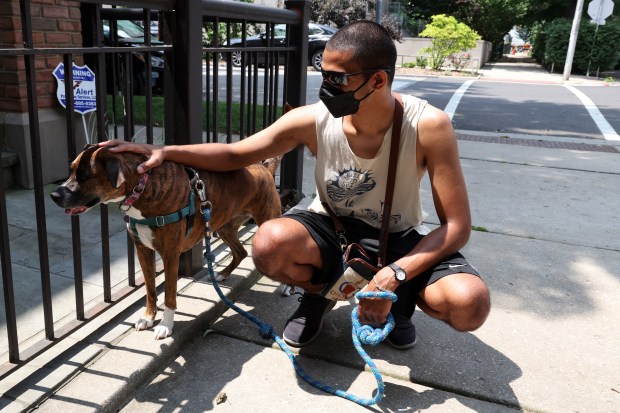
Mike Russell, co-owner of J&M Dog Walking, pays close attention to the weather since it influences how much time dogs spend outdoors. On Thursday morning, he encountered an advisory for poor air quality. Uncertain of what to expect, Russell instructed his walkers to limit outdoor time for pets. He soon recognized the severity of the issue, as many North Side clients canceled dog walks due to concerns about air pollution. “Like, a dog has never smoked a cigarette,” Russell remarked, concerned about reports equating the air to smoking multiple cigarettes.
This week’s hazardous air quality was a result of fine particles, PM2.5, originating from wildfires in Minnesota and Canada. These particles can harm animals, causing burning eyes and noses initially, and possibly entering the bloodstream due to their small size.
Shravan Raghuram from J&M Dog Walking was spotted wearing a face mask while working in Chicago to mitigate the effects of the wildfire smoke.
At Lincoln Park Zoo, General Curator Dave Bernier mentioned that employees were monitoring animals for signs of discomfort, such as labored breathing or reduced activity. “It would be probably pretty similar to what is recommended for people,” he explained. Despite the poor air quality, no zoo animals were kept indoors exclusively. Bernier noted that restricting their access to outdoor spaces could cause more stress. Instead, the zoo altered feeding practices by simplifying eating conditions and providing more indoor food for animals like great apes.
“It might be subtle, so you may have to watch them a little closer,” Bernier advised pet owners. “Make sure their overall breathing or their panting isn’t more excessive than it normally is, or their activity levels are the same.”
On Thursday, the presence of major pollutant PM2.5 quadrupled the previous air quality record for Cook County. The U.S. Environmental Protection Agency indicated emergency conditions that could affect everyone. Although conditions improved on Friday, the National Weather Service issued an air quality alert through Saturday night.
Jana Kinsman, a Back of the Yards beekeeper, expresses concerns about pollution affecting her ability to manage hives and bring products to market. With smoke and heat, outdoor work becomes challenging. “I can’t go out and manage my hives,” she explained. “It’s unhealthy for me to work and do manual labor outside.” Kinsman worries about the bees’ stress levels caused by the environmental conditions.
Jessica Helgen, program director at the University of Minnesota Bee Squad, shared that bees are resilient in smoky conditions, but less is known about long-term impacts. She differentiated between honeybees, considered managed livestock, and native bees, which lack human protection. “If one area is not doing well for honeybees, the beekeepers could pick up the colonies and move them,” she said. Despite the smoke, bees in Minnesota continue foraging.