Incoming House Democrats Aim for Significant Changes
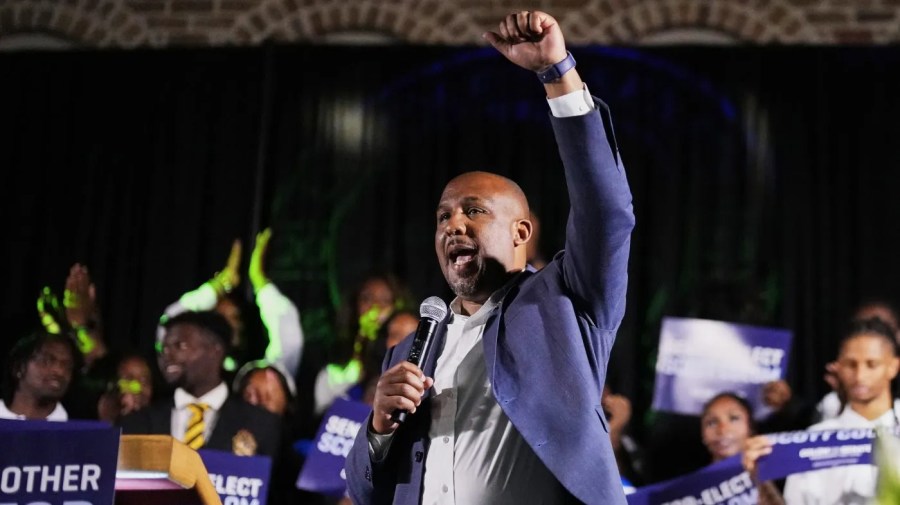
The new class of House freshmen is already strategizing to influence Congress extensively. Following their recent elections, the fresh Democrat members aim to prioritize reversing Medicaid reductions and prohibiting members from stock trading. This initiative emerges as one of the initial objectives in what is a notable majority for the party in recent memory.
The group, which features diverse backgrounds like smokejumper, mayor, state legislator, and emergency nurse, also intends to transform the culture in Washington, D.C. They seek to make it representative of the community that elected them, emphasizing bipartisan efforts. I want to see, frankly, more of what I am happy to see in our freshman class, like just normal working people who are in the halls here,
stated Rep.-elect Sam Forstag (D-Mont.).
Democrats are about to achieve a majority size not seen since at least 2008, the year they last held 257 or more seats. Some races remain pending, and signals hint they might match or exceed figures last noted in the 1990s, such as in 1992 when Democrats secured 258 seats.
Despite a labor force where over 50% identify as working class, Congress comprises only 2% of working-class lawmakers. The majority of Congress members were millionaires by 2014. Efforts to change this composition come as 17 union members claimed victories. Nicholas Carnes, a Duke public policy professor, mentions the difficulty for working-class individuals to engage in political pursuits due to financial precarity.
Rep.-elect Cyril Jefferson (D-N.C.) highlighted, You can tell we’ve had a long history of wealthy people being elected because that’s really the way a lot of it’s set up,
. Political representation mirrors life experiences. Thus, underrepresentation of working-class backgrounds hinders advocating their issues, according to Carnes.
Fundraising demands discourage many working-class candidates. Rep.-elect Matt Little (D-Minn.) emphasizes the dominant role of fundraising over public events during campaigns. Initiatives like New Jersey’s AFL-CIO’s “Labor Candidates School” aim to equip working-class candidates with necessary skills.
This year’s elections marked an increase in diversity. 155 women will serve in Congress, representing nearly a third of Capitol Hill. Sen.-elect Abdul El-Sayed (D-Mich.) will be the first Muslim American in the Senate. Sen.-elect Peggy Flanagan (D-Minn.) will be the first Native American woman in the Senate. In the same instance, three Black women are set to serve simultaneously.
Rep.-elect Michael Alfonso (R-Wisc.) will become the youngest House member. New senators average 15 years younger than their predecessors. Freshmen Democrats explore bipartisan opportunities as a cultural shift. Rep.-elect Zach Dembo (D-Ky.) said, I don’t know anything about the culture before that I’m stepping into, but what I’ll say is the perception is there’s not a lot of bipartisanship. I would like to change that,
.
Overall, the incoming freshmen are set on proving consistent advocacy from campaign promises through actions in Washington, D.C.