Innovations in Energy: Meeting Power Demands with New Technology
Investment in Infrastructure
Energy companies are addressing rising power demands through substantial investment in infrastructure. Exelon, one of the largest electric utility holding companies in the U.S., plans significant financial commitments. According to Exelon CEO Calvin Butler, the industry is committing approximately $1.1 trillion over the next five years. The focus is on ensuring a reliable power supply for homes and businesses.
Rising Demand from Data Centers
Data centers are predicted to become a major energy consumer, using between 1.5% and a significant share of global electricity. Predictions for this year indicate they might surpass traditional large consumers, ranking just below Japan and Russia in energy use.
Developing Fusion Technology
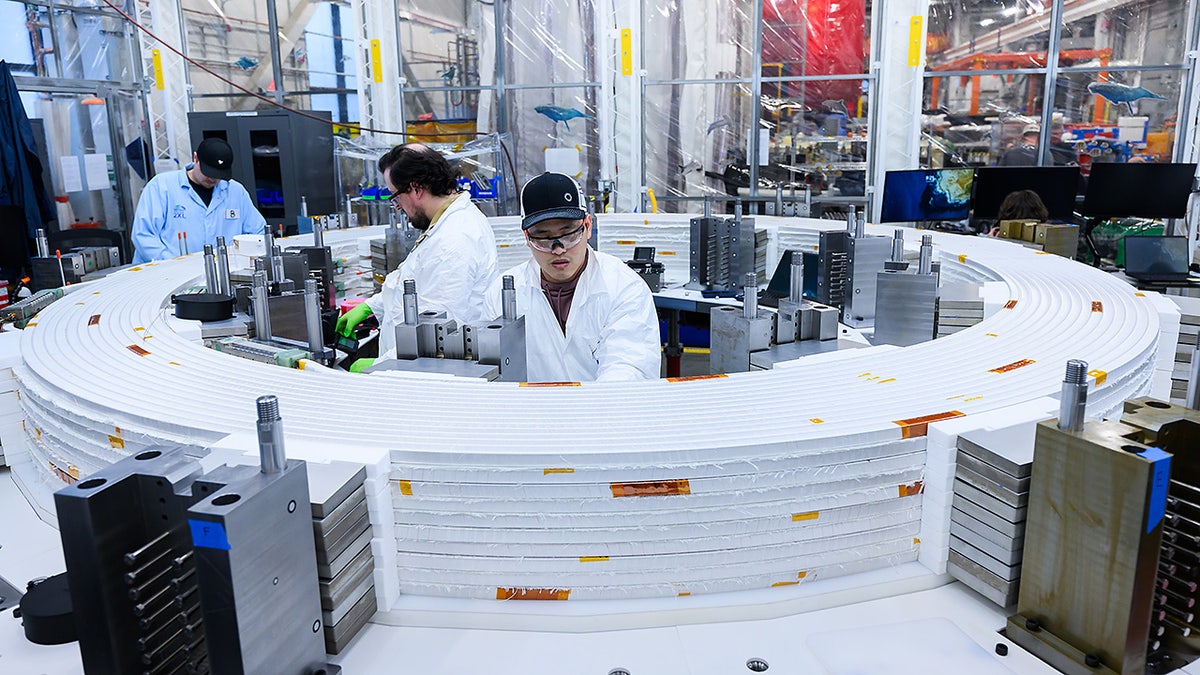
Commonwealth Fusion Systems is pioneering advancements in fusion technology. Based in Devens, Massachusetts, the company focuses on providing 24/7 reliable power to the grid with carbon-free options. Fusion, the energy source of the sun, holds promise due to its immense energy potential.
“Fusion releases about 10 million times more energy per weight by reaction than chemical energy,” said Brandon Sorbom, co-founder and chief science officer of Commonwealth Fusion Systems.
The company’s ARC fusion power plant could potentially generate fifty times more power than it consumes, enough to power a small city with minimal fuel.
Challenges and Projections for Fusion
Despite its potential, fusion technology faces uncertainties. MIT researchers suggest fusion could eventually contribute between 10% and 50% of global electricity needs. However, full realization might not happen until late into the century. The process remains expensive, and integration into the current grid poses logistical challenges.
Strategic Relocation of Data Centers
To manage power demand, data centers are relocating to cost-effective and energy-efficient regions. The Nordic countries offer advantages, such as abundant green energy and a cool climate. Philippe Sachs of Nscale praises the region’s favorable conditions for data centers.
“There’s abundant power — it’s green, it’s cheap,” said Sachs.
The Nordic countries boast plenty of land, which helps in reducing operational costs further. John Wernvik of Sweden-based EcoDataCenter highlights the efficiency of Nordic data centers.
Construction and Adaptation Challenges
Despite the benefits, constructing data centers in the Arctic involves high costs. Reports from Turner & Townsend show that cities like Oslo and Stockholm are among the costliest for data center builds. Companies unfamiliar with the region’s unique weather might face delays.
On the path to meeting energy demands, businesses emphasize the need for clean, efficient energy solutions. The link between energy consumption and quality of life remains significant.