Israel’s Strained Role in U.S.-Iran Peace Talks
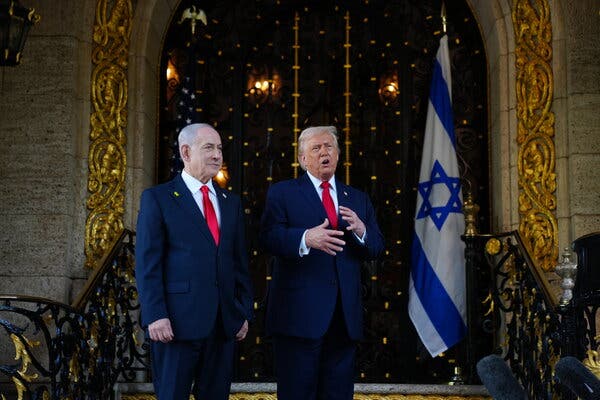
Israel, a key participant in the war, is noticeably absent from recent peace negotiations. This exclusion presents Prime Minister Benjamin Netanyahu with significant challenges amid domestic political pressures.
In February, during pivotal discussions leading up to an attack on Iran, Netanyahu was not just present but at the forefront. Working closely with President Trump, he anticipated that a joint U.S.-Israeli offensive would destabilize Iran’s regime.
However, this prediction did not materialize. Shortly after these events, Israeli defense officials noted a dramatic shift. Netanyahu found Israel largely sidelined by the Trump administration during U.S.-Iran truce discussions.
Israeli officials, deprived of direct information from the U.S., now rely heavily on regional alliances and intelligence operations within Iran to stay informed about diplomatic exchanges. Several sources, speaking anonymously, highlighted the strategic challenges Israel faces due to this lack of inclusion.
This exclusion has profound implications for Israel, particularly for Netanyahu. The prime minister, currently facing a challenging path to reelection, has historically underscored his close relationship with Trump to appeal to voters.
In public addresses, Netanyahu consistently emphasized his frequent communications with Trump, presenting himself as an influential adviser capable of swaying U.S. policy.
The conflict in February was seen as a bold maneuver to eliminate Iran’s nuclear ambitions. The initial military success appeared to bolster hopes for toppling Iran’s government, a long-held objective for Netanyahu.