Japan Revamps Imperial House Law, Controversy Over Male-Only Succession
Japan’s parliament recently revised the Imperial House Law, which dates back to the 19th century, emphasizing that only paternal-lineage men can ascend the imperial throne. This decision raises alarm over the future of the shrinking imperial family.
The revisions propose options like adopting distant male relatives as potential heirs and ensuring that princesses retain their royal status even after marrying commoners. This move has sparked criticism from those who support more inclusive succession rules.
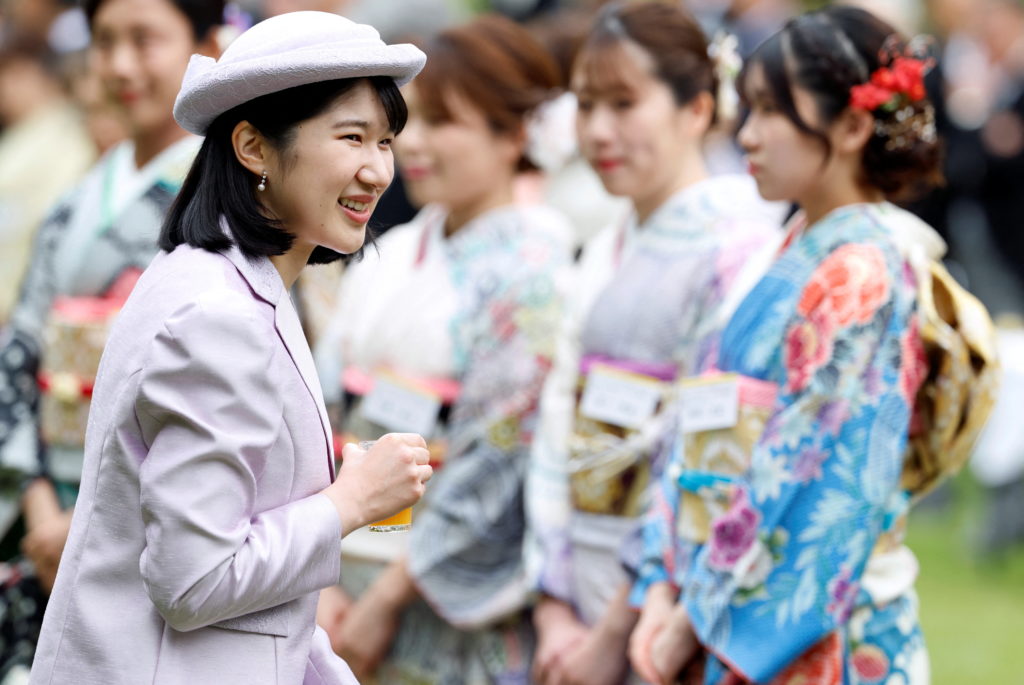
A significant concern stems from the male-only succession rule which excludes Princess Aiko, the daughter of Emperor Naruhito. Although popular among Japanese citizens, she cannot become emperor due to her gender. Instead, the succession will proceed with Naruhito’s brother, followed by the young Prince Hisahito and then his elderly uncle.
The birth of Hisahito marked the first male addition to the royal family in four decades, where emphasis has traditionally been placed on male heirs. Currently, among the 16 adults in the imperial family, only five are men, highlighting the scarcity of male candidates.
Prime Minister Sanae Takaichi and her conservative peers maintain that the male bloodline constitutes the core of the emperor’s authority.
Takaichi expressed pride after the law amendment. Under the revised law, only sons of royal men can inherit the throne, reinforcing the significance of the traditional male bloodline.
The gender-focused revisions are perceived as an effort to curtail female leadership within the monarchy, defended as upholding tradition, not chauvinism.
Chief Buichiro Kuroda stated that the Imperial Household Agency commits to supporting the family members in alignment with the new rules, while considering their sentiments.
Historically, Japan had eight female monarchs, with Empress Gosakuramachi being the last in the 18th century. The stipulations for male succession were firmly established in the laws from 1890, carried forward to the post-World War II era.
These revisions have generated protests, with some seeing the enforcement as discriminatory against women and fostering a patriarchal system.
Critics, like feminist scholar Chizuko Ueno, argue that the reforms impose undue pressure on female royals, viewing them as tools for male offspring production. Empress Masako faced stress-related challenges following Princess Aiko’s birth due to critiques over not yielding a male heir.
Historical and demographic factors also question the viability of the current succession model, with Japan grappling with an aging population.
Concubines predominantly sustained the lineage until Emperor Taisho ended the tradition. A plan in 2005 advocating for female monarchs was dismissed once Prince Hisahito was born.
Naruhito’s potential successors include Crown Prince Akishino and his son Hisahito, followed by Prince Hitachi. These male heirs are either close in age to Naruhito or significantly elderly.
Another controversial measure allows for adopting unmarried male descendants from distant imperial branches, who are aged 15 or older.
The move involves descendants from branches that removed their status post-war, aligning with ancestral lineage a minimum of 36 generations back. This strategy faces opposition, questioning its practicality and the romanticized demand for male heirs.
Yoshinori Kobayashi opposes the idea of unknown adoptees taking precedence over Princess Aiko for the throne.
The constraints imposed on royals’ choices regarding jobs, residences, and privacy draw criticisms regarding the potential re-entry of former royals into the emperor’s family.
Notable personalities expressing dissent signify a broader appeal for gender equity.
Princesses who choose to marry commoners, including the widely admired Aiko, might retain their status under the revised regulations. However, their spouses and offspring would still be non-royal.
Princess Mako opted to leave her royal responsibilities behind, moving overseas after her marriage, reflecting the challenges faced within the imperial framework.
Experts, like Hideya Kawanishi, foresee enduring pressure on royal men and their wives to produce male successors.
There is notable public support for Princess Aiko inheriting the throne, viewing historical precedents of female emperors as justification.
Some fear the ramifications on Emperor Emeritus Akihito’s legacy and the progressive steps taken to humanize the monarchy.
While Emperor Naruhito showed dissatisfaction with the legislative changes, he emphasizes reaching consensus that aligns with public expectations.
Coinciding with the house law revisions, Japan instated a contentious law prohibiting desecration of the national flag, viewed by critics as a strategy to suppress dissent and criticism.