China’s Kimi K3 AI Model Challenges U.S. Tech Giants
A Chinese startup has unveiled a new artificial intelligence model that has caught the U.S. tech industry off guard. Beijing-based Moonshot introduced the Kimi K3 model, which is now competing with top AI models like Anthropic’s Claude and OpenAI’s ChatGPT. According to Anastasios Angelopoulos, CEO of Arena, Kimi K3’s release could be the most significant AI event of the year, showing how open-source Chinese models are surpassing U.S. models.
Kimi K3 excelled in Arena’s rankings, particularly in ‘front-end coding capability,’ reflecting its strength in AI large language model performance. Angelopoulos shared on social media that the model is leading the pack as more results confirm its capabilities.
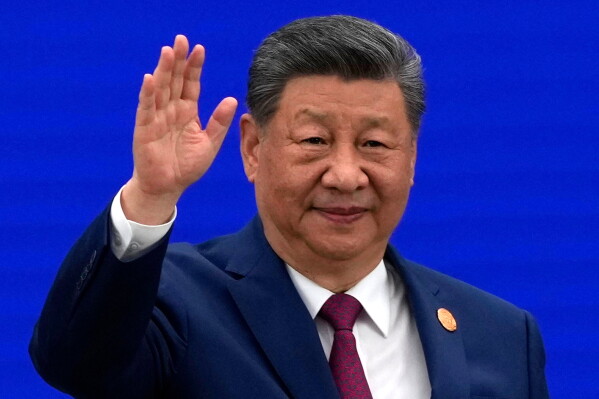
“The development of artificial intelligence should not be a solo performance by any single country but rather a symphony of global cooperation,” said Chinese President Xi Jinping.
The launch of Kimi K3 was strategically timed with President Xi Jinping’s speech during the World Artificial Intelligence Conference in Shanghai. U.S. restrictions have pushed China to develop its own technology, intensifying competition between the two leading global economies.
Moonshot follows Zhipu, a Chinese startup that launched its GLM-5.2 model last month. This model has been praised by developers worldwide for its efficiency and cost-effectiveness compared to U.S. models. However, tech analyst Patrick Moorhead believes reactions to K3 mirror the frenzy following DeepSeek’s release in 2025, potentially posing a revenue challenge for rivals like Anthropic and OpenAI.
The conference also showcased Huawei’s new AI system, the Atlas 950 SuperPoD, underscoring China’s advancements in developing domestic technology. While Moonshot partnered with Huawei, it hasn’t disclosed the hardware behind K3. K3 costs more than any previous Chinese models but remains cheaper than OpenAI’s GPT-5.6 Sol model, as per Bank of America analysts.
U.S. companies and politicians have accused Chinese AI firms of illegally extracting technology from their models. In February, Anthropic accused several Chinese labs, including Moonshot, of using distillation techniques to improve their own models by training on the outputs of more advanced systems. While distillation can be a valid method of training, it raises concerns when used to rapidly acquire advanced capabilities at reduced costs.
Interestingly, Anysphere, a San Francisco startup, has admitted using Moonshot’s K2.5 model for its coding tool Cursor. Elon Musk’s SpaceX plans to acquire Cursor for $60 billion.
Moonshot CEO Yang Zhilin, a Carnegie Mellon graduate, has made significant contributions to machine learning. Colleagues at Carnegie Mellon express pride in his achievements despite the U.S.-China competitive landscape.
Open-source AI models offer key benefits by allowing components to be examined and modified, fostering innovation. However, critics warn of potential safety and security risks.