Jensen Huang’s Departure Highlights Leadership Challenges at Nvidia
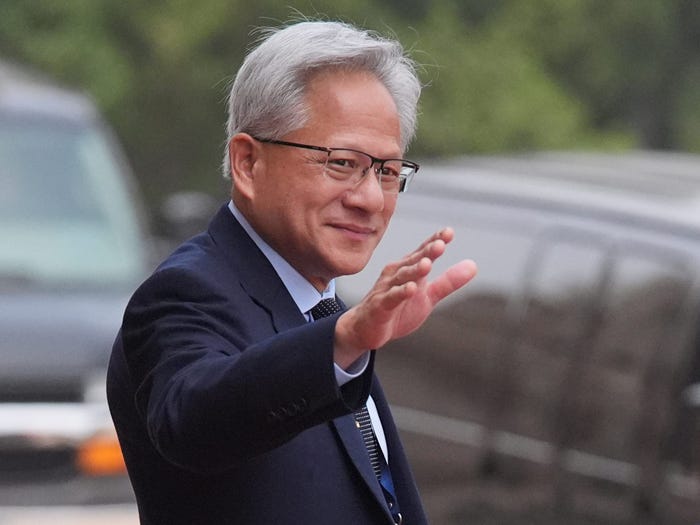
Jensen Huang adopted a flat leadership model as he developed Nvidia into a major player in the tech industry. His unexpected resignation has put this approach under scrutiny.
Huang co-founded Nvidia at a Denny’s restaurant in the early 1990s and led the company with up to 60 direct reports. The minimal hierarchy he championed was hailed for promoting information flow and empowering teams. However, experts highlight the risks of having a thin succession plan, particularly when the leader possesses outsize influence.
“It’s hard to imagine any of those direct reports are able to get the scale, scope, and experience to even be qualified to be the CEO,” said David Astorino, a senior partner at leadership consulting firm RHR International.
The unexpected transition underscores the challenges faced by founder-led companies. Huang’s departure follows reports of multiple extramarital affairs and a board probe into potential foreign intelligence concerns.
Nvidia’s board has appointed Colette Kress, its CFO, as interim CEO. The company has initiated a search for Huang’s permanent replacement, considering both internal and external candidates. This move suggests that Nvidia lacks a clear successor behind the scenes.
Astorino further noted that Nvidia’s significant position in the AI realm amplifies the “key-person risk” tied to Huang’s leadership. Dan Kaplan from ZRG explains that founders often tune out criticism, reinforcing the challenges in persuading them to prepare for successor planning.
Bradley Akubuiro from Bully Pulpit International emphasized the need for boards to add independent directors to mitigate risks associated with founder-led organizations. Ensuring continuity is paramount, as unforeseen situations can arise.
Succession planning requires more than identifying a successor. Prospective leaders need experience, exposure, and the ability to inspire all stakeholders.
Despite planning efforts, announcing a successor can have drawbacks. Umesh Ramakrishnan from Kingsley Gate points out that such announcements can lead to internal power shifts and potential resignations.
Lior Prosor from Deep33 remarked on Nvidia’s sustained employee loyalty due to stock incentives. However, recent leadership changes and stock value fluctuations may prompt employees to reconsider their equity’s value.
Alexander Kirss from Gartner suggests that Nvidia’s challenges are instructive for firms with similar management structures. He stresses that no employee, including the CEO, is irreplaceable.