Kansas Wheat Growers Struggle Amid Severe Drought and Economic Challenges
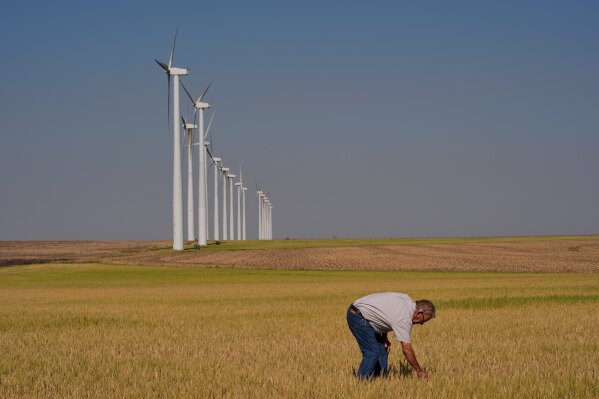
Orville Williams, a veteran farmer from Montezuma, Kansas, has consistently managed a healthy 2,600-acre wheat crop since his youth. Yet, this year represents an unprecedented struggle. “All in all, it’s not going to be a good year,” Williams, 76, shared.
Record drought and extreme temperatures have hit the U.S. early this year, especially impacting the Plains. These conditions have worsened wheat streak mosaic virus and barley yellow dwarf virus, reducing crop potential. Additionally, rising costs for fertilizer, diesel, and tariffs compound the problem, leaving wheat farmers feeling the pressure. “It’s kind of a double whammy,” Williams explained.
Drought and heat have dramatically decreased wheat production. The U.S. Department of Agriculture predicts the smallest wheat crop since 1972, with 1.56 billion bushels, a 21% drop from 2025.
Kansas, a leading wheat producer, faces particularly dire conditions. Only five times in the last 40 years have wheat ratings been so poor, with 58% deemed “poor” or “very poor” as of May 17. The last comparable downturn occurred during a severe drought in 2023. “It’s very tough conditions that growers are faced with right now,” noted Romulo Lollato, a Kansas State agronomist.
The impact reaches consumers through higher bread prices and reduced U.S. market share globally. Many farmers, like Williams, now resort to crop insurance or pivot to other crops to weather the uncertainties. Formerly achieving 100 bushels per acre on irrigated lands, Williams anticipates only 30 to 40 this year. His dryland wheat, reliant on rainfall, might yield just 10 to 15 bushels per acre.
“I guess my attitude is: Stay the course,” Williams remarked. “Forget your wants and just do your needs.” The financial strain increases, driven by unpredictable weather and rising costs.
Climate change complicates wheat farming. Winter’s unexpected warmth, late freezes, and drought have stressed crops. The U.S. wheat market share has declined against Russia and the EU in recent years, noted Brad Rippey, a USDA meteorologist. “Weather challenges over the last couple of decades have been a big part of that,” Rippey asserted.
Despite the difficulties, wheat remains the third-largest U.S. field crop. However, fast-growing, weather-stressed crops now threaten quality harvests. By early May, 86% of Kansas wheat had produced a seed head, outpacing the previous decade’s 61% average. Rapid growth often yields poor quality, Rippey explained.
This year, 17% of Kansas wheat is abandoned due to adverse conditions. “Rain makes grain,” said farmer Mike Nickelson. Yet, El Nino’s effect predicts sustained warmth, delaying drought relief. “It seems like we’re the ones out trying to feed the world and we’re the ones suffering the most,” Nickelson admitted, worrying about passing the farm to his son.
The Iran war has also spiked fuel prices. Williams observes a diesel rise nearing $2 per gallon within a year, with steeper costs for seed and fertilizer. Farmers, though insured, face restricted options to mitigate losses. Shifting crops is unfeasible without soil moisture.
Ben Palen, a fifth-generation farmer, emphasized the challenge. “This is probably about as challenging of a time to be a farmer that I can recollect,” he reflected. Drought-stressed wheat serves as a stark backdrop to these hardships.