LabGerm Videos Spark Outrage and Raise Questions on Social Media
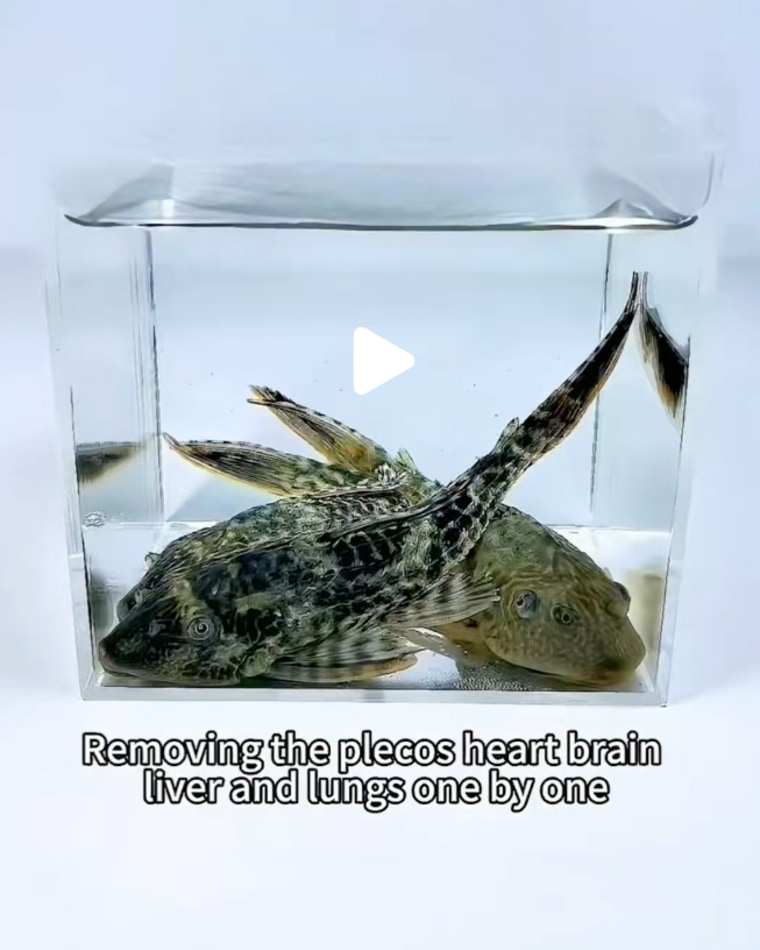
Hundreds of so-called ‘LabGerm’ videos have recently surfaced and spread across social media platforms, featuring disturbing content that has sparked significant outrage. These videos often begin with a pair of gloved hands set against a white backdrop, a narration by an AI-generated voice, and upbeat music. In these videos, fish and other small creatures undergo torturous experiments without any proper scientific conclusion presented. The content appears focused on shock value, sparking a phenomenon known as ‘rage bait.’
Originating from the Chinese social media app Douyin, these videos have made their way to platforms like TikTok, Instagram, and Facebook, accumulating millions of views. Audiences have responded with shock and anger, inadvertently amplifying their spread. This cycle of outrage feeding into more attention exemplifies the challenges of moderating objectionable online content.
An NBC News investigation uncovered at least 49 accounts on Douyin disseminating content related to the abuse of pleco fish, alongside other small animals. TikTok has been active in removing some such accounts for violating community guidelines, yet many imitation accounts persist. Reaction videos discussing the content further contribute to its dissemination.
‘Members of the public might see this content and be outraged. But we’ve even seen people creating content about the content, which is then, I think, leading people back to the content,’ explained Nicola O’Brien, the lead coordinator for the Social Media Animal Cruelty Coalition, an initiative by the Asia for Animals Coalition to stop animal cruelty online.
This issue reflects a broader trend of animal abuse content proliferating on the internet. While historically, such material was confined to secluded digital spaces, social media platforms have incentivized its widespread distribution. Despite advancements in automated moderation technology, such systems struggle to effectively filter out every inappropriate content piece.
TikTok responded to these findings by removing flagged accounts and reaffirming its commitment to community guidelines prohibiting animal abuse. Users can report content that breaches these policies through the app and a web submission form. However, issues remain unresolved, as similar content continues to circulate.
The social media company Meta did not provide a comment. Meanwhile, Douyin’s parent company, ByteDance, stated their rules against animal abuse expression or imagery. Although challenged in enforcement, efforts continue to curb this viral content.
LabGerm videos typically involve pleco fish, a species known for cleaning aquarium algae, and often described as invasive. Commenters sometimes rationalize the videos by pointing to the species’ status. The debate surrounding these videos is complicated by the perception that fish may not evoke the same empathy as familiar pets like cats or dogs.
Peter Li, an associate professor at the University of Houston focused on animal policy in China, observes that these videos have persisted. Lack of strong animal cruelty laws in China complicates enforcement and punishment for those responsible for creating such distressing content. Li has reported various accounts in an attempt to mitigate the spread.
The ongoing interest in these videos, driven partly by AI-generated content and so-called ‘experiment requests,’ highlights the challenge of addressing and stopping this type of harmful media. As digital platforms evolve, the responsibility to protect animals from such gratuitous online display grows increasingly pressing.