Marine One’s Communication Issues with Reagan National Airport
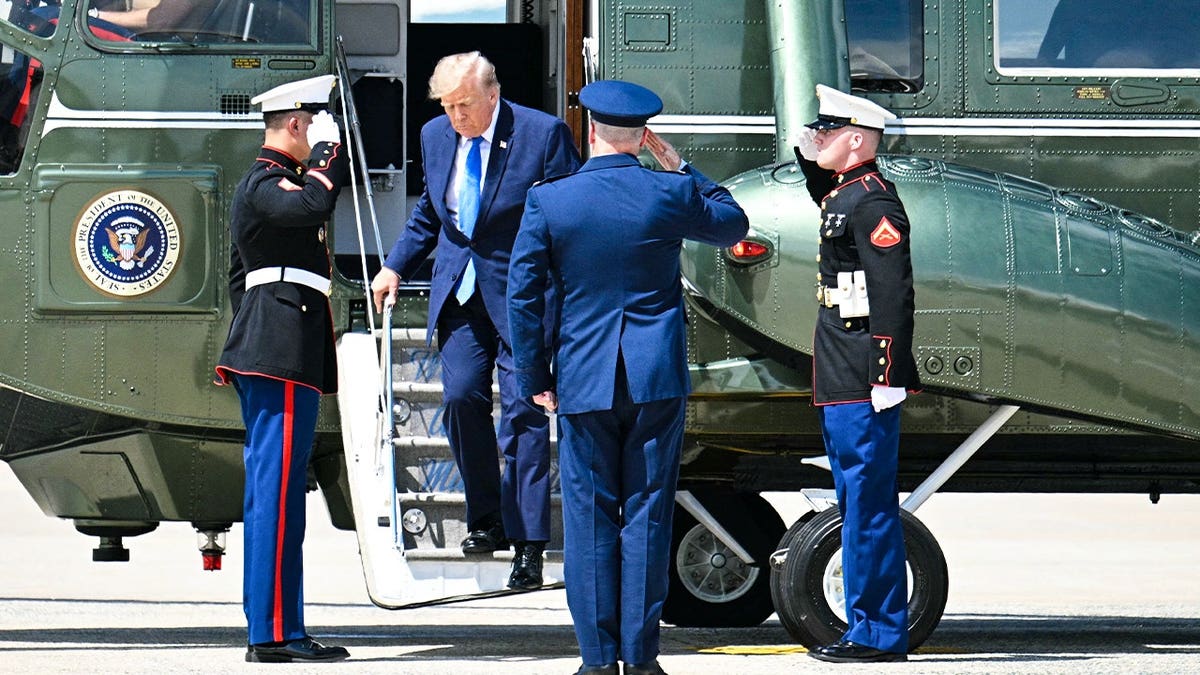
Marine One’s crew encountered communication challenges with Reagan National Airport on August 4, as detailed in a preliminary federal report. Despite multiple attempts, the crew could not notify the airport of President Donald Trump’s helicopter departure, leading to a close proximity with a commercial jet.
The National Transportation Safety Board (NTSB) released a report indicating initial communication attempts with the helicopter-control frequency were unsuccessful. Subsequent messages were either unreadable or failed to reach the tower. Attempts to relay notifications via Joint Base Anacostia-Bolling also did not succeed.
Aviation Concerns
As a result, the controllers at Reagan National were unaware of the pending presidential helicopter lift-off. Envoy Air Flight 3742, heading to Pensacola, Florida, was cleared for takeoff as Marine One departed from the Ellipse near the White House. The aircraft came within 0.82 nautical miles laterally and 700 feet vertically of each other, according to an FAA estimate. No injuries or damages occurred, and both flights proceeded safely.
The Envoy flight crew reported an alert from the traffic collision system indicating nearby traffic. Though the pilots did not visually spot Marine One, the helicopter appeared on their cockpit display.
Marine One eventually established reliable communication after gaining altitude, allowing the tower to issue advisory traffic information. The helicopter crew confirmed having the Envoy jet in sight.
Previous Communication Issues
Prior to the incident, HMX-1, the Marine Helicopter Squadron One, had expressed concerns about spotty communications with Reagan National controllers. Agreements had been made to use backup methods for notification if direct radio communication failed.
The failure on August 4 prompted FAA technicians to relocate radio equipment to improve line-of-sight coverage. After adjustments, further radio checks showed no deficiencies.
The FAA and NTSB characterized the event as a “momentary loss of separation,” with a safe vertical separation meeting FAA standards of 500 feet.
Ongoing Investigation
The NTSB continues to review surveillance data to determine the closest point between the aircraft. The White House confirmed that President Trump was never in danger, highlighting the skill of Marine One’s pilots.
According to the NTSB, the report provides factual information without conclusions or findings related to probable causes. Any safety recommendations will be announced publicly.