Medicare for All: Understanding Its Potential Impact
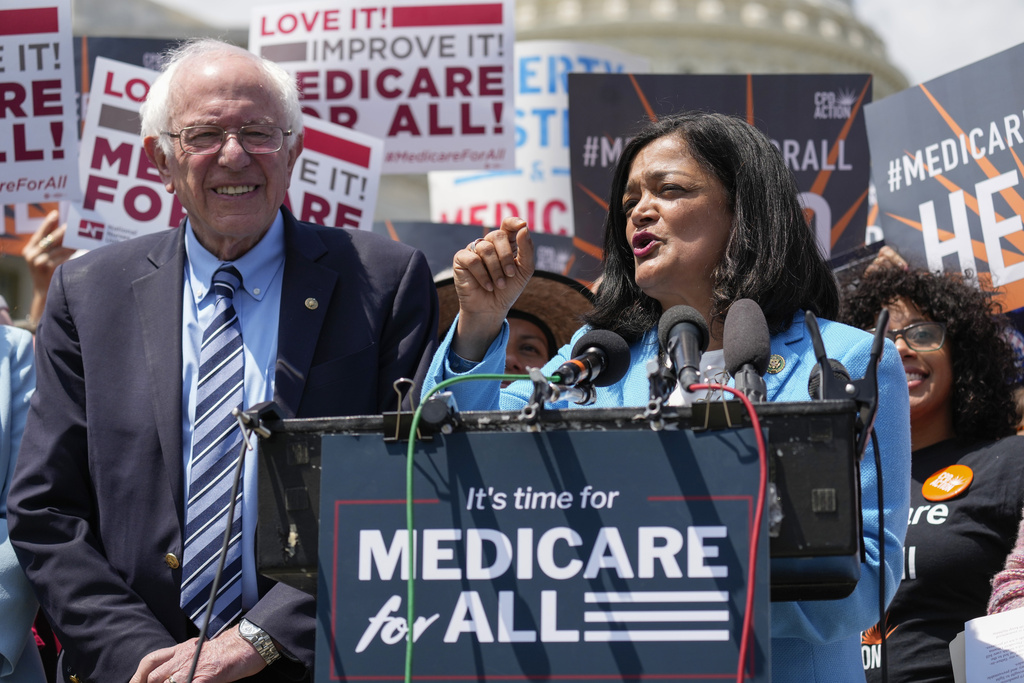
Rep. Pramila Jayapal from Washington, along with Sen. Bernie Sanders from Vermont, recently held a press conference to discuss a significant proposal called Medicare for All. This proposal aims to transform the current health insurance landscape in the United States.
Sanders has long advocated for the replacement of the nation’s current mix of private and government health insurance systems with a single government-run program. In this new system, taxpayers would face higher taxes, but no premiums, as the government would cover all medical expenses.
The Current System vs. Medicare for All
The existing healthcare model in the U.S. includes private insurance, such as employer-based and individual plans, alongside government programs like Medicare and Medicaid. Medicare, which is a mix of parts that cover different services, is particularly popular among seniors. Parts A, B, C, and D account for hospital bills, doctor visits, Medicare Advantage, and prescription drugs, respectively.
Under Medicare for All, the private sector coverage would be eliminated, including Medicare Advantage, which many seniors choose over traditional Medicare. Currently, 55% of seniors eligible for Medicare opt for Medicare Advantage.
Satisfaction Rates and Comparisons
Surveys show high satisfaction rates with the current U.S. system. According to recent data, 82% of Americans are satisfied with their healthcare coverage, and 90% of seniors on Medicare report satisfaction. However, introducing Medicare for All could remove existing choices that many find satisfactory.
The proposed system resembles the UK’s National Health Service, where a government-run model controls access to services. In the UK, only 26% express satisfaction with the NHS, compared to 90% satisfaction among U.S. Medicare users.
Potential Challenges
A government-run healthcare system may struggle with funding issues, potentially impacting service availability. The NHS has historically faced challenges with funding, often leading to long wait times for non-urgent treatment and limited access to the latest medical treatments.
Medicare’s survival currently depends on the cross-subsidization from private insurance plans. Health providers typically earn more from private plans, allowing them to offer care for Medicare participants. A government-only model could lead to financial constraints similar to the UK’s experience.
In such a politically managed healthcare environment, those with political influence might receive preferential treatment. This aspect raises concerns about equitable service availability under Medicare for All.