Miami Marine Stadium’s Future at Stake
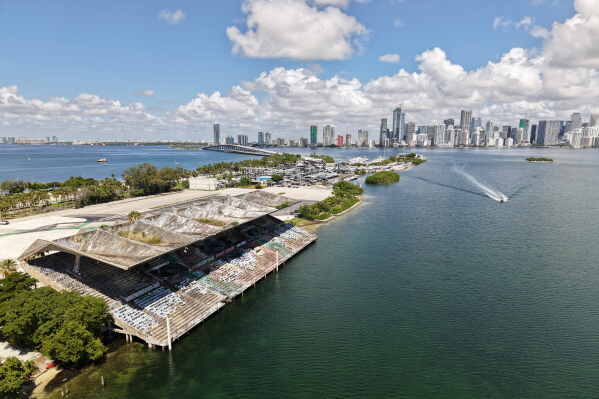
The Miami Marine Stadium, a notable Brutalist architecture piece from 1963, finds itself at a crossroads. Originally designed by Hilario Candela, a Cuban refugee, this stadium was not only the sole powerboat racing venue in the U.S., but also a cultural icon in South Florida. Over the years, it hosted numerous events, including performances by Elvis Presley and Gloria Estefan, as well as a 1972 campaign rally featuring President Richard Nixon and Sammy Davis Jr.
Despite its rich history, the stadium closed in 1992 after Hurricane Andrew caused significant damage. Since then, it has been fenced off and fallen into disrepair, despite being listed on the U.S. National Register of Historic Places. On an upcoming Tuesday, voters will decide if the city can partner with a private firm to restore the stadium located on Virginia Key.
“It encapsulated a time period in Miami that’s incredibly unique with an incredible story that touches all Miamians,” said Miami Commissioner Damian Pardo.
Candela, who designed numerous buildings across Miami, dedicated his life to efforts for the stadium’s restoration until his passing in 2022. Former Secretary of State Ken Detzner praised the structure’s architectural significance when it was added to the National Register in 2018, highlighting its unique design and multicultural influences from the 1960s.
In one of his last acts, Jimmy Buffett, who performed there in 1985, urged officials in 2023 to save what he affectionately called a “little cathedral of musical fun.” Despite challenges, efforts continue, driven by groups like Restore Miami Marine Stadium and its co-founder, Donald Worth, who began fighting for its preservation in 2008.
The potential partnership with Breakwater Hospitality Group envisions the renovated stadium as a top-tier entertainment venue, thanks to its location and city skyline views. Co-founder Emi Guerra asserts that this isn’t about development for condos, but about revitalization and preservation.
However, some, like Ernesto Cuesta of the Brickell Homeowners Association, express concerns over possible disturbances from events. They suggest more green spaces could serve the community better.
Richard Heisenbottle, the project architect, aims to respect the original design in the renovation process. Modern amenities and accessibility features will be added, but the structure’s integrity, protected by reinforced concrete, remains intact according to multiple studies.
Commissioner Pardo emphasizes that with the new management agreement, the stadium can finally reopen without burdening taxpayers. A flex park for public use will accompany the stadium’s upgrades and events will generate revenue for ongoing maintenance.
“It’s the right time to finally do this,” Pardo stated, highlighting the significance of the upcoming vote.