Midterm Elections Bring Significant Changes to Washington
Washington, D.C. experienced a shift in political power after the midterm elections, with Democrats making significant gains. Voter demands for change prompted Democrats to replace Republicans in Congress, who lost their majorities due to dissatisfaction with President Donald Trump and his administration.
Democrats claimed victory in many unexpected regions, signaling a clear rejection of the GOP’s control. The new Congress will have larger Democratic majorities in both the House and the Senate, ushering in a divided government where Congress intends to act as a coequal branch. Democrats plan to introduce a 100-day agenda to address high costs in gas, groceries, and healthcare while investigating Trump and his administration, with potential impeachment on the table.
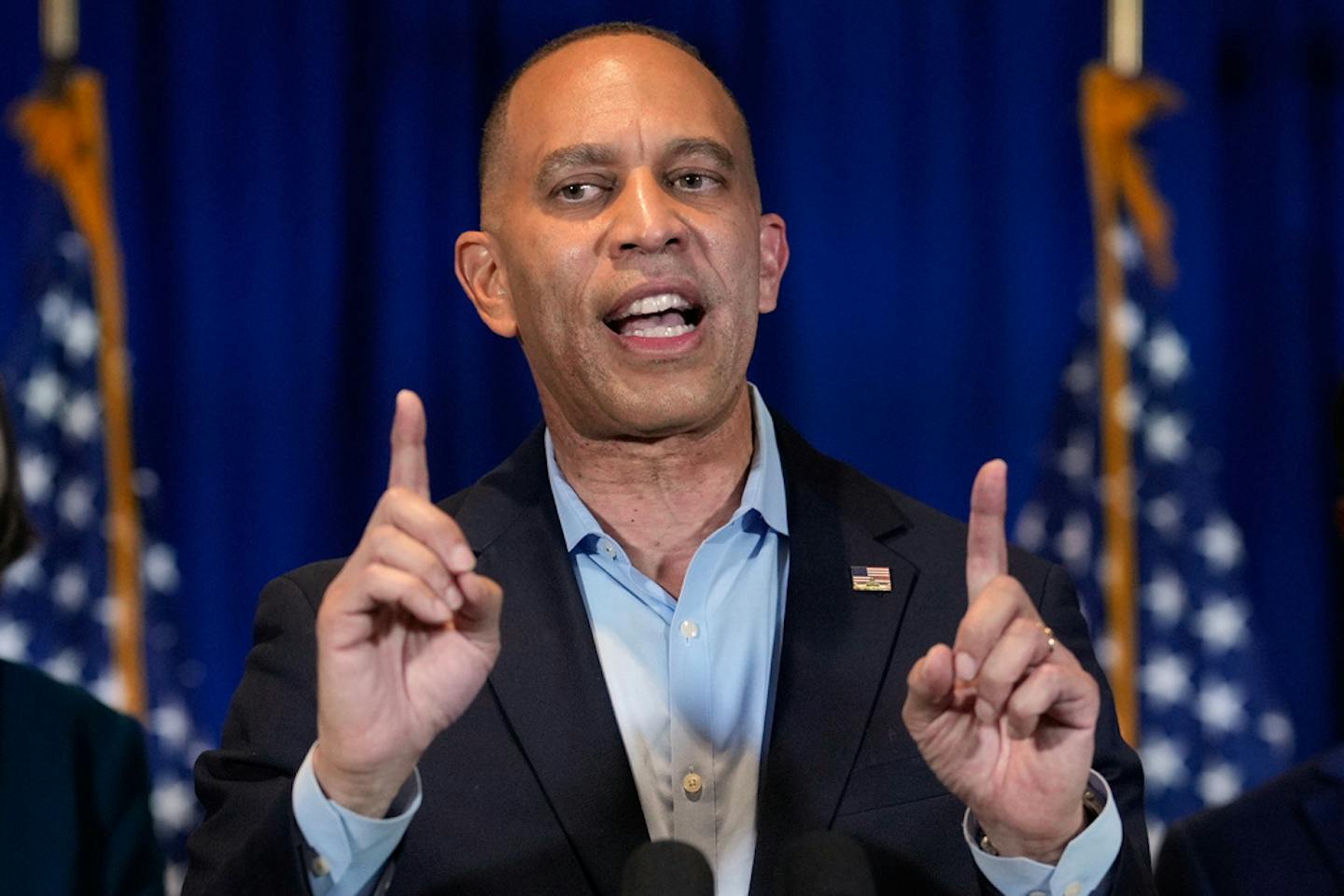
House Democratic Leader Hakeem Jeffries of New York stands to become the first Black speaker of the House if elected. He described the election outcome as a repudiation of MAGA extremism. Senate Democratic Leader Chuck Schumer noted that voters might be more intent on rejecting Trump than embracing Democrats, as shown by their victories in long-shot Senate races in South Carolina, Texas, and Kansas.
The election results suggest a fundamental redistribution of power, presenting both new opportunities and challenges. Many Republican veterans and firebrands were defeated, reflecting voter disquiet over economic conditions and democracy’s state. President Trump responded by expressing willingness to cooperate with Democrats but warned of possible gridlock if he has to veto their agendas.
Trump acknowledged that the ongoing war in Iran influenced election results, with high gas prices frustrating voters. Despite criticism over the war, he maintained support for Defense Secretary Pete Hegseth. Vice President JD Vance criticized the war’s impact on the Republicans’ performance and did not hold Trump solely responsible.
House Democrats, led by Jeffries, aim to reverse Trump’s healthcare cuts and conduct comprehensive investigations into his administration. They plan to hold those in power accountable, as emphasized by prominent Democrats like Rep. Robert Garcia of California and Sen. Ron Wyden of Oregon.
The Democratic leadership faces pressure to address high prices, the Iran war, and national concerns about democracy. As Jeffries and other leaders take the helm, they navigate a mix of newcomers and experienced politicians. The expanding Democratic majorities provide room for legislative movement.
For Republicans, the election prompted introspection and strategy reassessment. Vice President Vance attributed the losses to the war in Iran. In the impending lame-duck session, Republicans aim to achieve as much as possible before relinquishing power.
Internal leadership elections are anticipated within both parties. House Speaker Mike Johnson of Louisiana will not seek reelection as Republican leader, encouraging a competitive race for his successor. Democrats, under Jeffries, aim to solidify their leadership positions before the new Congress convenes.
Historically, the president’s party struggles to maintain power in midterm elections. The Democratic surge echoes moments from Trump’s initial term and the Obama era when Republicans and Democrats exchanged legislative control. The incoming Congress will welcome diverse new faces, marking several firsts in U.S. political history.
The Senate will, for the first time, include three Black women with Democrat Juliana Stratton from Illinois. Other firsts include Democrat Peggy Flanagan from Minnesota as the first Native American female senator, Chris Pappas of New Hampshire as the first openly gay male U.S. senator, and Abdul El-Sayed from Michigan as the first Muslim senator.