Migrants Crossing from Morocco to Ceuta: A Test for the E.U.
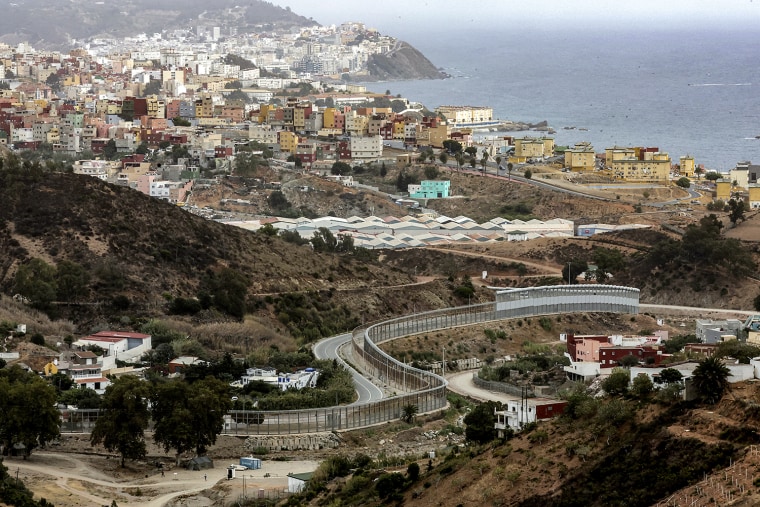
In late July 2026, tens of thousands of migrants crossed from Morocco into Ceuta, an autonomous Spanish territory in North Africa. This unexpected event overwhelmed local authorities and infrastructure, challenging the European Union’s new Pact on Migration and Asylum. The rapid nature of the crossing highlighted a critical point in Europe’s migration system. However, the speed at which authorities regained control became a separate issue, raising questions about whether the E.U. system is effective or failing.
The surge drew criticism from Washington and European cities. The State Department accused the Spanish government of enabling mass illegal migration into Europe. Denmark and Italy echoed this sentiment, co-signing a letter with 22 member states. They called for coordinated E.U. border measures and accused Spain of creating a ‘pull factor’ for undocumented migrants. Far-right parties in Europe used the crisis to criticize Spain and the E.U.’s migration policy.
Charles A. Kupchan, a European affairs expert at the CFR, noted that migration to the E.U. is generally a trickle rather than a flood. ‘This mass arrival within forty-eight hours is quite unusual,’ he said. While many migrants returned to Morocco, the incident reignited debates on European border and migration policy.
What Happened in Ceuta?
About 72,000 migrants crossed into Ceuta from Morocco in a short period, according to Spain’s interior minister. Some reports cite 50,000 to 60,000 people. Most migrants reached Ceuta by sea, either swimming or with flotation devices. Tragically, over 80 deaths occurred on both sides of the border, including drownings and stampedes.
Ceuta has a population of 84,000 and has long faced migration challenges. Ceuta, along with Melilla, are the only Spanish cities on the northern coast of Africa. Experts note the unprecedented size of this latest incident. Previously, a surge in 2021 saw 12,000 people crossing into Ceuta over two days.
What Caused the Surge?
Experts suggest multiple factors led to the border surge. A key reason was a ruling by Spain’s Supreme Court, which stated migrants arriving in Ceuta and Melilla by sea cannot be immediately returned. Instead, they must enter Spain’s regular deportation proceedings.
Migration expert Rita Fernández said misinformation spread rapidly online, leading many to attempt the journey after hearing rumors of no deportations. This misinformation was a significant driver for many, as opposed to smuggling networks.
Critics target Spain’s progressive migration policies under Prime Minister Pedro Sánchez, who launched a regularization program in April 2026. This allowed undocumented migrants to apply for residency and work permits, with over a million applications by June’s end. Spain’s more liberal policies stand in contrast to the tougher approaches of other E.U. countries.
How Did Spain Respond?
Spain deployed armed forces and police to Ceuta, using measures like water cannons and tear gas. Ceuta’s leader declared a humanitarian and security emergency. The city’s migrant reception center struggled with overcrowding.
Prime Minister Sánchez visited Ceuta, labeling the surge a violation of Spain’s sovereignty. He defended his migration policies and noted the misinformation about the court ruling as a cause. Following the influx, Spain installed a floating sea barrier to prevent similar crossings.
About 1,100 unaccompanied minors who reached Ceuta remain there. The Spanish government approved $29 million to support them, as many found shelter in warehouses or slept on the streets.
Implications for Europe’s Migration Policy
The Ceuta incident tested the E.U.’s new Pact on Migration and Asylum. Some member states imposed Schengen suspensions rather than relying on the pact’s mechanisms. Migration has become a controversial topic in Europe, especially with mass surges sparking debates.
The E.U. held an emergency meeting on Aug. 4 to address the situation. Ministers discussed enhancing shared situational awareness, early warning systems, and social media monitoring. E.U. migration chief Magnus Brunner expressed solidarity with Spain and condemned divisive uses of the migration debate.
Despite the surge, Frontex reports irregular border crossings into the E.U. dropped by 40% in the first five months of 2026 compared to 2025. Expert Kupchan views the situation as a temporary breach, with Spain’s rapid response suggesting the system is operational, not in crisis. ‘Are there challenges to address? Yes. Is the system broken? No,’ he concluded.