Milky Way’s Spiral Arms May Stretch Further Than Previously Known
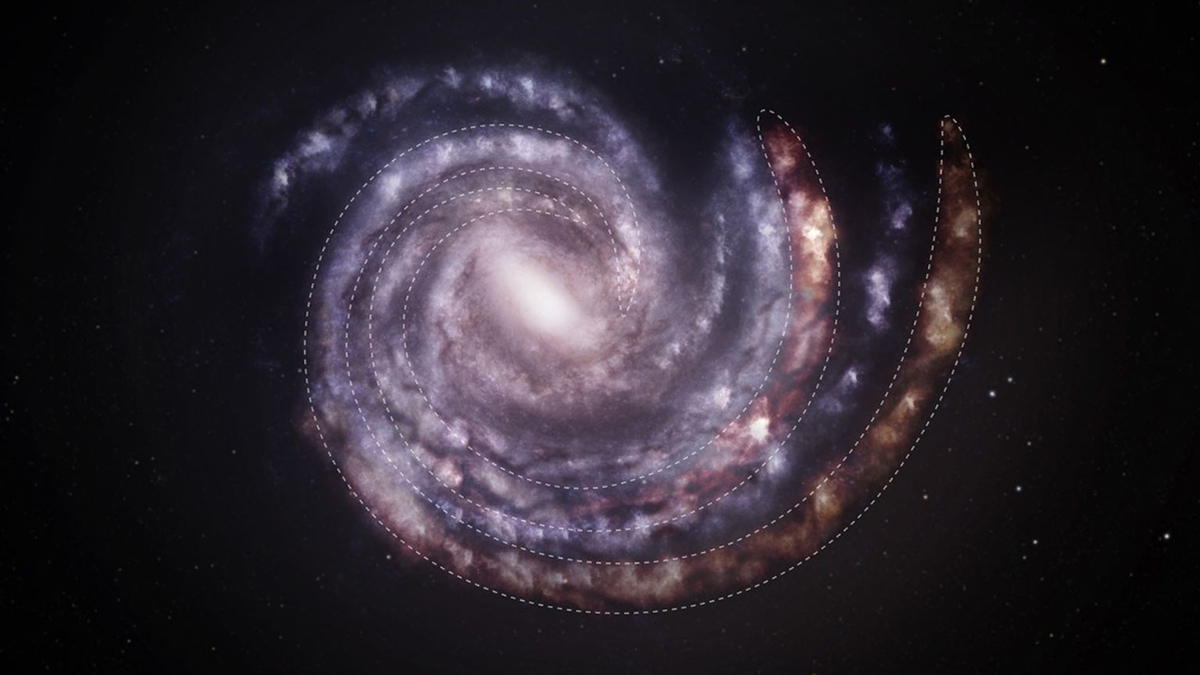
Astronomers have revealed new insights into the structure of the Milky Way galaxy, suggesting that its spiral arms extend further into space than previously thought. Leveraging data from NASA’s Chandra telescope and the European Space Agency’s XMM-Newton, researchers have made precise measurements of dust clouds within these arms.
The team utilized gamma-ray bursts from distant galaxies. As X-rays from these bursts passed through the Milky Way, they interacted with dust clouds, producing measurable rings. This technique offers a direct method, relying solely on geometry, to accurately assess the galaxy’s spiral arm distances.
Leading the study, Beatrice Vaia highlighted the advantages over traditional methods, which depend on uncertain assumptions about the Milky Way’s rotation. Data indicated that the dust cloud in the most distant arm spans approximately 3,500 light-years.
Understanding the Milky Way’s spiral arms continues to be challenging since Earth resides within one of those arms. This breakthrough in gamma-ray burst analysis provides a more comprehensive approach unhindered by our position in the galaxy.
Co-author Ilaria Fornasiero noted the significance of these refined measurements. Such data could alter estimates of the galaxy’s mass, influencing theories about the extent of the arms.
A downside to this method is the rarity of suitable gamma-ray bursts, with researchers identifying only a few favorable occurrences over the last 25 years. However, Andrea Tiengo expressed optimism about future discoveries.