Momentum Grows for National Popular Vote Compact Amid Democratic Wins
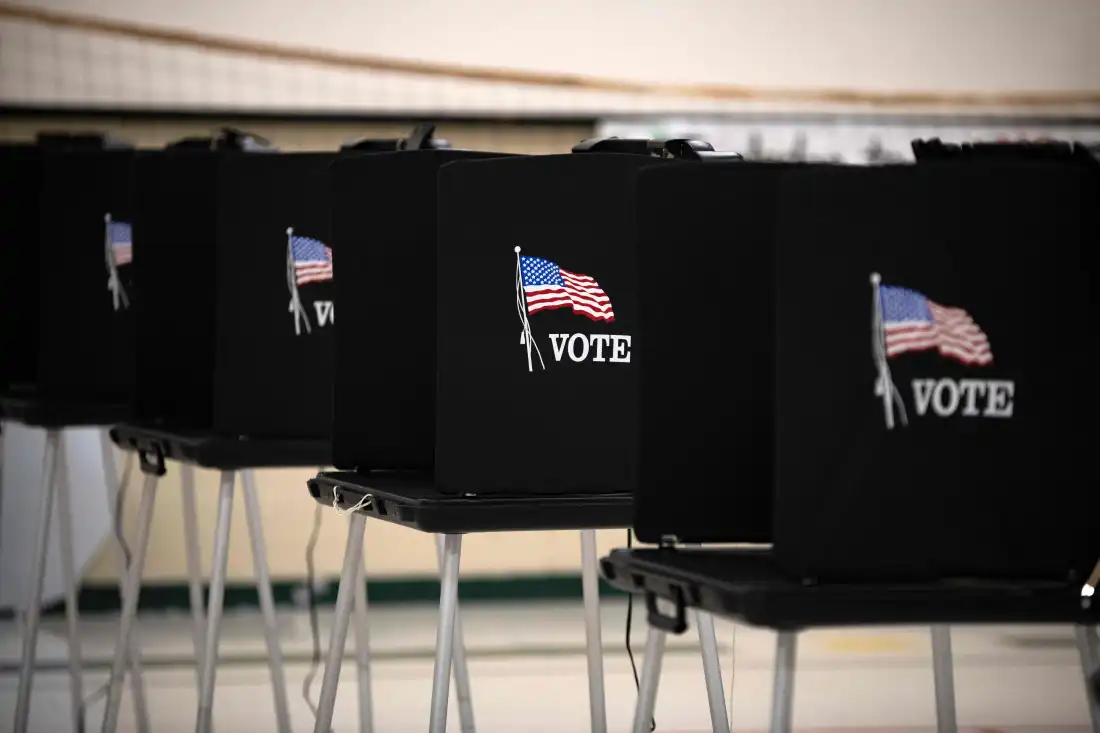
Elections held at Glass Elementary School’s polling station in Eagle Pass, Texas on November 8, 2022, could signal a pivotal moment for electoral reforms in the United States. With significant Democratic victories in the recent midterm elections, a national movement to ensure that the president is elected by the popular vote is gaining traction.
There is a potential shift on the horizon, as Democrats will soon fully control five crucial states. These states are in a position to join the National Popular Vote Interstate Compact. This agreement aims to allocate their presidential electoral votes to the candidate who wins the nationwide popular vote, as opposed to the current state-by-state basis.
Should these states join the existing 18 states led by Democrats and the District of Columbia, they would surpass the necessary 270 electoral votes needed to implement the compact. This development could bypass the Electoral College system. So far, no states led by Republicans have joined the compact, and internal division exists within the party on this matter.
Challenges and Opportunities
Despite the promise of change, numerous political, practical, and legal challenges remain for this initiative. Advocates, however, express optimism about overcoming these obstacles. Patrick Rosenstiel, a senior consultant for the National Popular Vote, cites Pew polling showing that a significant portion of voters desires a national popular vote for the presidency.
Currently, the compact has gathered 222 electoral votes. Democratic control in states like Arizona, Pennsylvania, Michigan, Nevada, and Wisconsin could bring an additional 61 votes. Commitments from governing officials in Pennsylvania and Nevada suggest potential support, yet other leaders have not publicly confirmed their positions.
One critical question is whether states traditionally seen as election battlegrounds would relinquish their influence in return for broader representation. Democrats, such as Arizona’s Governor Katie Hobbs, previously in favor, haven’t reiterated their support, highlighting potential internal hesitancies.
Legal Implications
Legal scholars identify constitutional hurdles, particularly related to the compact clause of the Constitution. This clause prohibits states from entering agreements without Congressional consent, except under certain conditions. Norman Miller, a constitutional law professor, describes how the decentralized nature of presidential elections could pose practical issues if the compact is enforced.
States independently manage who votes and how votes are counted. Transitioning to a nationalized system could introduce discord rather than unity,
Miller warns.
John Koza, chairman of National Popular Vote, argues that current laws would suffice without centralized control. Yet, Miller highlights the deeper question of whether the reform needs a constitutional amendment, emphasizing the complexity of altering the U.S.’s electoral process.
Consideration for Constitutional Amendments
Efforts to amend the Constitution, such as in 1969 with the failed attempt to eradicate the Electoral College, underscore the challenges of this path. Rosenstiel believes innovative solutions are necessary, as broad consensus exists on the issue. He advocates for changes that would make presidential candidates appeal to the entire nation rather than specific regions, thus enhancing voter significance.
Ultimately, every American citizen should feel valued when voting,
says Rosenstiel, indicating the desire for a voting system that reflects this principle.