Muckleshoot Tribe’s Enduring Connection to Salmon
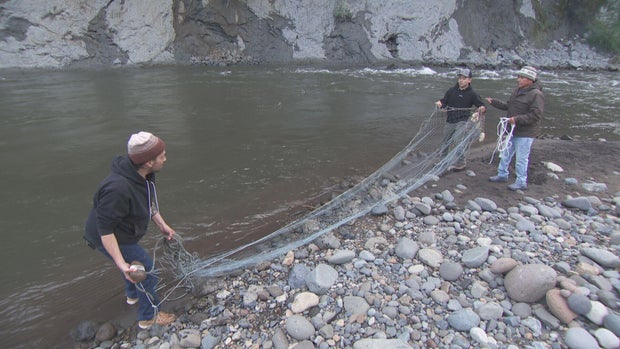
The Muckleshoot tribe sees salmon as more than a meal. For them, safeguarding the fish means preserving a deep-rooted history of culture and tradition. Descended from the Duwamish and Upper Puyallup peoples, who inhabited the Seattle area for millennia, the Muckleshoot are known as the Salmon People.
“We have a connection with the fish and the water, and you can feel that in your body when you are done fishing or swimming,” shared 21-year-old Mike Jerry Jr., a member of the tribe. Standing on a riverbank in Western Washington, Michael Jerry Sr. alongside his brother Cory Jerry demonstrated traditional net-throwing techniques to Mike Jerry Jr. to catch spring salmon. This method focuses on capturing just one salmon each time.
“It’s all a process. The processing, the preservation, the drying, and smoking are crucial because that’s how I grew up,”
said Cory Jerry, emphasizing the importance of passing on these traditions.
The spiritual bond between the tribe and salmon is profound. Muckleshoot oral historian Warren King George described salmon as relatives, visiting yearly, highlighting the need to nurture this relationship. The tale of Salmon Boy exemplifies this bond, symbolizing a promise to care for the waters and watershed supporting the fish, with salmon returning yearly to sustain the people.
This promise is honored with a yearly ceremony celebrating the first salmon of the season. King George explained, “We gather the people here, and we have a feast. We thank that relative for coming home, returning home to feed the people.”
However, gaining access to fish hasn’t been straightforward for the Pacific Northwest tribes. In 1892, known as Big John, a tribal member received a citation for fishing outside the reservation, marking the beginning of struggles over fishing rights. The “Fish Wars” in the 1960s saw tribes mobilize to regain these rights. The 1974 Boldt Decision granted tribes half of the harvestable salmon.
Phil Hamilton from the Muckleshoot Fish Commission noted that today, the tribe’s fishers represent 2% of the total wild salmon catch, impacting global markets. Environmental factors now pose the biggest threat to salmon populations. The tribe has long worked to protect and restore habitats.
“We’re still losing 5% of the habitat yearly,”
stated Hamilton, stressing that keeping the water clean is vital for the salmon.
Efforts over the past decades have turned around salmon population declines from the 1990s, according to Hamilton. At the turn of the century, there were only a few dozen fishing boats, but today’s stronger population supports 500 fishers and over 200 boats.
Hamilton reflects on the reward of seeing the tribe’s success: “When I have that opportunity to watch our fishers and see the joy on their faces, for me, that’s the most rewarding aspect of the job.”