NASA Launches Nancy Grace Roman Space Telescope for Major Cosmic Exploration
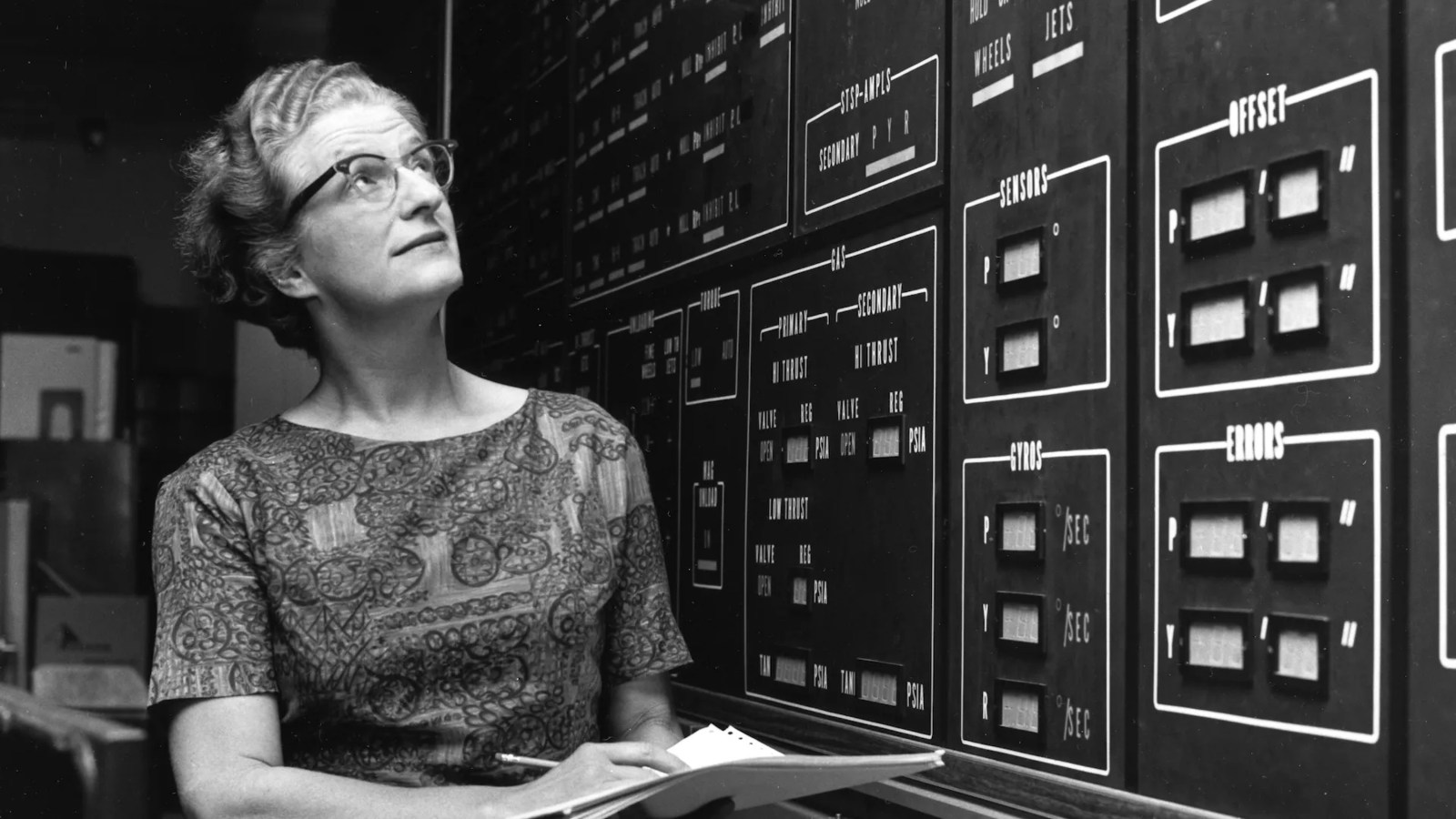
The Nancy Grace Roman Space Telescope, a significant project by NASA, launched on Sunday aboard a SpaceX Falcon Heavy rocket. This mission, with a budget of $4.3 billion, aims to explore some of the universe’s greatest mysteries. The telescope takes its name from Nancy Grace Roman, a pioneering astronomer fondly referred to as the ‘Mother of Hubble’ for her pivotal role in advancing NASA’s space astronomy initiatives.
This mission is one of NASA’s most critical scientific undertakings in recent years. Officials highlight the telescope’s impressive wide field of view, enabling astronomers to map extensive portions of the universe more rapidly than with previous observatories. This work will complement the achievements of the Hubble and James Webb Space Telescopes.
Nicky Fox, director of NASA’s science mission, explained that the telescope is expected to uncover ‘thousands of supernovae, tens of thousands of planets, billions of galaxies, and tens of billions of stars.’ Such discoveries could transform our understanding of galaxy formation, planetary development, and the universe’s evolution over billions of years.
Who Was Nancy Grace Roman?
Nancy Grace Roman was a groundbreaking figure in U.S. space science, serving as NASA’s first chief astronomer. Born in 1925, she pursued a career in astronomy despite the considerable barriers facing women in the field at the time.
After joining NASA during its formative years, Roman played a crucial role in creating the agency’s astronomy program. She became a staunch advocate for deploying powerful telescopes above Earth’s atmosphere to minimize issues caused by weather and atmospheric distortion. Her work laid the foundation for the Hubble Space Telescope, earning her the nickname ‘Mother of Hubble.’ In addition to her scientific achievements, Roman spent her career advancing opportunities for women in astronomy. She passed away in 2018 at the age of 93.
The New Telescope’s Objectives
The Nancy Grace Roman Space Telescope is engineered to execute wide-field surveys of the universe on an unprecedented scale from space. With a field of view over 100 times larger than the Hubble Space Telescope, it is designed to image large sky regions swiftly while maintaining comparable sensitivity.
The telescope will travel for over three months to reach a site near the second Lagrange point, a stable gravitational area about 1 million miles from Earth. This is the same region where the James Webb Space Telescope is located.
Throughout its five-year mission, Roman is tasked with searching for exoplanets, mapping billions of galaxies, studying black holes, and examining the properties of dark energy and dark matter. By covering vast sky regions, scientists hope the telescope will uncover objects and events never previously observed.
For more details, contact Newsweek editors Amanda Castro and Anthony Murray.