NATO’s Arctic Presence: Defensive Stance Amid Rising Tensions
A senior NATO military official has stated that the alliance does not pose any threat to Russia. This statement came after Russia’s Foreign Minister, Sergey Lavrov, accused NATO of militarizing the Arctic, a region that has largely avoided becoming a focal point of international conflict.
NATO’s Defense Position
Colonel Martin O’Donnell, spokesperson for NATO’s Supreme Headquarters Allied Powers Europe, emphasized that NATO is a defensive organization. He reassured that NATO’s operations present no danger to any country. O’Donnell’s remarks were in response to Lavrov’s claims that the alliance is intensifying military efforts in the Arctic, escalating international tensions.
With the Arctic increasingly garnering attention due to climate change, new navigational routes have opened for military and civilian activities. Among the eight Arctic states, Russia stands apart as the only non-NATO member. It is also the most influential state in the region, known for its adaptability to the rigorous Arctic conditions.
Russia’s Arctic Strategy
Moscow has revived several Soviet-era military bases, formed an Arctic-specialized command, and expanded their facilities. Russia maintains a critical nuclear submarine fleet in the Arctic. In light of Russia’s efforts, NATO has steadily increased its presence in the region, following heightened attention from China and an interest in the Arctic from former U.S. President Donald Trump.
In a statement released by Russia’s foreign ministry, Lavrov expressed concerns over military activities near Russia’s northern borders. He underscored the ongoing preparations underway by NATO around this area.
NATO’s Initiatives in the Arctic
NATO initiated ‘Arctic Sentry’ to enhance its visibility and operation frequency in the Arctic. This initiative includes intelligence-gathering flights, maritime exercises, and extreme climate training. NATO’s headquarters in Norfolk, Virginia, oversees these operations and those across the Atlantic and northern Europe.
Previously, NATO adopted similar initiatives in the Baltic region and along its eastern boundaries. Recently, hundreds of troops from NATO countries have been deployed in Finland and Sweden to fortify NATO’s northeastern front nearby Russian territory. The alliance also established a monitoring center in Bodø, Norway, to manage air operations in the Arctic and the northern Atlantic.
Regular Arctic Drills
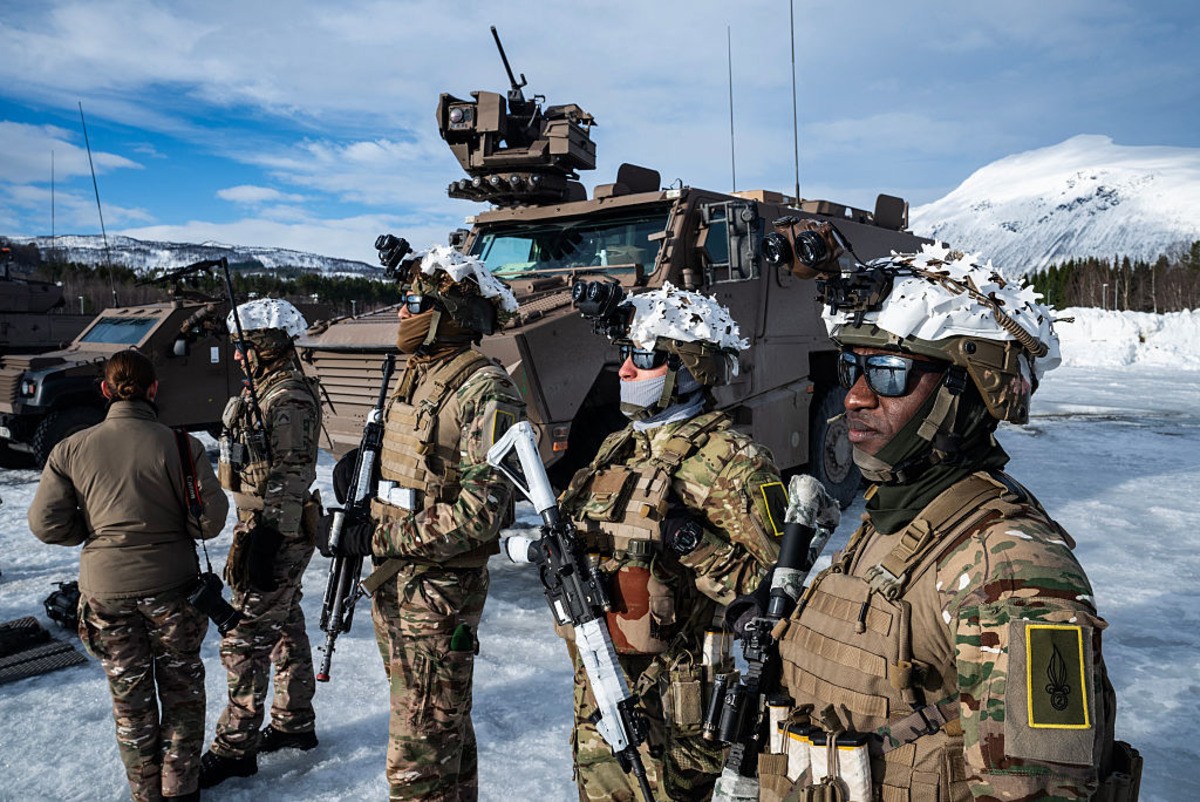
NATO frequently conducts military exercises in the Arctic, paralleling Russia’s efforts. These exercises help member troops perform defense missions in cold climates, like capturing shorelines and traversing icy expanses. The number of these Arctic drills by NATO has grown in recent years.
Recently, U.S.-led exercises called Northern Viking took place in Iceland, designed to practice defending the country and the strategically vital GIUK Gap. This gap serves as the primary route for Russian submarines moving from the Arctic to the northern Atlantic.
Lieutenant Commander Tim Pietrack from NATO’s Maritime Command reaffirmed that NATO’s activities in the region are purely defensive and appropriate to the current security climate. He assured that NATO forces would sustain their exercises, training, and presence in the Arctic.
This year saw significant drills with tens of thousands of troops, including 4,000 U.S. Marines, in cold-weather exercises across Norway and Finland. Danish-led exercises about Greenland also fell under the Arctic Sentry framework.