New York and California Push Laws to Restrict 3D-Printed Guns
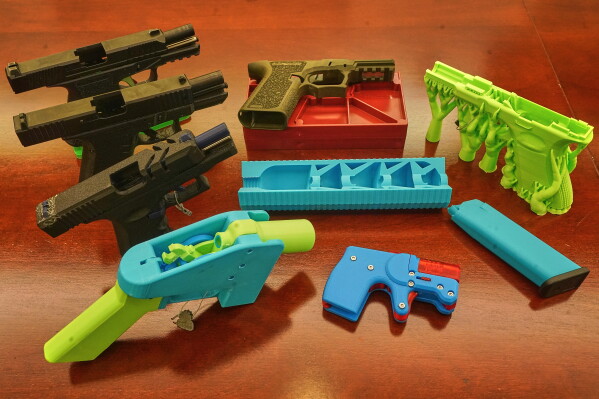
A pioneering law in New York could soon mandate that 3D printers sold for home and business use are equipped with technology to block the creation of guns. California is considering a similar measure as both states aim to prevent the production of untraceable ‘ghost guns’ used in criminal activities. However, this initiative raises questions about the technology’s effectiveness and potential impacts on privacy and constitutional rights.
Many U.S. states already restrict or ban so-called build-it-yourself firearms that lack serial numbers, thus bypassing background checks. This new effort is distinct because it targets the equipment for creating these firearms, not the individual users. Technology standards set by New York and California may influence the 3D printing industry and could inspire other Democratic-led states to strengthen gun regulations.
The Growing Use of 3D Printers in Crime
The popularity of 3D printers has surged, with their global presence increasing from about 30,000 units in 2012 to over 3 million today, as noted by Bill Decker of the Association of 3D Printing. The industry’s value has also multiplied to approximately $26 billion annually. While high-end printers are expensive, some models are available for a few hundred dollars. These machines can create a wide range of items, including toys, prosthetics, and firearm components, all from digital designs available online.
Guns made with 3D printers, known as ‘ghost guns,’ are difficult to trace and increasingly feature in criminal investigations. A Department of Justice report highlighted a rise in privately made guns recovered from crime scenes, with numbers growing from 1,600 in 2017 to nearly 27,500 in 2023. Notably, a 3D-printed gun was reportedly used in a 2024 New York murder case.
How New Technology May Block Gun Production
The recently passed New York law and proposed California legislation aim to establish standards for firearm detection algorithms. This technology could analyze 3D printing designs and reject those that resemble firearm components. Implementation isn’t expected before 2029, giving experts time to assess feasibility.
According to Solomon Diamond, an engineering professor, the concept resembles apps that identify plants from photos. For 3D printers, algorithms could analyze geometries to prevent the creation of gun parts. Julian Chultarsky from Physna supports this approach, stating the technology is ready for such applications.
Challenges with 3D Printer Restrictions
Despite support, there are doubts about effectiveness. Bill Decker believes criminals will find ways around restrictions. There’s concern that overzealous algorithms might inadvertently block harmless items, as Rory Mir of the Electronic Frontier Foundation points out. The potential for misuse of artistic designs and intellectual property is also a worry.
The question remains whether the right to bear arms includes homemade firearms. Advocates argue 3D printers offer a loophole for illegal acquisitions. Some states and Everytown for Gun Safety support restrictions to enforce current laws. However, opponents like the NRA view such measures as infringing on legal traditions, emphasizing that homemade firearms have historical roots in the U.S.