Next Phase of Iran Peace Talks Begins Amid Tensions
The next stage of negotiations to end the conflict in Iran is set to commence on Sunday. This comes amid ongoing hostilities in Lebanon and uncertainty around the Strait of Hormuz.
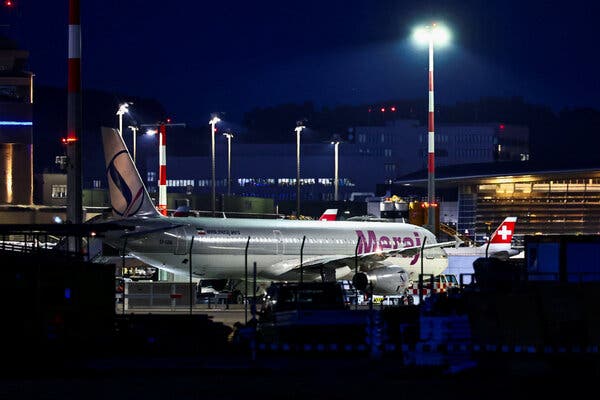
On Saturday, an Iranian negotiating team arrived at Zurich International Airport in Switzerland. The team included Gen. Mohammad Bagher Ghalibaf, a prominent figure in previous discussions and the speaker of Iran’s parliament, alongside Abbas Araghchi, Iran’s foreign minister.
Vice President JD Vance reached Switzerland early Sunday, ahead of talks aimed at elaborating on the initial deal to conclude the war in Iran. Vance stated that he plans to participate in the peace discussions for only a short time. He leads a team featuring President Trump’s special envoys, Steve Witkoff and Jared Kushner, both already present in Switzerland.
Pakistan, acting as a mediator, announced that “technical talks” are scheduled to start on Sunday, involving Pakistani and Qatari intermediaries. Pakistan’s delegation includes Prime Minister Shehbaz Sharif and Field Marshal Syed Asim Munir, the army chief.
These discussions are happening against the backdrop of the conflict between Israel and Hezbollah in Lebanon, which is backed by Iran. This situation poses a challenge to broader peace efforts and the continuation of shipping in the Strait of Hormuz. Although the U.S.-Iranian talks were supposed to begin on Friday, they were delayed due to the clashes in Lebanon.
Tehran condemned Israeli airstrikes as a breach of agreement. On Saturday, Iran’s military claimed to have closed the Strait of Hormuz in retaliation. However, the U.S. military has maintained that marine traffic remains unaffected and stated Iran does not control the strait.
Several complex issues might be addressed during negotiations. President Trump’s temporary agreement with Iran left out key points, such as the future of Iran’s nuclear activities, its missile program, and the status regarding the free passage in the Strait of Hormuz.
Esmail Baghaei, Iran’s foreign ministry spokesman, expressed on state media that the visit aims to ensure the “implementation of the other side’s commitments.” He noted that talks on a final deal will only start when Iran believes the U.S. is honoring the existing agreement.
Tehran accused the U.S. of failing to curb hostilities between Israel and Hezbollah, who continued to exchange fire even after a ceasefire was declared in Lebanon on Friday. The U.S.-Iranian deal calls for a truce on all fronts, including Lebanon, yet neither Israel nor Hezbollah have signed the agreement.
Vice President Vance mentioned before his departure that he hoped to “make progress on the nuclear issue” and the “Lebanon ceasefire issue,” adding that he expected Iran would have its own concerns to present.
Reporting was contributed by Sanam Mahoozi, Zolan Kanno-Youngs, and Yan Zhuang.