NOAA Reports Smaller-Than-Expected ‘Dead Zone’ in Gulf of Mexico
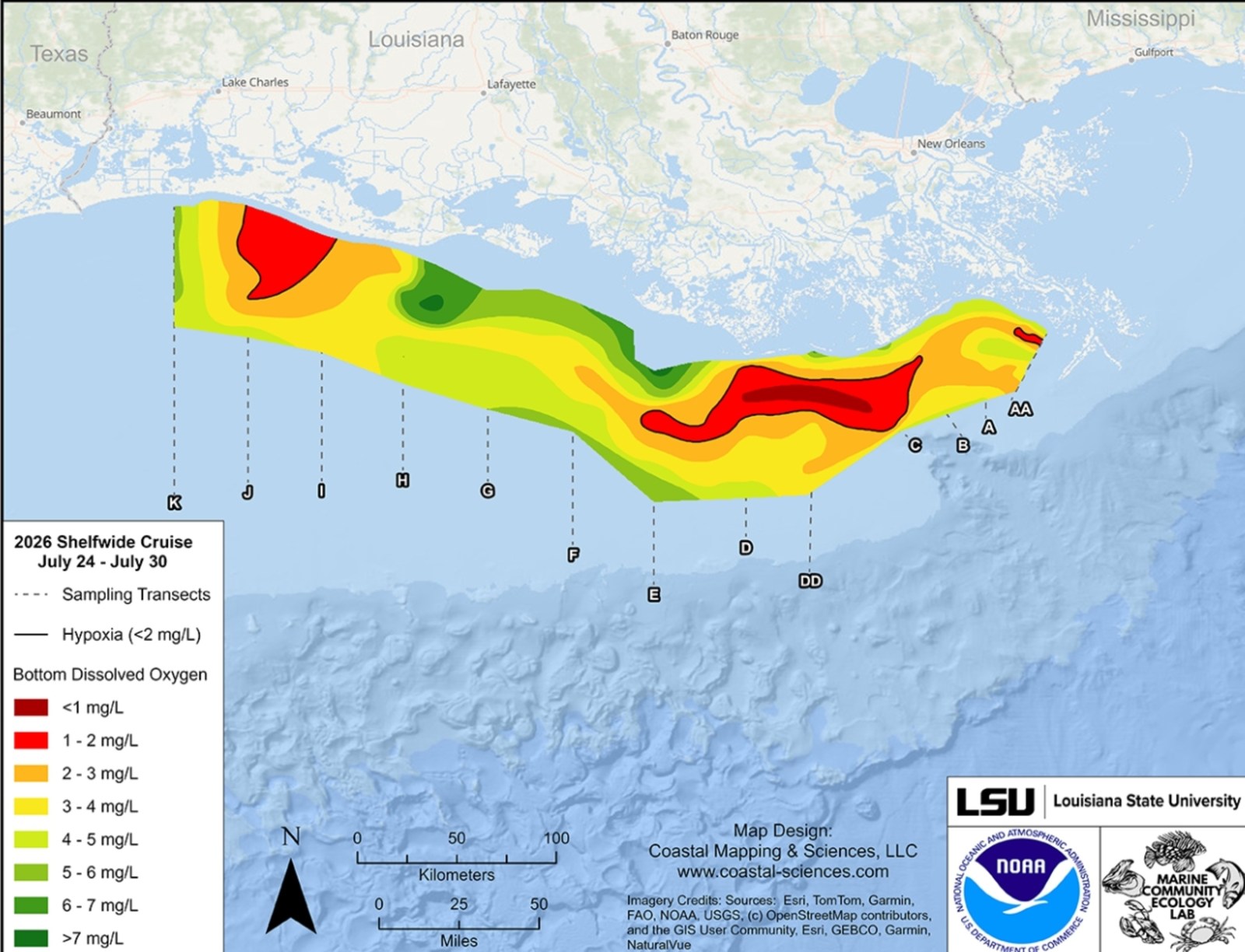
Hypoxic Zone Formation in the Gulf of Mexico
The National Oceanic and Atmospheric Administration (NOAA) recently released data showing a low-oxygen “dead zone” in the Gulf of Mexico adjacent to the U.S. coast. This year’s zone measures 1,332 square miles, comparable to the size of Rhode Island, marking the second-smallest area recorded in over four decades. This smaller size emerged after a tropical storm temporarily mixed the waters.
Understanding Hypoxic Zones
Hypoxic zones occur when nutrient-rich waters from rivers cause algal blooms. These blooms eventually decompose, with bacteria consuming available oxygen, creating areas unsupportive to marine life. NOAA maps indicate that these zones stretch across parts of the northern Gulf near Louisiana.
Causes of Hypoxia
Excess nutrients, especially nitrogen and phosphorus from agricultural runoff, wastewater, and stormwater, amplify hypoxic zones. These inputs trigger algal blooms, leading to low oxygen levels upon decomposition. Scientists have tracked this for its ecological and economic consequences, which include changes in species migration and habitat reduction, affecting fisheries and tourism.
Most Vulnerable Marine Life
Species residing near the seafloor face the greatest risk. Bottom-dwelling organisms lack the mobility to escape, leading to stress and habitat challenges. While fish and shrimp can sometimes relocate, their movement can lead to crowded ecosystems and disrupted behaviors. Marine mammals like whales and dolphins are less directly affected but experience changes in prey availability.
Smaller Zone Due to Storm
This year’s smaller dead zone is not indicative of diminished hypoxic conditions overall. Tropical Storm Bertha stirred the waters, mixing oxygen-rich surface water downward, temporarily shrinking the area. NOAA had predicted a 7,027 square mile zone originally, illustrating the role of weather in influencing these regions.
Other Hypoxic Areas
Besides the Gulf, other U.S. waterways like Chesapeake Bay and Long Island Sound witness similar phenomena. Region-specific conditions often lead to recurring dead zones. These areas challenge marine life, restricting their ability to thrive in their habitats.
Goals Moving Forward
Efforts are underway to reduce the Gulf’s dead zone to 1,900 square miles by 2035. Strategies focus on decreasing nutrient runoff throughout the Mississippi River watershed. While recent measurements suggest progress, scientists highlight the influence of storms like Bertha and emphasize continuing environmental mitigation efforts.