Opening Statements in Duane Davis Trial for Tupac Shakur’s Murder
The highly anticipated murder trial of Duane “Keffe D” Davis commenced on Monday. Prosecutors presented a comprehensive account of what they assert led to the 1996 shooting of rap icon Tupac Shakur. They claim Davis coordinated a retaliatory attack after Shakur and his entourage assaulted Davis’ nephew, Orlando Anderson, hours before on the Las Vegas Strip.
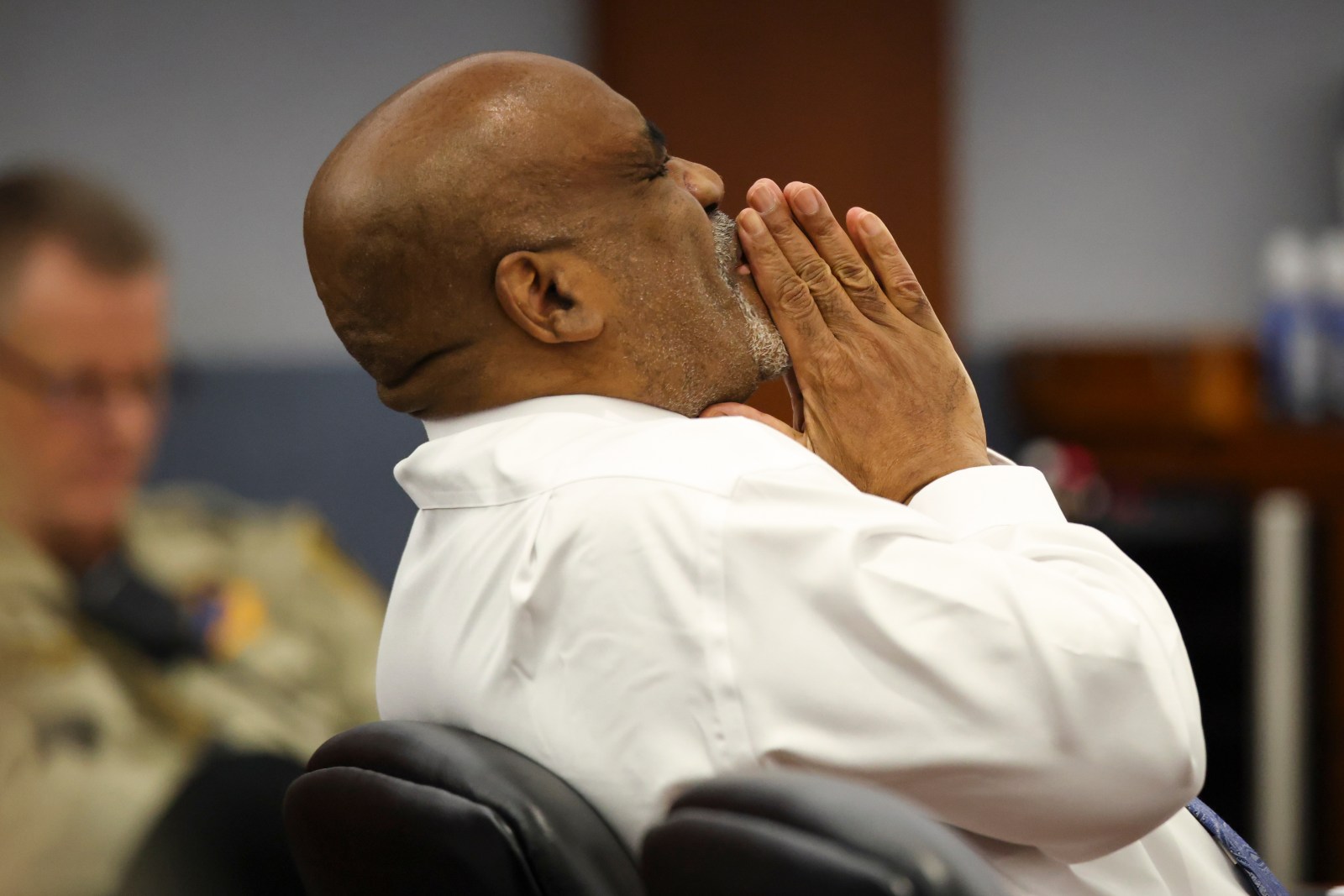
Davis entered the courtroom dressed in a blue suit and tie, appearing calm and unrestrained. He remained expressionless as prosecutors detailed a series of events stemming from gang rivalry to one of America’s most infamous unsolved murders. Although acknowledging Davis did not pull the trigger, prosecutors argued he was pivotal in planning the retaliation and providing the weapon used.
Davis’ attorney, Michael Sanft, countered in the opening statement, questioning the allegations’ credibility. He stated, “There’s no facts.”
The Alleged Retaliation for a Nephew’s Assault
Prosecutor Marc Wall explained that events leading to Shakur’s death began well before the fatal shooting at a Las Vegas intersection. Tensions were escalating between the Mob Piru gang, linked to Death Row Records, and the South Side Compton Crips led by Davis.
An earlier confrontation at California’s Lakewood Mall involved Mob Piru member Trevon Lane. The incident, in which Lane reportedly had his chain snatched by South Side Crip members, intensified the conflict. The situation came to a head on September 7, 1996, when Shakur and his entourage attacked Anderson in the MGM Grand casino after a Mike Tyson fight. The assault, captured on surveillance video, is widely seen as a crucial incident in the case.
There was no question that a response was required,
prosecutors stated, describing Davis’ response to his nephew’s attack. Wall stressed that Shakur, though involved with Mob Piru members, was fundamentally “an artist” and not a gangster. Nevertheless, his association with gang members placed him at the core of that night’s gang dispute. Prosecutors asserted Davis, angered by Anderson’s assault, deemed retaliation necessary.
Statements to Investigators
A significant component of the state’s case involves statements made by Davis years after Shakur’s murder, while facing unrelated federal drug charges. Prosecutors explained that a federal task force, probing Davis after an undercover narcotics investigation led to charges, approached him for information about a principal target in their inquiry. Davis allegedly denied knowing the individual but offered details about Shakur’s murder instead.
Prosecutors presented jurors with Davis’ recorded narrative of the shooting, gathered during a private meeting with federal investigators. This conversation, reportedly recorded secretly, became public in 2009. In it, Davis detailed his role in the circumstances preceding the shooting and identified others involved that night.
The state emphasized that Davis exceeded recounting events by traveling to New York, seeking Eric “Zip” Martin’s self-incrimination. Prosecutors argued this illustrated Davis’ extensive cooperation with federal officials. They maintain Davis’ statements, providing a thorough murder account, will be pivotal evidence in the trial.
Davis’ Alleged Commentary on the Shooting
Prosecutors shared one striking moment described in opening statements, where Davis allegedly explained why he didn’t fire the shots. Prosecutors claimed Davis explained to investigators he sat in the front passenger seat while Brown drove the Cadillac. When positioned beside Shakur and Knight’s vehicle, Davis reportedly handed the gun to the back seat to DeAndre “Dre” Smith and Anderson.
Davis supposedly told investigators, had Shakur’s car been on his side of the Cadillac, he would have fired himself. Instead, prosecutors explained, Anderson, seated on the shooting side, fired into Shakur’s car. The state argued this commentary demonstrated Davis’ involvement and intent, citing the group was “armed and ready” for retaliation.
Prosecutors proposed the shooting stemmed from gang tensions and personal vengeance, while defense attorneys plan to dispute both Davis’ statement credibility and the prosecution’s event interpretation.
Defense Argues Insufficient Evidence
Davis’ attorney countered, asserting the prosecution’s case lacks independent, verifiable evidence, primarily relying on decades-old statements. He insisted to jurors there are “no facts” linking Davis to the murder beyond ancient claims.
The defense acknowledged several undisputed details: Shakur was shot multiple times on September 7, 1996, around 11:17 p.m., and .40-caliber shell casings were collected at the scene. Nonetheless, the defense argued that beyond these facts, prosecutors cannot independently verify key theory components.
Sanft emphasized a flawed investigation, highlighting cold early leads, uncooperative witnesses, fading memories, and strained inter-agency relations. The defense cited an incident where investigators initially matched a firearm to the case evidence, only to later discover it wasn’t the murder weapon.
A critical defense argument theme involves Davis’ 2008 statements to a federal task force lacking adequate corroboration. Sanft argued that although agencies like the FBI, LAPD, and federal prosecutors were aware of Davis’ claims, charges were never filed then. He criticized investigators for not interviewing witnesses capable of corroborating or refuting Davis’ account, failing to develop independent evidence supporting those statements.
The defense criticized former Las Vegas Metropolitan Police detective Jason Johansson for reigniting the investigation. Sanft claimed Johansson concentrated on “closing” rather than solving the case, relying excessively on Davis’ accounts and a subsequent memoir. The attorney accused him of insufficiently investigating alternative theories and verifying memoir information, producing limited documentation before Davis’ charges.
Ultimately, the defense cautioned jurors prosecutors would encourage conviction largely based on unquestioned witness statements with credibility issues. Sanft argued, “You have to corroborate everything I say in order for it to be true,” insisting the state cannot prove beyond a reasonable doubt Davis committed first-degree murder or orchestrated Shakur’s murder.
Next Steps in the Tupac Shakur Trial
With opening statements finished, jurors will hear testimonies from witnesses who prosecutors believe can confirm the shooting’s lead-up events and Davis’ alleged plot role. The state won’t claim Davis was the shooter but will persuade jurors he organized the attack and provided the murder weapon, holding him criminally responsible under Nevada law. The trial is projected to span several weeks. Davis, 63, maintains his not guilty plea, with a conviction risking a life sentence.