Political Turbulence in Germany: CDU Faces Election Defeat
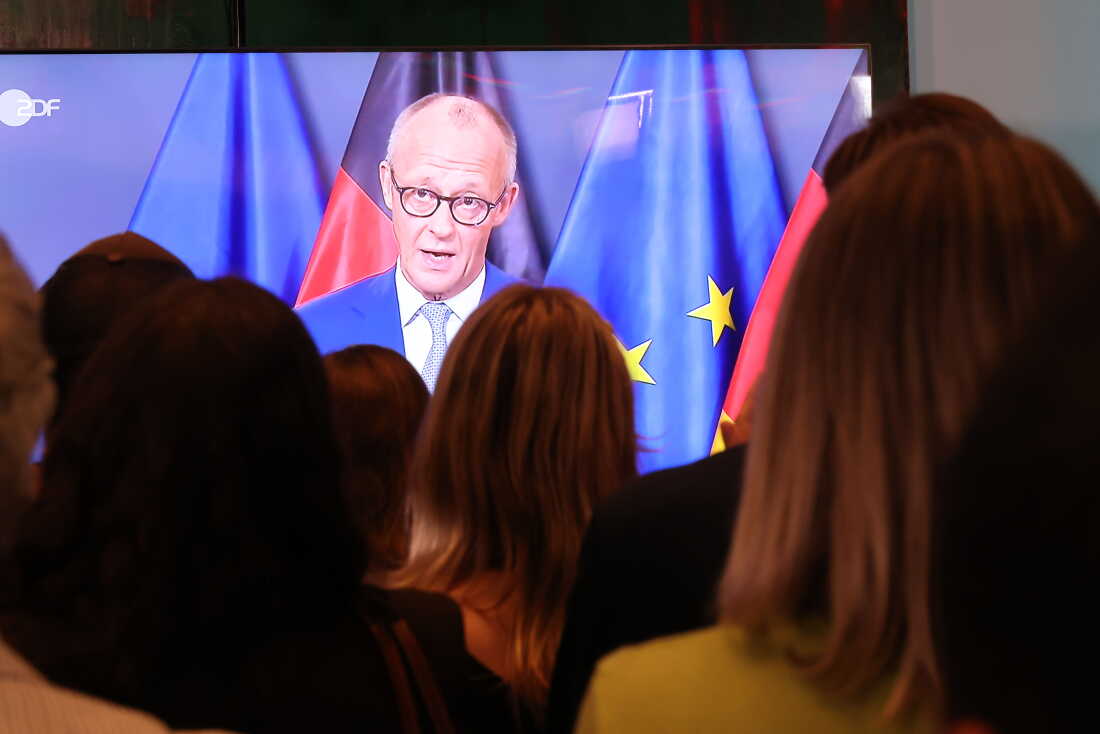
Supporters of the Christian Democratic Union (CDU) gathered at the party’s headquarters in Berlin as election results rolled in from Mecklenburg-Western Pomerania and the city of Berlin. German Chancellor Friedrich Merz appeared on a screen, reacting to the exit polls indicating a significant setback for the CDU. These polls marked the party’s worst performance since World War II.
State elections were held for parliamentary seats that determine the government and governor in both regions. The far-right Alternative for Germany (AfD) made significant strides, winning 38.2% in the rural northeastern state and 16.3% in Berlin. In contrast, in Berlin, the far-left Die Linke emerged as the frontrunner with 25.7% of the votes, leaving the CDU trailing by seven percentage points.
In Mecklenburg-Western Pomerania, the CDU secured only 4.9% of the vote, failing to meet the threshold required to enter parliament. Despite this blow, Merz dismissed rumors of his resignation, stressing his intention to continue with his agenda despite losses in Saxony-Anhalt two weeks earlier. The result has started casting doubt on Merz’s leadership, especially given the custom for federal chancellors to refrain from immediate comments on regional elections.
Merz acknowledged the results as a “disaster” for the political center. He reiterated his commitment to tax and welfare reforms, portraying them as antidotes against authoritarianism. He emphasized that realizing these reforms demands determination, patience, and resolve, promising to uphold these as the German Chancellor.
The AfD’s federal leader, Alice Weidel, claimed that Merz’s leadership benefits her party. “Friedrich Merz is dragging the CDU down,” she commented. In Mecklenburg-Western Pomerania, the AfD also outperformed Merz’s coalition partner, the Social Democrats (SPD). Despite the AfD’s gains, forming a coalition remains unlikely, which could allow the SPD’s Manuela Schwesig, second-place finisher with 35%, to sustain her role with new alliances.
In Berlin’s election, Die Linke achieved its best result. Its leader, Elif Eralp, committed to making Berlin more affordable and drew parallels to New York’s Mayor’s efforts. Eralp opposed the AfD’s ideology, asserting that “love and justice have triumphed over hate.” Her plans include a controversial rent cap and possibly acquiring corporate-owned apartment buildings. These proposals might challenge her coalition negotiations.
Germany’s electoral system blends winner-takes-all with proportional representation, necessitating coalitions for governance. For Eralp to become mayor, she must ally with at least two other parties. Nationally, Merz’s struggle reflects this need for coalition, as he strives to maintain consensus with one partner.
Sudha David-Wilp of the German Marshall Fund commented on Merz’s determination to retain his position, highlighting the high threshold needed to remove a chancellor in Germany. As political fragmentation complicates coalitions, AfD warns mainstream parties of its readiness for the next federal election.