Data Centers Stir Debate Across American Communities
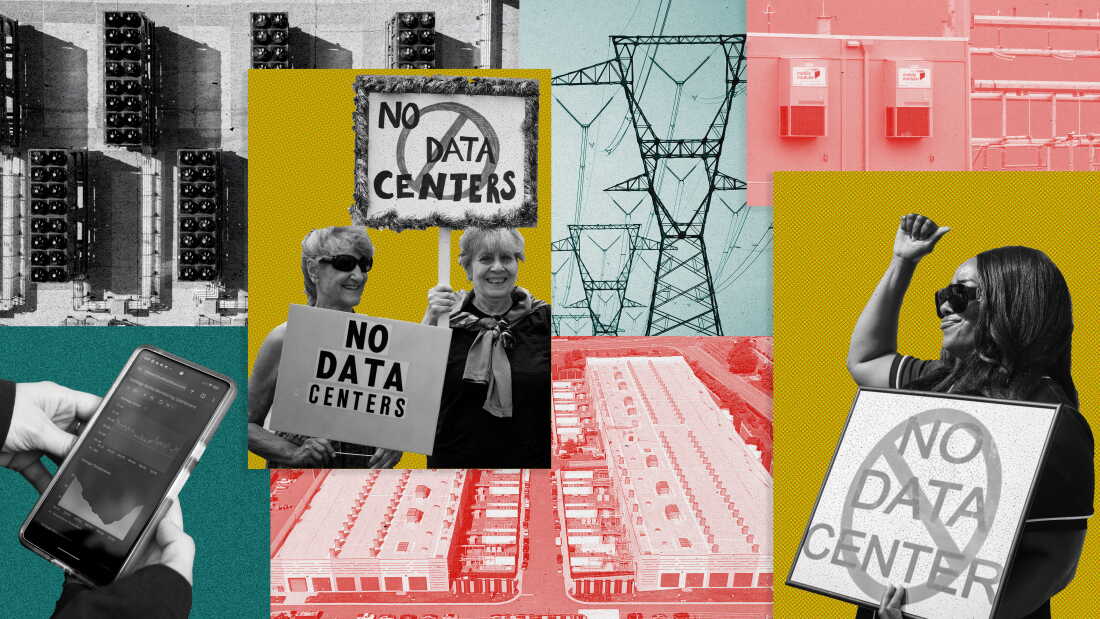
With remarkable speed, the topic of data centers has ignited widespread discussion in U.S. communities, causing divisions across political lines and creating unexpected alliances. Across the nation, citizens are challenging local officials, driven by distrust and existential concerns about technology potentially taking over jobs or humanity. Data centers are not merely a local issue—they represent a larger grassroots movement involving everyday people from all political backgrounds.
The Complexity of Data Centers
Data centers have offered economic benefits like reducing land taxes and creating jobs. However, many deals involve secretive agreements between elected officials and developers, leading to suspicion. Noise complaints arise from facilities like the Vantage VA2 data center in Sterling, Virginia, due to gas turbines. A poll conducted by The Economist and YouGov found that around two-thirds of Americans oppose new data center construction in their areas.
Political science professor Chris Borick notes that the issue has united otherwise opposing interests, putting elected officials under pressure. Many face challenges in adjusting to this new political landscape.
Political Divides
Data centers have divided political groups, such as in Loudoun County, Virginia. Juli Briskman, a board member, advocates slowing data center development, in contrast to fellow Democrat Phyllis Randall, who supports them for their tax revenue impact. Briskman aims to unseat Randall, tapping into local sentiment against the centers.
The debate has extended beyond party lines, with individuals from different backgrounds finding common ground. Residents like Kasey Hatch, who deals with persistent noise from nearby data centers, witness unexpected political alignment on the issue.
Community Action and Economic Impact
Activists like Nusheen Farahani have united across political lines, joining forces to oppose data centers. The Data Center Opposition Report reveals substantial grassroots activity against these developments, with 640,000 active members and 220 new opposition groups emerging in a few months.
Data centers contribute significantly to local economies, exemplified by Loudoun County, which saw $1.2 billion in property tax revenue in fiscal year 2026. However, the facilities demand significant resources, including electricity and water, linking them to concerns over sustainability.
Shifting Government Policy
In recent years, state and local governments have reevaluated their approach toward data centers. Virginia’s governor enacted new restrictions on their development, reflecting growing concerns. Across the U.S., restrictions and moratoriums are being applied as communities push back against the perceived prioritization of developer interests over local well-being.
Transparency Issues
Secrecy in data center deals, often involving nondisclosure agreements, fuels community distrust. Sociologist Eric Bonds discovered that NDAs are common across Virginia localities with existing or proposed data centers.
Efforts towards greater transparency are underway, and data center executives acknowledge the need for better engagement with communities on issues like noise and air quality.
Challenges and Community Efforts
In Alabama, secrecy has driven voter suspicion, while in Wisconsin, grassroots opposition resulted in abandoning a large hyperscale center project. Meanwhile, Loudoun County implements a temporary halt on new applications, serving as a case study for the nation.
Neighboring Frederick County, Maryland, follows Loudoun’s lead, implementing a development freeze while conducting impact analyses. The county faces challenges with ongoing construction on large data center campuses.
Community members dedicate significant time to advocating against data centers, driven by political disillusionment and concerns about government accountability and economic fairness.
Political scientist Kathy Cramer finds that concerns about data centers embody larger grievances against government and corporate sectors. For many, like Steve Black in Maryland, engagement becomes a non-partisan call to action, transcending traditional political divides.