Pope Leo XIV Calls for Responsible Use of Artificial Intelligence
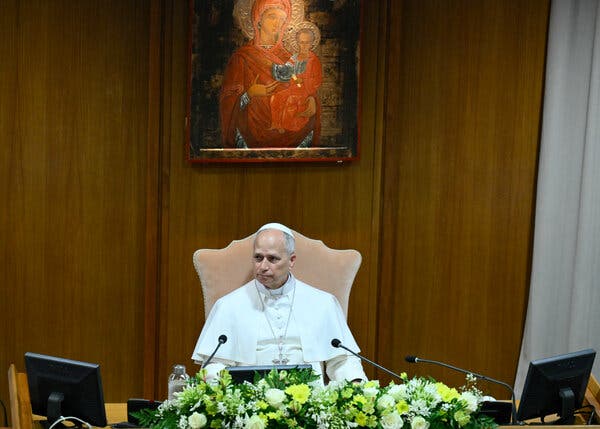
Pope Leo XIV has made a significant entry into the discussion on the challenges posed by artificial intelligence. He recently presented his first encyclical letter titled “Magnifica Humanitas” at the Vatican. In this document, he stressed the need to protect human dignity and autonomy in an era increasingly dominated by artificial intelligence.
On May 25, 2026, he outlined his vision for how leaders in both corporate and political spheres, as well as individuals, should navigate the future shaped by artificial intelligence. His focus was on ensuring humanity is protected from the most disruptive consequences of AI.
The encyclical, an open letter addressed to all people of goodwill, comprised about 42,300 words in English. It emphasized safeguarding human roles and responsibilities amid technological advancements that threaten to take over various professional and social functions.
Pope Leo XIV presented this letter alongside Christopher Olah, co-founder of Anthropic, a notable AI development firm. This presentation symbolized a dialogue between spiritual guidance and technological progress.
While acknowledging that technology should not inherently conflict with human welfare, the pope cautioned against profit-driven decisions that might systematically endanger jobs. He called for several measures, including:
- Government regulation of private companies developing artificial intelligence.
- Protection and retraining for workers whose employment is at risk due to AI advancements.
- Educational initiatives to promote critical thinking about technology among students.
- Actions to shield children from violent, hypersexualized, or fraudulent content often generated by AI.
- Ensuring humans, not AI, remain responsible for decisions involving weaponry.
Pope Leo XIV highlighted the necessity for a societal structure that maintains meaningful roles for all individuals. He warned against a scenario where technological development leads to unemployment for a large segment of the population, potentially resulting in forced idleness. This situation, he explained, could cause a paradox where material progress leads to social regression, thereby threatening social stability and peace.
During the presentation at the Vatican, witnessed by numerous attendees, he underlined how his perspectives were influenced by discussions with experts across various fields—scientists, engineers, and political leaders. He specifically mentioned Mr. Olah, expressing a commitment to collaborative efforts in guiding humanity through the age of artificial intelligence.