Race to Preserve Ancient Artifacts at Nunalleq Site Amid Climate Threats
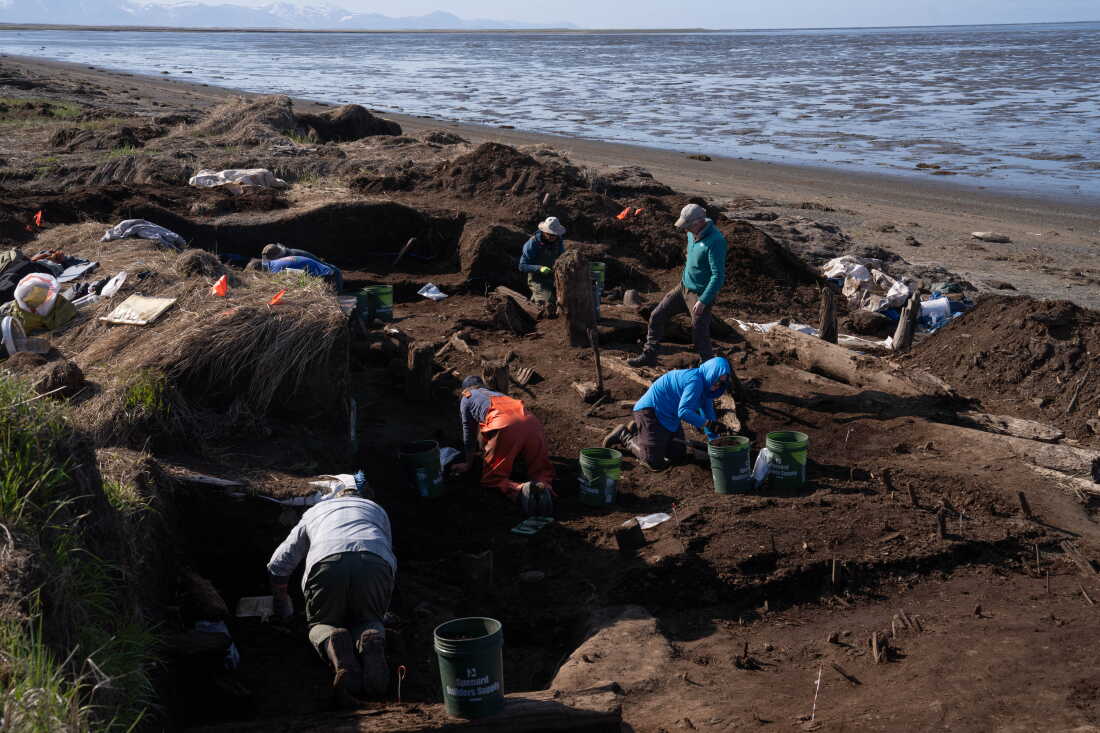
In early June, a dedicated team of volunteer excavators and archaeologists combed through the soil at the Nunalleq dig site near Quinhagak, Alaska. Their mission: uncover and preserve artifacts from the region’s rich cultural history. This effort follows the devastation caused by Typhoon Halong last October, which led to widespread flooding in western Alaska, impacting several remote villages.
The storm’s impact in Quinhagak was severe, damaging infrastructure and displacing residents. Among the debris, a wooden bowl emerged, carved by the Yup’ik people between 400 and 600 years ago. This artifact, along with many others, was buried at Nunalleq, a site of immense cultural significance. Yet, the storm not only revealed these treasures but also heightened the risk of losing more to the encroaching Bering Sea as land erodes.
Preserving Cultural Heritage
Lead archaeologist Rick Knecht and his team have been working at the site since 2009. They aim to save pieces of Yup’ik heritage, including hand-carved animals, grass ropes, sewing needles, masks, and kayak parts. The frozen ground, revealing these objects in the early 2000s, has protected many artifacts, preserving them better than a different environment might have. The team, working with limited resources and supported by organizations like the Pacific Northwest Archaeological Society, focuses on a crucial emergency dig area the size of a backyard pool.
The dig exposes artifacts from sod houses dating back 400 to 500 years. Knecht notes the ongoing challenge as the Bering Sea continues to erode the shoreline, a situation worsened by climate change factors such as decreasing sea ice and thawing permafrost. Last October’s storm eroded the soil further, granting seawater access to parts of the site during high tides.
Urgency Amid Erosion
Charlotta Hillerdal, a long-term participant in the excavation efforts, shared the emotional toll of the storm’s damage from her home in Scotland. The sea’s steady advance raises fears of future storms further decimating the site. With past floods already washing away valuable objects, the team is gathering funds via a GoFundMe campaign and through support from Quinhagak Heritage Inc., hoping to resume excavation next summer.
Knecht expressed determination, emphasizing the need to safeguard these cultural artifacts from being lost to the sea. “I’ll be damned if I’m going to leave this for the waves,” he stated. Meanwhile, artists like Stephanie Harold illustrate these findings, adding to the collective efforts to document and preserve the site’s legacy.
Connection to Ancestral Roots
The Nunalleq Culture and Archaeology Center, acting as both museum and lab, displays the artifacts for community members and visitors, fostering a connection to the past. Elizabeth Church, director of Quinhagak Heritage Inc., spoke of the community’s commitment to protecting their ancestors’ belongings, reflecting a deeply felt responsibility.
“They are interwoven into us as people, and we feel a great sense of responsibility to care for them well, and to take them into the future with us,” Church emphasized.
The artifacts serve as a powerful reminder of the adaptability and skills of past generations. Church notes, “When you know that you come from a people that were so resilient and so capable and so talented and so smart — you get a boost.” As fall storm season looms, urgency mounts in the effort to preserve this vital history.