Recent Offshore Earthquakes Near Northern California: A Detailed Analysis
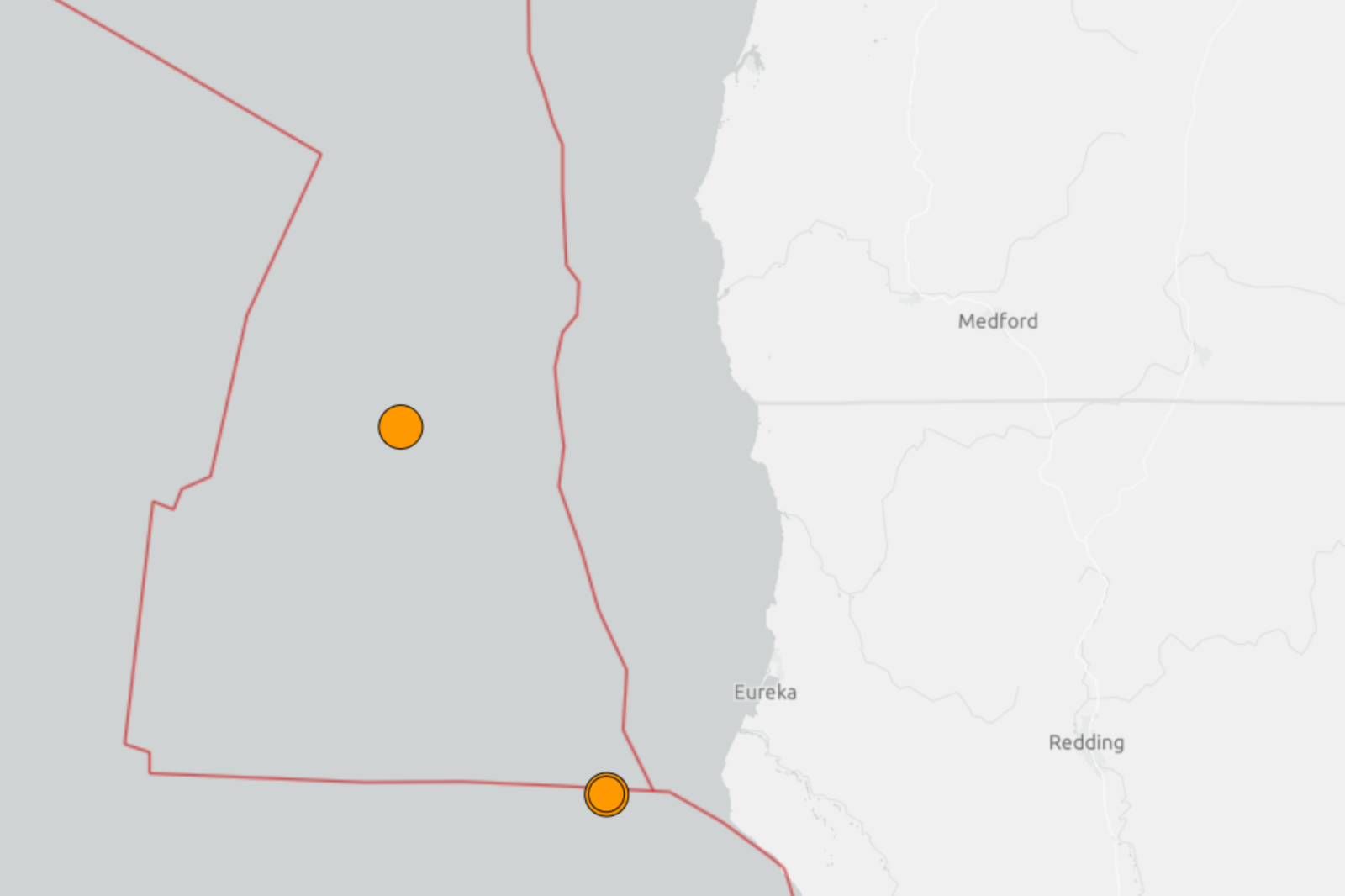
Early Wednesday, a series of offshore earthquakes occurred in the Pacific Ocean near the Northern California coast, as reported by the U.S. Geological Survey (USGS). This cluster included two tremors with magnitudes of 5.0 or stronger, stirring concerns in coastal communities. These communities were already alert due to a stronger 5.7 magnitude earthquake off the Oregon coast earlier in the morning.
Seismic Activity Location
The morning began with a 5.7 magnitude earthquake off the Oregon coast, about 100 miles west-southwest of Pistol River. This was followed by a 5.1 magnitude tremor approximately 40 miles west of Petrolia, California, at a shallow depth of about 0.12 miles, or 633.6 feet. Subsequently, two more quakes of 4.5 and 2.8 magnitude struck the same area.
A smaller earthquake measured at 1.8 magnitude also took place nearby, roughly 11 miles west of Petrolia. Despite the shallow nature of these earthquakes, which typically increases their potential impact, early reports indicated minimal effects. Officials confirmed there was no tsunami threat or warning, and there were no immediate reports of significant damage or injuries.
Recent Earthquake Activity
In addition to these notable offshore earthquakes, California has experienced a series of minor tremors recently. Over the past few days, USGS recorded 82 earthquakes throughout the state. In Northern California alone, at least 35 earthquakes ranged from 0.03 to 3.6 magnitude, chiefly clustering north of Santa Rosa near Mercuryville, an area with notable seismic activity in recent months.
Southern California also saw 47 smaller earthquakes, ranging in magnitude from 0.3 to 2.5, stretching from Parkfield in the north to Imperial in the south.
California’s Seismic Activity Explanation
California is prone to earthquakes primarily because it sits on a major tectonic plate boundary, one of the most active worldwide. The boundary is between the Pacific Plate and the North American Plate, which are constantly moving past each other. This movement occurs along faults, such as the San Andreas Fault. However, instead of gliding smoothly, the plates frequently get stuck due to friction, leading to stress accumulation underground. An earthquake occurs when this stress releases suddenly.
Furthermore, California’s geography is not confined to a single fault. It has a complex network of faults, including the well-known San Andreas and numerous smaller faults. This extensive fault network disperses seismic activity across the state, resulting in earthquakes occurring across various regions rather than being limited to a single fault line.