Record High Ocean Temperatures as El Niño Intensifies
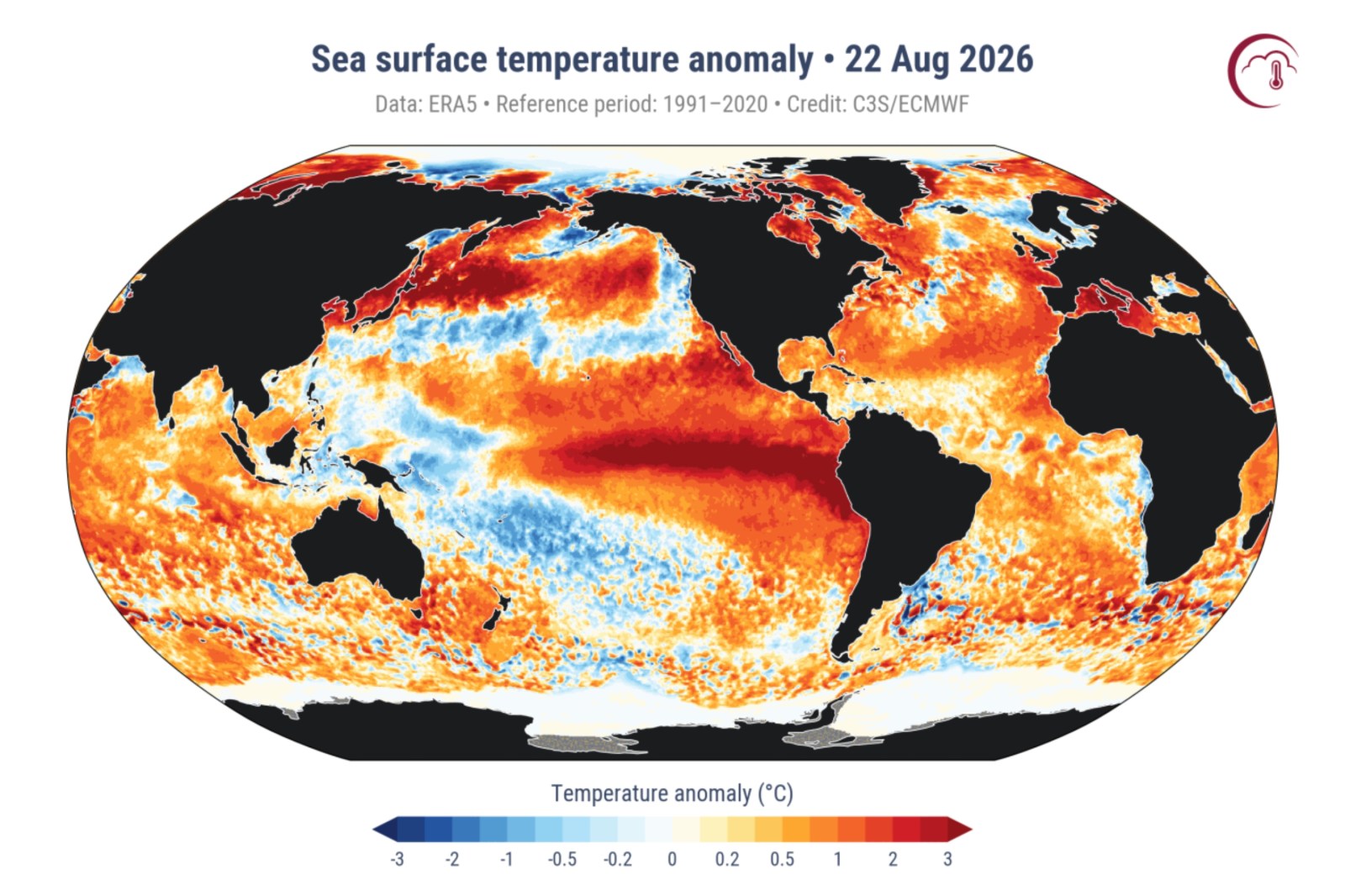
The world’s oceans have reached unprecedented average surface temperatures, marked at 21.1 degrees Celsius or 70 degrees Fahrenheit. This significant data point was recorded by the European Union’s Copernicus Climate Change Service, surpassing the previous daily record of 21.09 degrees Celsius set in March 2024.
Unusual Timing
The occurrence of this record in August is particularly noteworthy, as global ocean temperatures are usually highest in March and April following the austral summer, according to Copernicus.
AccuWeather meteorologist Alex DaSilva noted that the record pertains to non-polar ocean regions and involves warmth spreading across multiple ocean basins. He emphasized that the strengthened El Niño predominantly affects the Pacific Ocean, making record-breaking temperatures more feasible during these periods. Additionally, warmer conditions in the Atlantic basin have contributed to achieving this global record.
Long-Term Temperature Trends
Copernicus had earlier reported ocean temperatures outside the polar regions fluctuating between 0.35 and 0.73 degrees Celsius above the long-term average over the past three years. These temperatures had already reached record levels by June, coinciding with the development of El Niño in the equatorial Pacific.
Implications of the Ocean Temperature Record
The highest daily average temperature recorded in oceans outside the polar regions stands at 21.1 degrees Celsius, reached on August 22, 2026. Samantha Burgess, strategic lead for climate at the European Centre for Medium-Range Weather Forecasts, highlighted that this record signals increasing stress on the ocean. The effects of El Niño are compounded by decades of anthropogenic warming, raising risks to marine ecosystems and coastal communities. The numbers of marine heatwave days have tripled since the early 1990s, exerting pressure on marine ecosystems and dependent communities.
DaSilva mentioned that 2024 and 2023 also hold positions in ocean heating records. The influence of El Niño was felt in late 2023, moving into early 2024 before transitioning toward La Niña.
Understanding El Niño
El Niño is identified as the warm phase of the El Niño-Southern Oscillation (ENSO), a natural climate phenomenon occurring every two to seven years in the tropical Pacific. During El Niño, central and eastern equatorial Pacific waters warm, trade winds diminish, and tropical rainfall patterns shift eastward, causing global weather and climate alterations.
The National Oceanic and Atmospheric Administration (NOAA) projects a greater than 90 percent chance of a forceful El Niño event in the Northern Hemisphere’s fall and winter into 2027. This could potentially lead to another world sea-surface temperature record.