Residents Challenge ComEd’s Substation Plans in North Side Chicago
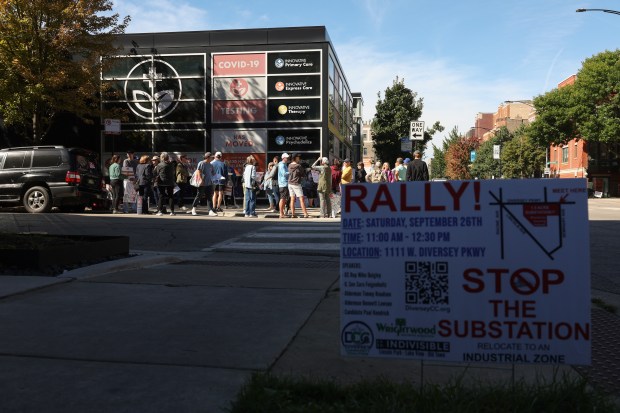
Residents in North Side Chicago are expressing concerns about an impending strain on their electrical grid. There’s a consensus on the necessity of a new substation to channel power to homes and businesses. However, many argue that the proposed location for the substation is unsuitable, sparking a community-wide debate.
Mary Driscoll, a long-time resident, stresses that this is not about resisting unwanted utilities but ensuring fair urban planning. As a member of the Diversey Community Coalition (DCC), she joins thousands in opposing ComEd’s plan to construct a substation at 1111 W. Diversey Parkway. The utility assures that it has selected the optimal site to prevent power outages, while local residents propose that the land should be repurposed for housing.
“We like the idea of transit-oriented housing,” says Driscoll. The DCC focuses on gathering support for residential developments instead of utility structures.
Opposition to the substation isn’t rooted in NIMBYism (Not In My Backyard). Instead, the coalition refers to their stance as THIMBYism (Transit-oriented Housing In My Backyard). In recent gatherings, community leaders discussed potential noise and fire hazards from the substation, although they remain hopeful about alternative residential projects.
“Building housing could transform the area,” agrees 10-year-old Emilia Rosenberg, while her younger brother, Henry, emphasizes safety over industrial development.
With local politicians on their side, the DCC has flooded the Illinois Commerce Commission with public comments, slowing down ComEd’s progress. On their website, the DCC pitches the choice between potential environmental impacts and sustainable residential living. Their projections include over 200 apartments, featuring multiple affordable units. However, these projections lack developer consultation, leading some experts, like former Chicago Zoning official Edward Kus, to challenge their feasibility.
ComEd, having acquired the site for $11.5 million, affirms its entitlement under current zoning laws to build the substation. The Illinois Commerce Commission’s potential approval could pave the way for development, though any housing proposals hinge on selling the land to an interested developer, a prospect ComEd considers unlikely.
Beyond plans and disputes, DCC has actively searched for alternative locations, suggesting over a dozen new sites farther from schools. Yet, ComEd responded that all proposed alternatives were unsuitable, citing increased costs and potential disruption of relocated infrastructure.
For residents like Driscoll, who boasts countless stories stemming from safety concerns and past substation failures, the uncertainty remains daunting. ComEd executive Keisha Parker acknowledges modern engineering improvements but insists on the proximity for efficiency.
As both parties await the Illinois Commerce Commission’s decision on December 15, many remain optimistic. Preliminary evaluations suggest ComEd’s needs may have been exaggerated. Yet, ComEd maintains the chosen site as the best solution, despite readiness to alter the facility’s design for aesthetic integration.
The core question persists: Can this neighborhood balance its demand for energy and real estate, or must residents choose between new infrastructure and housing developments?