Roman Villa Unearthed in Devon: A Window into Ancient Affluence
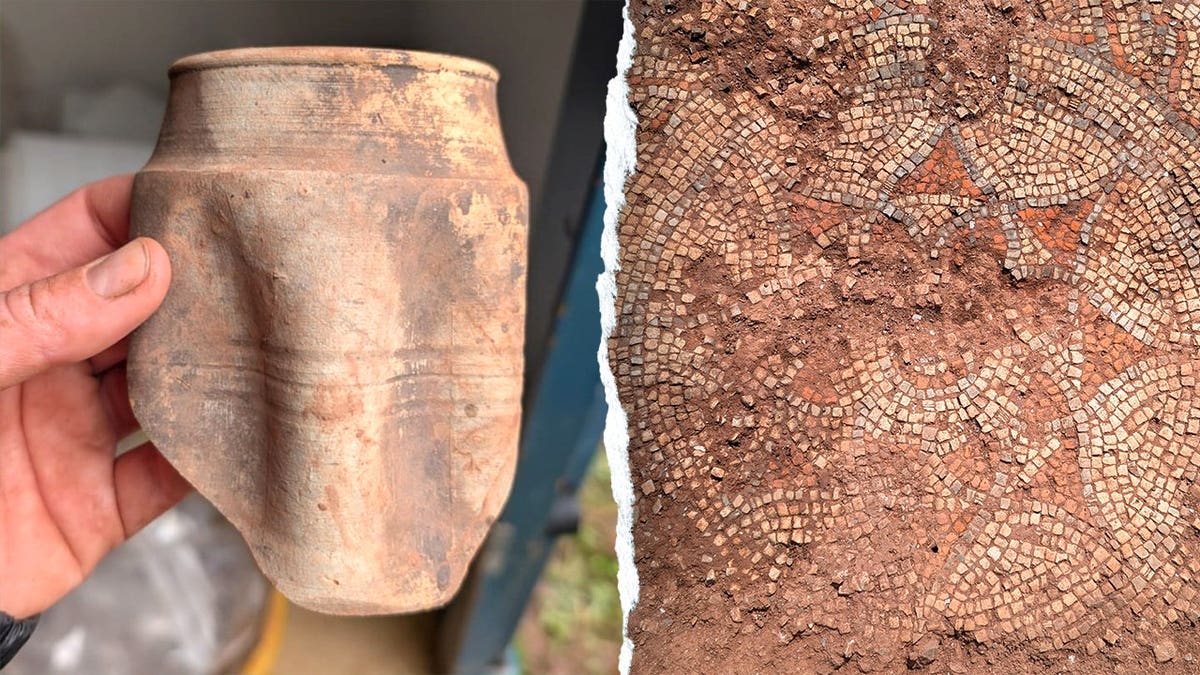
Archaeologists in the United Kingdom have discovered the remains of a vast ancient Roman villa in Devon, dating back over 1,600 years. Located on farmland between Halberton and Sampford Peverell, the fourth-century villa was unearthed through the Saving Halberton’s Ancient Roman Environment (SHARE) project. This initiative is a collaboration between the University of Exeter and Cotswold Archaeology, as reported by SWNS.
The highlight of the excavation is a complex Roman mosaic, crafted from thousands of small stone cubes arranged in a floral pattern. Bill Horner, county archaeologist and historic environment manager at Devon County Council, stated, “The polychrome mosaic is the most westerly example to have been found in a villa in Roman Britain.” He emphasized that the findings, including the mosaic and other artifacts of Roman civilization, reflect the integration of this region into the Roman Empire.
Images released reveal the mosaic alongside ancient pottery and other artifacts brought to light after centuries beneath the soil. The mosaic’s design features red, white, and dark blue cubes forming an eight-petaled stylized flower.
In addition to the villa, archaeologists have excavated two stone structures; one is thought to have been a bathhouse, and the other likely served agricultural purposes. Among other discoveries, there are a copper-alloy bracelet, a silver-plated spoon, a beaker used for beverages, pottery fragments, and a gemstone engraved with the goddess Victory.
Britain was part of the Roman Empire from A.D. 43 until the early fifth century. Research indicates the villa was home to a wealthy Roman family. The project’s leader, Susan Greaney, an archaeology professor at the University of Exeter, expressed surprise at the discovery of an elaborate bathhouse, stating, “This villa was undoubtedly home to people of wealth and high standing.” The site first gained attention in 2004 when local metal detectorist John Hill found Roman remains.
Officials plan to carefully move the mosaic to Tiverton Museum of Mid-Devon Life for preservation and display. This discovery adds to numerous notable Roman finds across England. Last summer, an extensive 2,000-year-old Roman settlement was uncovered in the Cotswolds, following another metal detectorist’s discovery. More recently, archaeological work preceding a British railway project yielded a rare Roman coin and various ancient artifacts.