Saudi Arabia, Turkey, and Pakistan Sign Defense Agreement
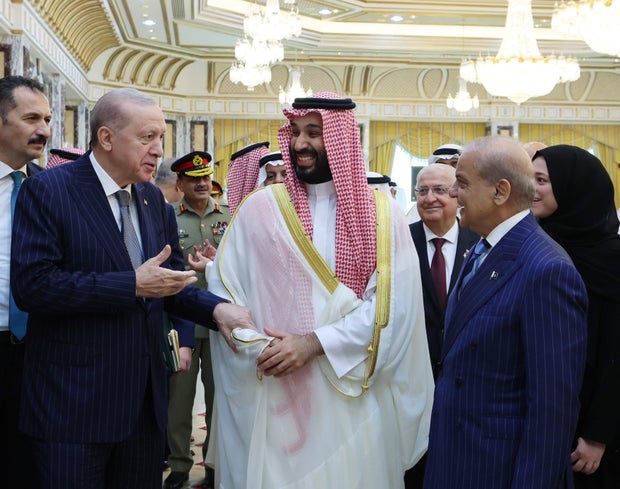
Saudi Arabia, Turkey, and Pakistan have entered into a defense agreement, finalizing their collaboration amid increasing security challenges and threats from the Iran conflict. This agreement, known as the ‘Mecca Joint Defense Agreement,’ was signed on Friday in Mecca by Saudi Crown Prince Mohammed bin Salman, Turkish President Recep Tayyip Erdogan, and Pakistani Prime Minister Shehbaz Sharif.
The agreement emphasizes strengthening collective deterrence against aggressions. It mandates that any armed attack on one of these nations will be considered an attack on all of them. Both the Pakistani Foreign Ministry and Turkey’s presidential communications directorate released identical statements highlighting the dedication to enhance all aspects of defense cooperation among the three countries.
This pact exemplifies a significant union of three Sunni Muslim-majority states: Saudi Arabia, rich in oil resources; Pakistan, a nuclear power; and Turkey, possessing NATO’s second-largest army and an expanding defense industry. Turkish media sources suggest that the agreement could permit joint military exercises, training, technology transfers, and intelligence sharing.
A Turkish official clarified that the agreement is defensive, ensuring mutual support is solely for defense purposes. The pact is not directed at any specific entity and invites other regional countries to join. Additionally, a Saudi official stated the agreement is not intended to form a military alliance or a sectarian coalition and isn’t linked to nuclear ambitions or an arms race. The focus is on building sustainable capabilities, as emphasized by Deputy Minister for Public Diplomacy Rayed Krimly.
This agreement does not override or substitute any existing bilateral or multilateral agreements with other countries or organizations. A prior separate defense pact, signed between Pakistan and Saudi Arabia in September, already defined that an attack on one would be seen as an attack on both.
In Islamabad, defense analyst Abdullah Khan described the agreement as the natural evolution and formalization of strategic partnerships among the three countries. He noted that the shifting regional security environment and the changing nature of warfare have heightened the necessity for tighter cooperation.