Secret WWII Records Uncovered in New York Garage
Discovery of Hidden Records
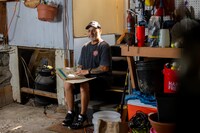
Jason Hurdle was organizing his garage for Halloween decorations near Waterloo, New York, when he uncovered a hidden crawl space behind a sheet of plywood. Within this space was a dusty box filled with old files, initially appearing as mere junk. However, a gust of wind revealed a significant detail: ‘SECRET’ in red letters on a cover.
Hurdle, a school district mechanic, was unfamiliar with classified documents. As he examined them, he realized they contained firsthand accounts from American POWs during World War II, describing harsh conditions in German captivity. The 80-year-old records detailed experiences of over 120 soldiers, nearly lost if the documents had been discarded.
Importance of the Documents
In July, the National Archives safely recovered these documents through its Archival Recovery Program. This team has reclaimed various lost records, such as Apollo mission documents and a letter from J.E.B. Stuart to Jefferson Davis. Unlike others, the WWII records were found in a private residence.
Contact with the soldiers’ families revealed that while some were aware of their relatives’ experiences, others were surprised by the existence of official documents. Kimberly Guise from the National WWII Museum highlighted the exceptional value of these records for POW research.
Transferring to the National Archives
After recognizing the significance, Hurdle brought the documents to a local museum. Amelia Burm, a research historian there, consulted her professor, who advised contacting the National Archives. In January, Archives officials visited Hurdle’s home to examine the records.
The National Archives had no prior record of these missing files. Spokeswoman Grace McCaffrey emphasized their importance for historical preservation. The documents are now stored at the Archives’ College Park facility and will be digitized for public access.
Origin and Significance
Hurdle speculated the files might belong to a former neighbor’s family, but the origin remains unknown. He expressed gratitude to the National Archives for preserving the history contained in these documents.
The discovery spans accounts of POWs returning to Camp Lucky Strike in 1945, a major processing area in Normandy for freed American soldiers. They transitioned from harsh captivity to a semblance of normalcy with ample food, medical care, and debriefings.
Detailed Accounts of Captivity
The documents contain firsthand narratives of POWs captured during the Battle of the Bulge. Julian G. Candelaria and Eugene Eidschun recounted transport in overcrowded, unsanitary conditions and exposure to danger. These stories highlighted breaches of the 1929 Geneva Conventions by Germany regarding POW treatment.
Many documents reveal severe conditions: inadequate food, medical care, and vermin-infested quarters. The records preserved stories untold to families, providing fresh insight into the soldiers’ wartime experiences.
Discovering Families’ History
For families like Michael Yanes, these documents filled gaps in their knowledge about ancestors’ war experiences. Some soldiers refrained from sharing details, sparing families from distress, while others like Pete Dimas are left piecing together familial history through these findings.
The National Archives’ effort to locate and recover the records ensures these stories are not lost but available for future generations to understand POWs’ true challenges during World War II.