Senate Rejects SAVE America Act Amidst Debate
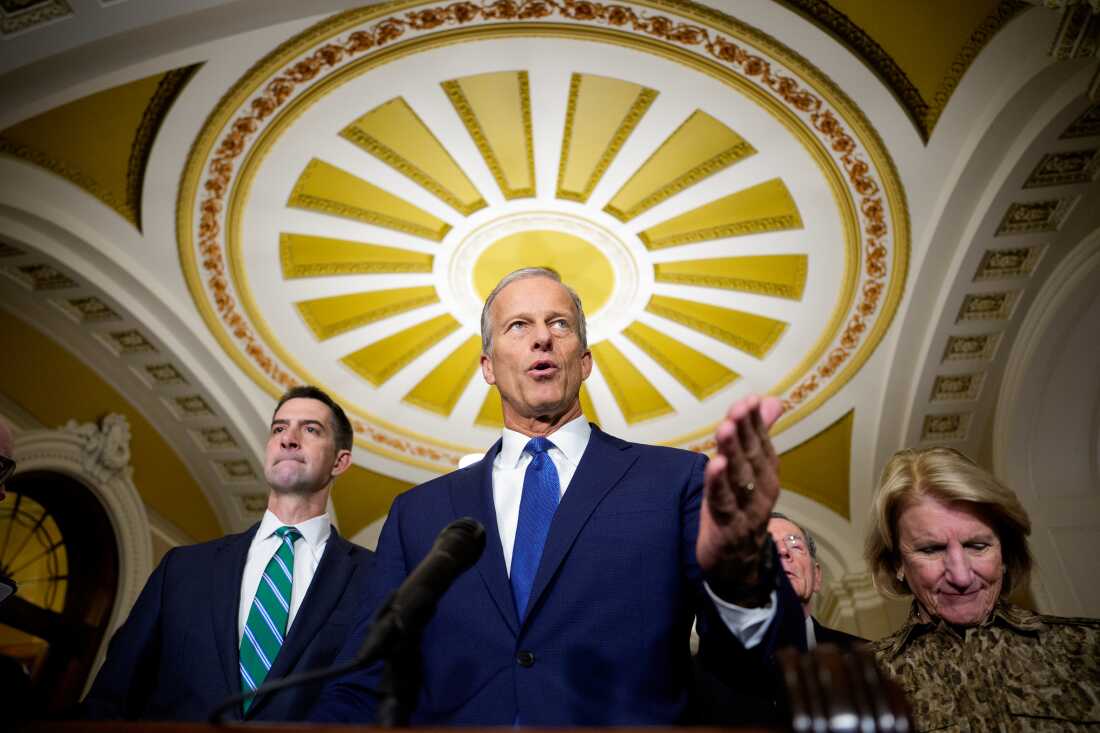
Senate Majority Leader John Thune from South Dakota addressed the media at the U.S. Capitol regarding the SAVE America Act and other current issues. The bill was envisioned as a comprehensive Republican overhaul of election processes, championed by President Trump. However, it recently faced defeat in the Senate.
The measure was considered on Thursday as an amendment during extensive discussions over an immigration funding package. The bill had remained stagnant in the Senate for several months despite the House passing a version in February with a largely partisan vote. The proposal intended to become effective immediately, even as congressional primaries were underway.
A significant stipulation of the legislation was the requirement for voters to provide a document proving U.S. citizenship, such as a passport or birth certificate, upon registration. Research indicates many Americans lack easy access to such documents. Experts argue this requirement is unwarranted, as noncitizen voting occurs at negligible levels in American elections.
“The alleged sin that it is trying to correct happens so infrequently that it really does seem like the solution would be much, much worse than the disease,” said Steve Vladeck, a law professor at Georgetown University, in an interview earlier this year.
Despite evidence, Trump has propagated doubt about the legitimacy of American elections. He promoted the SAVE America Act as a solution to the purported fraud he often claims exists. During his State of the Union address, Trump urged Congress to prioritize this legislation above all else, accusing Democrats of wanting to cheat by opposing it.
Trump frequently commented on the bill online, emphasizing that its passage was a precondition for signing other legislation. Some Republicans, inspired by Trump’s stance, considered bypassing the legislative filibuster to ease the bill’s passage. However, Thune recognized the lack of widespread Republican support for such drastic measures.
“It’s about the votes. It’s about the math,” Thune told reporters, acknowledging the legislative challenge. “And I’m—for better or worse—the clear-eyed realist about what we can achieve here.”
The act also mandated voter photo identification for ballot casting and required states to use a Homeland Security system known to incorrectly flag U.S. citizens. Traditionally, Republicans have resisted any measures that would centralize voting regulations. Yet Trump advocated for nationalizing voting, leaving a significant mark on the discussion.
Derek Muller, a law professor at the University of Notre Dame, reflected on the implications of the act. Had it passed, Muller described it as one of the most substantial centralizations of elections in U.S. history. In a blog post, Muller noted that the act’s striving might shift the debate for future Democratic discussions on election nationalization.