Spain’s Immigration Regularization Process Offers Hope for Undocumented Families
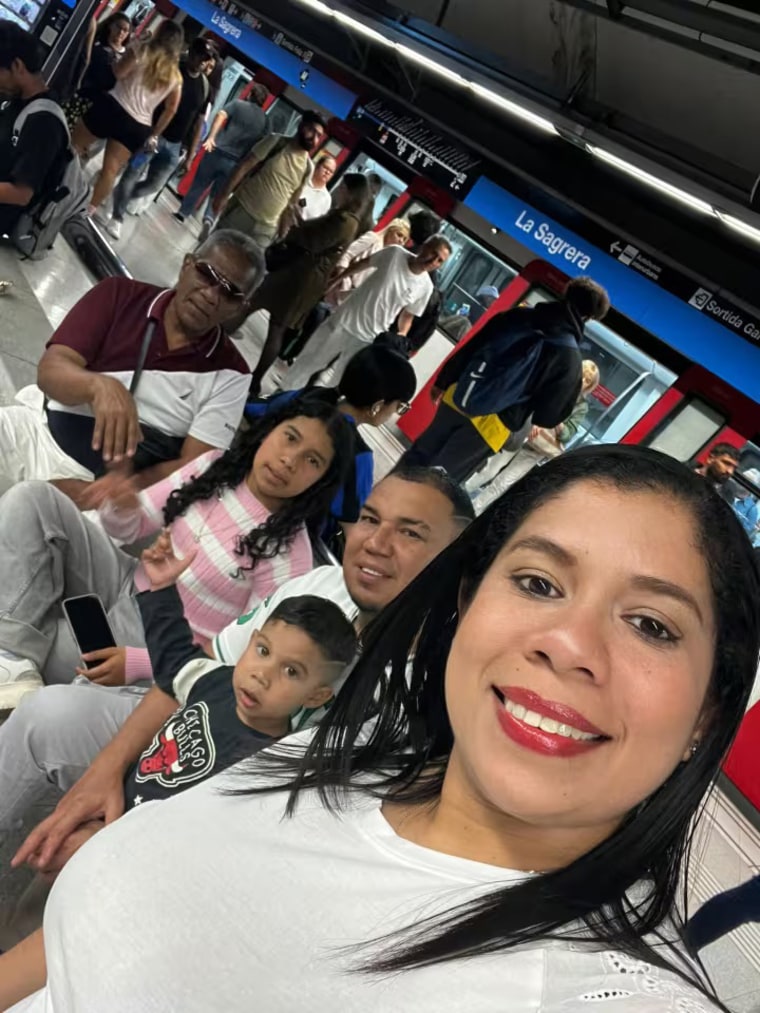
In Barcelona, Nariola Romo, 34, and her family moved to Spain from Colombia with a different initial plan. Their goal was to reach the United States, but failed attempts to secure loans redirected them to Europe. She now views their change of course as fortunate. ‘With the current situation for migrants in the U.S., perhaps it was best we never went there, as we might have faced deportation,’ Romo said.
The Romo family, including her son Angelito, her husband Ángel, daughter Claribel, and her father Will, finds themselves on the Barcelona metro, riding a wave of change. Spain’s extraordinary regularization process promises to legalize the status of more than 500,000 undocumented immigrants. Approved adults receive a one-year work and residence permit, which requires proof of employment for renewal. Minors are granted five-year status.
This development contrasts with U.S. policies where former President Donald Trump pursued extensive detainment and deportation of immigrants. In Spain, the deadline to submit applications is June 30, allowing a three-month processing period after submission. The response to the initiative was overwhelming, with over 43,000 applications arriving in three days and reaching 549,596 in just a month.
Spanish Prime Minister Pedro Sánchez described the process as an act of ‘normalization,’ recognizing immigrants as integral to Spanish society. Romo’s family is among those eager to benefit from this measure. ‘We found out about this regularization through social media and have been preparing ever since,’ Romo explained.
Relocating from Barranquilla in Colombia, the family fled threats and extortion from criminal gangs. Romo, a teacher by profession, worked in a warehouse and as a private tutor in Spain. She reflects on her challenging journey: ‘Leaving everything behind took courage, but Spain has welcomed us. I’m grateful my children are here.’
Navigating Life in Spain: The Nguirane Story
Diadji Nguirane from Senegal finds himself in a different situation. While the regularization benefits him, his partner Maimouna Gueye and their daughters, born in Spain, already hold legal status. ‘I’ve been in Spain for two years. Obtaining my documents would allow me to work and support my family,’ Nguirane said.
Unable to work legally so far, Nguirane has only occasionally assisted friends with maintenance jobs. Gueye, employed in a hospital, has been the primary breadwinner. She hopes Nguirane will secure a job in sanitation services at the same hospital.
For Nguirane, returning to Senegal seems unlikely. Despite occasional short visits, he struggles with the unfamiliarity. ‘It’s not a place I’m familiar with,’ Gueye explained.
The Legislative Framework and Its Implications
Applicants for regularization must meet specific criteria. Besides presenting a passport, immigrants must verify their presence in Spain before January 1, 2026, and must have resided continuously for at least five months. Various documents such as a registration certificate, medical records, or proof of children’s school enrollment serve this purpose.
Applicants also need to demonstrate a clean criminal record from previous residences over the last five years. Social services may issue a vulnerability certificate if needed, confirming hardship in employment or housing access.
This isn’t Spain’s first regularization effort. A similar process occurred 20 years ago under the Zapatero government. Lawyer Verónica Jaramillo from the Bayt al-Thaqafa Foundation notes this practice extends globally. The #RegularizacionYa movement estimated over 500,000 undocumented immigrants, while studies from the Funcas think tank suggest numbers surpassing 800,000 by 2025.
Regularization benefits aging populations like Spain’s. The aging index highlights 148 older adults for every 100 younger individuals. Jaramillo argues regularization fortifies the labor force essential for Social Security contributions.
Yet, the initiative faces sharp criticism from right-wing parties. Isabel Díaz Ayuso, Madrid’s conservative regional president, claims it manipulates demographics and impacts public services. However, legalized immigrants won’t gain voting rights.
For families like the Romos and Nguiranes, the hope lies in the transformative possibilities regularization offers. They seek not merely stability, but a chance to establish deeper roots in a welcoming Spain.