Spain’s Triumph in 23rd Men’s World Cup: A Triumph of Teamwork
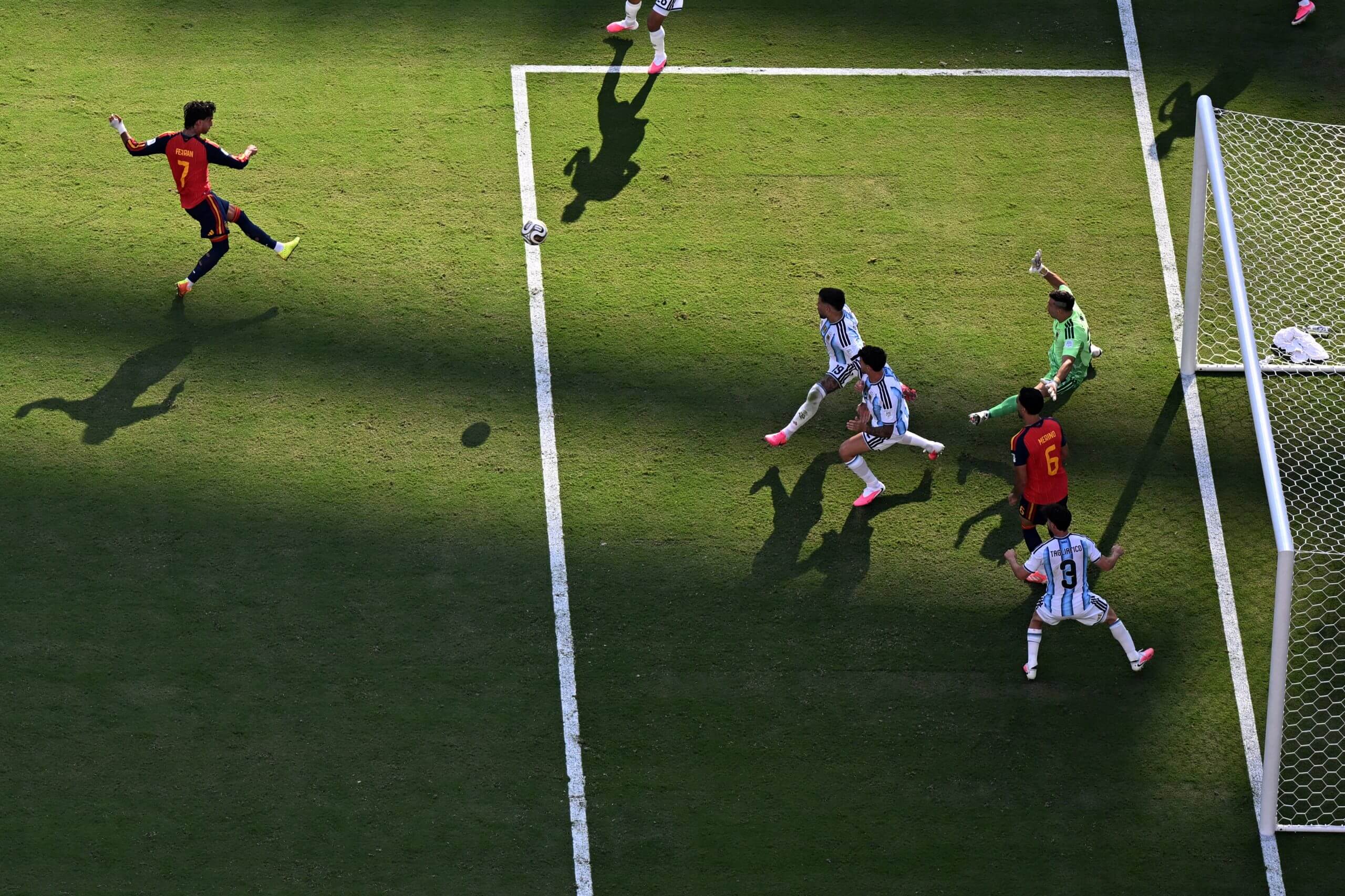
As the 23rd edition of the men’s World Cup drew to its final stages, excitement and anticipation surrounded Spain’s breakthrough moment in a tournament held across three countries over five and a half weeks. The atmosphere echoed the fervor of a Spanish bullring, with supporters chanting, ‘Ole! Ole! Ole!’ as Spain neared glory in the final match against Argentina.
Spanish football needed to ‘decide if it wants to be the bullfighter or the bull.’
This quote from Cesar Luis Menotti, Argentina’s 1978 World Cup-winning coach, highlighted Spain’s transformation from underachievers into a dominant force in international football. Over the past 18 years, Spain embraced possession-based football, resulting in three European Championship victories and two World Cup titles.
Throughout the early weeks of the tournament, attention focused on star players like Kylian Mbappe and Lionel Messi. However, Spain’s gradual intensification saw them establish themselves as the standout team at the business end of the competition. Their semi-final victory over France set the stage for a 2-0 win, and victory came in the final with Ferran Torres’ goal ending 105 minutes of stalemate with Argentina.
Spain’s triumph was marked by teamwork, controlled possession football, and composure amid Argentina’s aggression. Argentina’s efforts lacked attacking ambition, with midfielder Enzo Fernandez sent off before regulation time ended and an aggressive closing performance that contrasted with Spain’s disciplined approach.
The final evoked memories of past World Cup encounters; notably, Argentina’s unsportsmanlike performance against West Germany in 1990 and Spain’s overcoming of Netherlands’ aggression with a goal in extra time in 2010.
Former Arsenal manager Arsene Wenger once likened international play to ‘fast food,’ contrasting it with the refined style of elite club teams. However, Spain’s team reflects an organic development, characterized by a distinct style and identity at the national level.
While Argentina reached the final propelled by emotion and brilliance from their captain, Spain showcased calm, calculated football grounded in strong principles. Their victory stood as a testament to method over the chaotic instincts prone to undermine Argentina.
Throughout the knockout phase, Argentina teetered on the verge of elimination, relying heavily on last-minute heroics. Conversely, Spain rebounded from a slow start, growing into the tournament with consistently solid performances, conceding only one goal across eight games.
A key to Spain’s success lies in their strategic development approach. Under coach Luis de la Fuente, who spent years with Spain’s youth teams, they achieved a European Championship and World Cup double. De la Fuente’s experience with nurturing talents played a crucial role in cultivating a winning squad.
Standout contributions came from captain Rodri, recipient of the FIFA Golden Ball; Pau Cubarsi, awarded for his performances in defense; and Ferran Torres, who scored the tournament-deciding goal. Their collective effectiveness showcases Spain’s systematic approach to nurturing players and coaches.
Spain’s coaching prowess extends beyond national success with well-known figures like Pep Guardiola and Luis Enrique shaping the era. Moreover, several Premier League teams benefit from Spanish coaching influence.
Amid England’s pursuit of immediate success fueled by wealth from Premier League commercial dominance, Spain’s methodical progress contrasts sharply. Luis de la Fuente built a squad from the youth ranks, instilling a clear understanding of Spanish football culture.
The victory epitomizes a dominant Spain team characterized by a unified identity and seamless transition from youth to senior levels. They exceeded past Spanish teams’ achievements, showcasing an evolved, coherent style.
Spain commanded extensive possession and confidently attacked throughout their matches, culminating in victory by leveraging their patient and passing-oriented gameplay. The final saw them seize control of the game with strategic execution, prevailing over Argentina with a collective flourish symbolized by ‘Ole! Ole! Ole!’ chants.
This victory signals Spain’s reign over men’s and women’s World Cups simultaneously, alongside current dominance in youth categories. With players like Yamal advancing rapidly, Spain underscores their commitment to fostering exceptional talent within a cohesive unit, securing further accolades.
De la Fuente inspired his players with a message before the final: ‘We have an appointment with history.’ Spain answered that call, delivering a memorable performance and ultimately flourishing as World Cup champions.